askST: Should I install solar panels at home? How much can I save on electricity?
Energy prices in Singapore have been fluctuating amid ongoing conflict in the Middle East.
Singapore produces 95 per cent of its electricity from imported natural gas, leaving it exposed to changes in global fuel prices.
Households in Singapore saw a 17 per cent quarter-on-quarter increase in the electricity tariff to 31.91 cents per kilowatt hour (kWh) from July to September. It fell to 28.59 cents per kWh for the period of October to December. The rates do not include goods and services tax (GST).
More homeowners in Singapore have turned to solar power over the past year. There were around 8,086 private homes, including condominiums and landed properties, with solar panels in the first half of 2026. This is up from 5,817 such homes at the end of June 2025, according to data from the Energy Market Authority (EMA).
Can switching to solar power help landed homeowners guard against price volatility? Here’s what you should know.
Q: Is installing solar panels actually worth it? How much money can I save every month?
It makes financial sense for landed property owners to install solar panels at home, says Thomas Reindl, deputy chief executive officer of the Solar Energy Research Institute of Singapore (SERIS) at the National University of Singapore.
“If one invests in a solar (PV) system, the self-generated electricity costs around 15-cents per kWh over the lifetime of the solar system, which is 20 years or more,” he explains.
Solar panels comprise photovoltaic (PV) cells, which are made of semiconductor materials that can convert sunlight into electricity.
EMA estimates that investment in solar panels can usually pay off for landed homeowners in five years, or shorter if they have larger electricity consumption.
How does having solar affect my electricity bill?
With the declining cost of solar panels, rooftop solar has become increasingly cost-competitive with electricity purchased from the grid, says EMA.
Installing solar panels allows households to reduce their electricity bills by using the electricity they generate and receiving payments for excess electricity exported to the grid.
Actual savings and payback periods depend on factors such as installation costs, household electricity consumption and solar generation, EMA adds.
Retiree Andrew, 77, who asked to be known by his first name only, spent over $40,000 installing solar panels on the roof of his landed property in Katong in August.
He used to pay around $900 a month for electricity for his five-person household – partly due to high electricity consumption, which includes charging an electric vehicle.
His solar PV system with 94 panels has an installed capacity of over 60 kilowatt peak – the unit used to measure the maximum power output of solar panels under ideal conditions, depending on size and complexity. Installation of the panels took around four days. He estimates his payback period to be around three years.
He has also installed a bi-directional meter, which measures how much electricity he exports back to the grid. With it, Andrew can sell his excess solar-generated power to national grid operator SP Group to offset his bills. The PV system helps him hedge against fluctuations in electricity prices, he says.
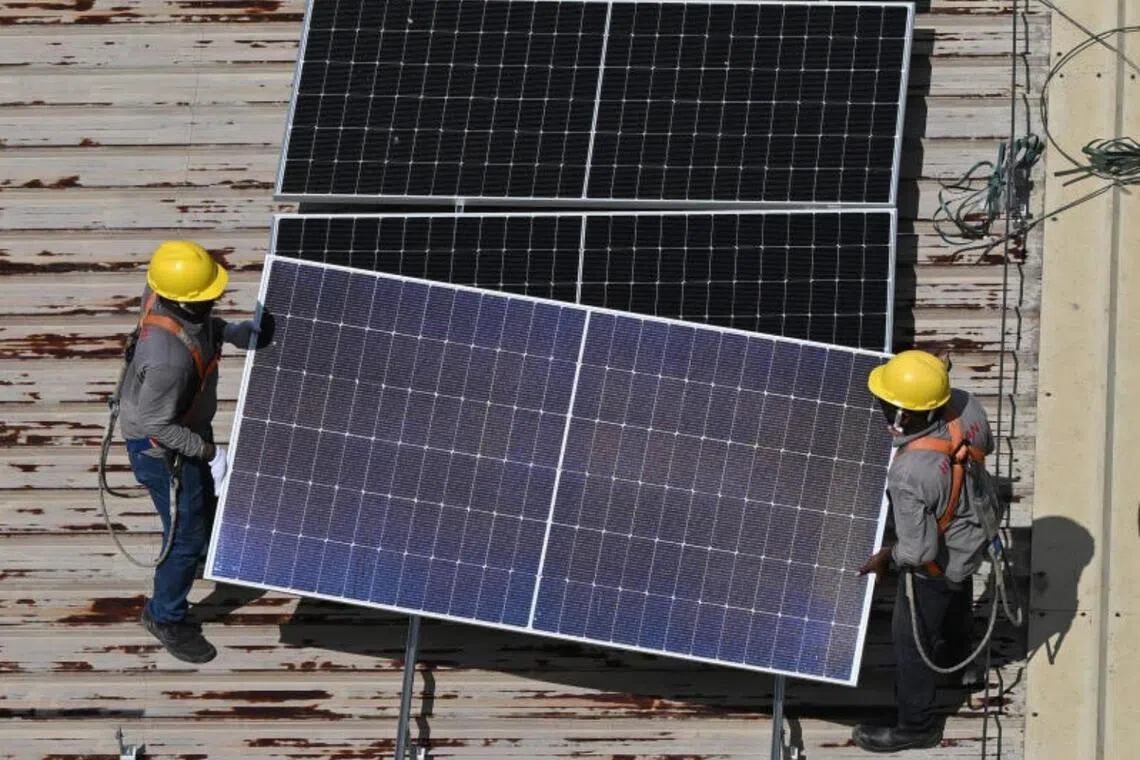
Solar panels can help households reduce their electricity bill by generating their own electricity and selling any excess energy back to the grid.
PHOTO: ST FILE
What happens to solar electricity I generate but do not use?
Homeowners can use solar power for all activities requiring electricity during the day but will still need to draw power from the grid after sundown.
Excess electricity generated in the daytime that is unconsumed can be sold back to the grid, says EMA.
Homeowners buying electricity from SP Group may do so under the Simplified Credit Treatment Scheme (SCT), and those buying from other retailers under the Enhanced Central Intermediary Scheme (ECIS).
Under the SCT, homeowners will be paid based on the prevailing electricity regulated tariff minus grid charges. Under the ECIS, homeowners will be paid based on the prevailing half-hourly wholesale electricity prices.
Selling excess solar-generated electricity can help to offset nighttime electricity costs. Andrew sells his excess electricity to SP Group under the ECIS.
In September, his system generated over 6,700 kWh of electricity. He uses around 2,200 kWh of electricity a month, of which around 900 kWh is used in the daytime – which can be directly drawn from the system.
This means that he can sell 5,800 kWh of electricity back to the grid in a month, which will earn him over $800 even after accounting for his 1,300 kWh of nighttime electricity use.
According to EMA data, landed homes in Singapore use an average of 1,175 kWh of electricity per month.
What are the upfront costs involved? Are there any other longer-term costs I should be aware of?
The exact cost of installation depends on the size of the solar PV system and how it is deployed, such as on the roof or integrated into the building facade, says EMA.
Upfront costs typically take up around two-thirds of the cost of a solar PV system, says Reindl. He adds that installation will set owners back around $1,000 to $1,600 per kilowatt peak.
“For a solar PV system, there is no fuel cost as the sun energy is free,” he adds.
Those concerned about high upfront costs can also consider the rent-to-own option, says Reindl. This allows homeowners to pay a monthly fee to rent and maintain their solar PV system. At the end of the rental term – usually around five to ten years – the ownership of the system will then be transferred to the customer.
Reindl says solar PV systems should be maintained every six to 12 months. Maintenance costs are usually around 1 to 2 per cent of the initial installation costs, he adds.
How do I know if my roof is suitable for solar panels, and what the right system size is?
Most rooftops of landed residential properties in Singapore can accommodate solar panels, according to EMA, though steep slopes, complex structures or separate roof sections may limit usable space.
There are also rare instances, Reindl adds, when installation may not be advisable. For example, when a neighbouring house is much taller, shading and limiting the amount of sunlight the roof gets.
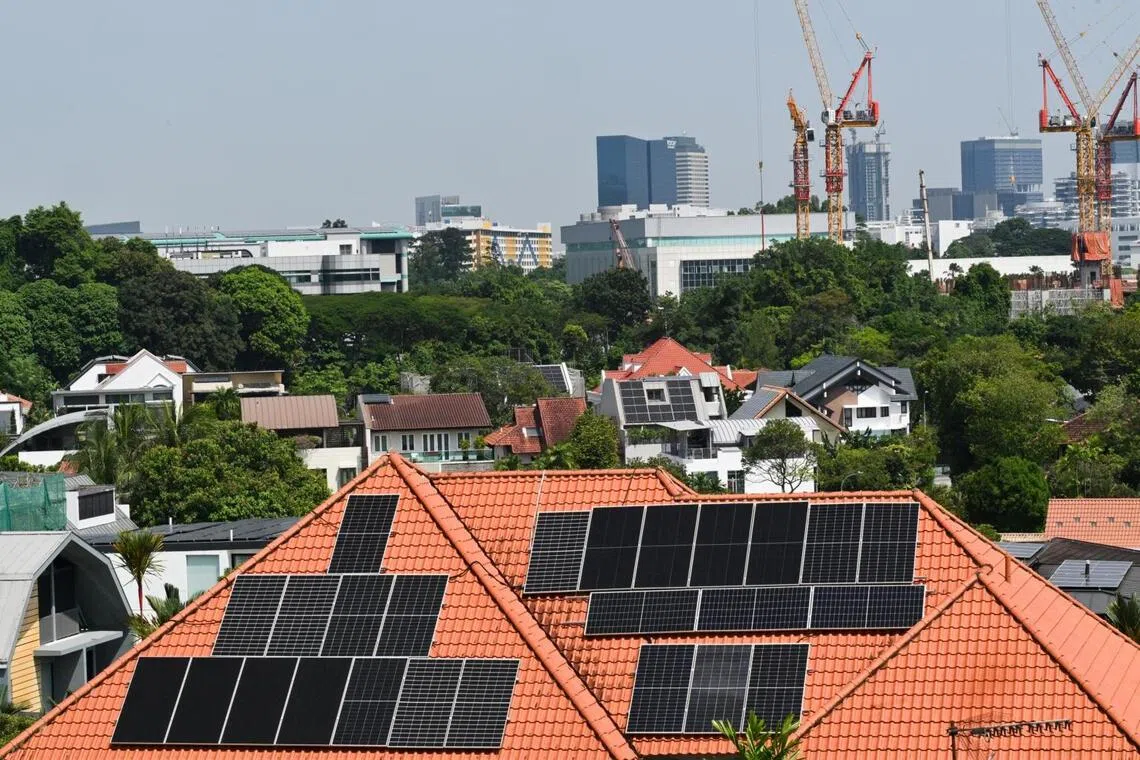
Most residential landed properties in Singapore have roofs that can accommodate the installation of solar panels, says the Energy Market Authority.
PHOTO: ST FILE
Reindl advises interested homeowners to visit the National Solar Repository website, which shows how installations on landed properties are typically deployed.
The NSR site also has resources to help consumers contact installers and compare the cost of generating electricity through solar with the prevailing regulated tariffs.
Will solar panels damage my roof? What maintenance is needed?
Andrew says the solar panels also double as a protective layer for his roof. “The roof doesn’t get direct sun exposure now, so wear and tear will not be that (severe), and any water will drop onto the solar panels rather than directly onto the roof before going into the drain,” he says.
His installer estimates yearly maintenance of the PV system to be around $1,000.
Aside from cleaning, maintenance should include checking cables and connections, and possible obstruction from nearby trees, says Reindl.
More important, he adds, are regular checks of the system’s performance data to assess if there are any issues with the solar PV system and whether it is under-performing.
What should I look out for when choosing an installer?
EMA advises homeowners to compare quotations from different solar vendors and check that only qualified professionals will be engaged to support the proper installation and connection of the solar PV system. Homeowners can find more information on the EMA website.
In Andrew’s case, he reached out to two installers, including one that had left a leaflet advertising its services in his mailbox. He compared the two and went with one that was more experienced, and were also roof specialists. The company also installed solar PV systems for three of his neighbours.
Reindl says checking an installer’s track record is important. “Don’t be shy to give previous clients of the company you intend to work with a call,” he says.
“This is a major decision that will last with the house for over 20 years.”
KioskNews shows a cleaned-up reading view extracted from the publisher’s page — the original always lives on their site, not ours.