The 8 Best Soft Sci-Fi Movies in Film History

Luc Haasbroek is a writer and videographer from Durban, South Africa. He has been writing professionally about pop culture for eight years. Luc's areas of interest are broad: he's just as passionate about psychology and history as he is about movies and TV. He's especially drawn to the places where these topics overlap.
Luc is also an avid producer of video essays and looks forward to expanding his writing career. When not writing, he can be found hiking, playing Dungeons & Dragons, hanging out with his cats, and doing deep dives on whatever topic happens to have captured his interest that week.
Sign in to your Collider account
The label 'soft sci-fi' refers to sci-fi stories that shift the focus away from strict scientific plausibility and instead place a premium on people, culture, and society. They're not that interested in explaining the nitty-gritty of their advanced tech or alien creatures. The speculative elements exist to bring out the themes or reveal something about human nature.
With that in mind, this list looks at some of the best movies in this subgenre, from intimate romances grand to space operas, the wacky time-travel of Back to the Future to the existential cybernoir of Blade Runner. Bangers, all.
8 'Eternal Sunshine of the Spotless Mind' (2004)

“Meet me in Montauk.” Although this one has a speculative premise involving fictional technology, it's really a story about relationships. After discovering that his former girlfriend Clementine (Kate Winslet) has undergone a procedure to remove her memories of their relationship, main character Joel (Jim Carrey) decides to do the same. Most of the film then unfolds inside his collapsing memories as the procedure progresses, which writer Charlie Kaufman and director Michel Gondry (both masters of the offbeat) cleverly present in non-linear order.
Joel revisits arguments, disappointments, tenderness, embarrassment, and ordinary moments that seemed insignificant when they happened. In the process, he begins to realize that losing the painful parts of the relationship also means losing everything meaningful about it. As a result, Eternal Sunshine of the Spotless Mind winds up being a madcap but surprisingly touching psychodrama.
7 'Her' (2013)

“The heart's not like a box that gets filled up. It expands in size the more you love.” This is one of the most perceptive movies ever made about AI, precisely because it avoids the usual Skynet-like 'evil robot' storyline. Instead, we get something more wistful and intimate. Joaquin Phoenix leads the cast as Theodore Twombly, a lonely writer living in a near-future Los Angeles who installs an advanced operating system that names herself Samantha (voiced by Scarlett Johansson).
Samantha learns extraordinarily quickly, developing curiosity, humor, insecurity, desire, and an increasingly complex relationship with Theodore. Director Spike Jonze refuses to treat that romance as a simple joke about a man falling in love with his computer. Ultimately, Her paints a compellingly prescient picture of isolation in the digital age, as well as a cautionary tale about the inability of any machine to truly replicate human connection.
6 'Back to the Future' (1985)
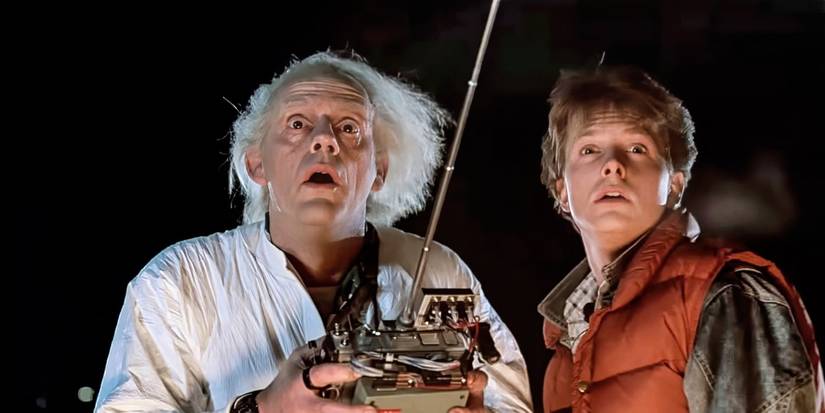
“Roads? Where we're going, we don't need roads.” Back to the Future devotes remarkably little effort to making time travel scientifically credible. Doc Brown (Christopher Lloyd) invents the flux capacitor after hitting his head on a bathroom sink, installs it inside a DeLorean, and discovers that traveling through time requires reaching 88 miles per hour. That's essentially all audiences need to know, because director Robert Zemeckis understands that explaining the physics would only slow down the endlessly entertaining, ingeniously constructed plot.
The solution requires our likable hero Marty McFly (Michael J. Fox) to play matchmaker for two teenagers who will eventually become his own mother and father, while simultaneously finding enough power to return home. The time travel itself makes no real sense and functions more like something out of a fairy tale than a typical sci-fi flick, but that's all part of the charm.
5 'Stalker' (1979)
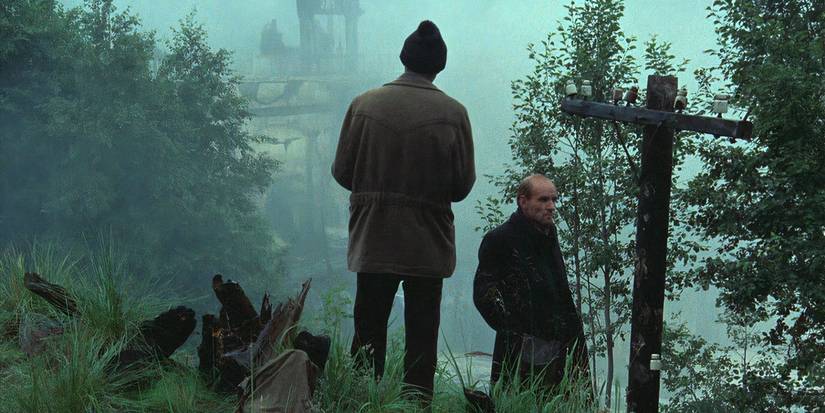
“Everything that comes true is an expression of your true wishes.” This cryptic gem from Andrei Tarkovsky bears some sci-fi trappings, but approaches them with a meditative sensibility. In Stalker, three men (Alexander Kaidanovsky, Anatoly Solonutsyn, and Nikolai Grinko) are sent into an eerily abandoned landscape known as the Zone, where the normal rules of reality may no longer apply. The Stalker makes his living illegally guiding people into this forbidden territory.
His latest clients are known simply as the Writer and the Professor, both of whom want to reach a mysterious Room supposedly capable of granting a person's deepest desire. Their journey gradually becomes less about reaching a physical destination than confronting what each man actually believes. In other words, this is philosophical sci-fi where clear answers are in desperately short supply. It's poetic and elliptical, leaving the viewer to draw their own conclusions.
COLLIDERInteractive
Long-range scan active
Movies/Science Fiction/Survival Assessment
Collider Survival Assessment
Which Sci-Fi World
Would You Survive?
8 questions · 5 worlds · one honest verdict
Five of the great screen futures, and not one of them is built for comfort. Answer eight questions about instinct, loyalty and the line you would cross, and the scan will tell you which one you would still be standing in. Worlds in range
▦︎The Matrix
◈︎Mad Max
◑︎Blade Runner
▲︎Dune
✦︎Star Wars
Signal lock01 / 08
Question 01 of 08INSTINCT
The world as you know it ends overnight. What is your first move? No wrong answer. There is a wrong hesitation.
Keys 1 to 5 or A to E · Enter to advance
Signal lock02 / 08
Question 02 of 08RESOURCE
You can stockpile exactly one thing. What is it? Choose carefully. You are not getting a second run.
Keys 1 to 5 or A to E · Enter to advance
Signal lock03 / 08
Question 03 of 08THREAT
Which kind of enemy scares you the most? Be honest about what keeps you up.
Keys 1 to 5 or A to E · Enter to advance
Signal lock04 / 08
Question 04 of 08AUTHORITY
How do you handle the people in charge? Every world has them. Even the ones that pretend otherwise.
Keys 1 to 5 or A to E · Enter to advance
Signal lock05 / 08
Question 05 of 08ENVIRONMENT
Pick the place you would rather wake up in: You will be there a while.
Keys 1 to 5 or A to E · Enter to advance
Signal lock06 / 08
Question 06 of 08ALLIANCE
Who do you want standing next to you? Pick one. You only get one.
Keys 1 to 5 or A to E · Enter to advance
Signal lock07 / 08
Question 07 of 08MORALITY
Which line would you cross to survive? Everybody crosses one.
Keys 1 to 5 or A to E · Enter to advance
Signal lock08 / 08
Question 08 of 08PURPOSE
What are you really fighting for? Last question. Make it count.
Keys 1 to 5 or A to E · Enter to advance
Scan completeYou would survive
▦︎ The Matrix The Resistance, Zion You take the red pill, you stay in Wonderland, and I show you how deep the rabbit hole goes.
You would survive The Matrix because you were never fully sold on the version of reality you were handed. You notice the seams. You ask the second question. In a world built to keep people comfortable and incurious, that instinct is the whole fight, and it is why Morpheus would have found you long before you found him. From the Collider file
- The Wachowskis' 1999 film won four Academy Awards, including Visual Effects and Film Editing.
- Bullet time was shot with a rig of roughly 120 still cameras firing in sequence around the actors.
- Keanu Reeves trained in martial arts for about four months before a frame was shot, recovering from neck surgery the whole time.
- It opened the same year as Fight Club and eXistenZ, in a run of films about not trusting the world in front of you.
Red pill energy Pattern spotter Built to question
◈︎ Mad Max The Wasteland Oh, what a day. What a lovely day.
You would survive the Wasteland because you do not waste energy mourning the world that ended. You move, you improvise, and you are very good with whatever is bolted to the thing in front of you. Furiosa would let you drive. That is not a compliment anybody earns easily. From the Collider file
- Mad Max: Fury Road won six Academy Awards in 2016, more than any other film that year.
- George Miller storyboarded the entire film as roughly 3,500 panels before there was a script.
- The chase was shot almost entirely practical in the Namib Desert, with real vehicles and real stunt performers.
- Anya Taylor-Joy and Chris Hemsworth carried the prequel, Furiosa: A Mad Max Saga, in 2024.
Keeps moving Improviser Good with engines
◑︎ Blade Runner Los Angeles, 2049 All those moments will be lost in time, like tears in rain.
You would survive 2049 because you know how to be small in a very loud city. You keep your head down, you do the job, and you hold onto one private thing that belongs only to you. That quiet stubbornness is exactly what both Deckard and K run on, and it is what keeps either of them going when the case stops making sense. From the Collider file
- Blade Runner 2049 won Roger Deakins his first Oscar for cinematography, on his fourteenth nomination.
- The film also took Best Visual Effects, 35 years after Ridley Scott's 1982 original.
- Villeneuve shot it on large-format film and kept the fog and rain practical on set wherever he could.
- Three short films by Luke Scott and Shinichiro Watanabe bridge the 30-year gap between the two movies.
Keeps her head down Private Noir soul
▲︎ Dune Arrakis Fear is the mind-killer. Fear is the little-death that brings total obliteration.
You would survive Arrakis because you think in decades while everyone around you thinks in weeks. You read the room, you learn the customs, you wait. The desert does not reward speed. It rewards people who understand that patience is a weapon, which is the one lesson the Fremen never had to be taught. From the Collider file
- Denis Villeneuve's Dune won six Academy Awards in 2022, including Cinematography and Original Score.
- Hans Zimmer turned down Christopher Nolan's Tenet so he could score Dune instead.
- Dune: Part Two arrived in 2024 and brought in Austin Butler, Florence Pugh and Christopher Walken.
- David Lynch's 1984 version and Alejandro Jodorowsky's unmade one are both their own legends by now.
Plays the long game Reads the room Patient
✦︎ Star Wars A Galaxy Far, Far Away Rebellions are built on hope.
You would survive the galaxy because you never try to survive it alone. You collect people. You end up in the middle of other folks' problems and you stay anyway. Every version of this story, from the Falcon's crew to the Ghost's, runs on somebody exactly like that holding the group together. From the Collider file
- The 1977 original won six Academy Awards plus a special achievement award for sound effects.
- John Williams' score was recorded by the London Symphony Orchestra and became the best-selling symphonic film soundtrack ever.
- Andor took the galaxy somewhere colder and earned Emmy nominations for drama series in both seasons.
- The saga now runs across eleven feature films and a growing shelf of series on Disney+.
Collects people Shows up Hope merchant
Compatibility readout · top three
1
2
3
Copied to your clipboard
Scan filed byCOLLIDERCollider.com · The Sci-Fi Desk
4 'Dune: Part One' (2021)

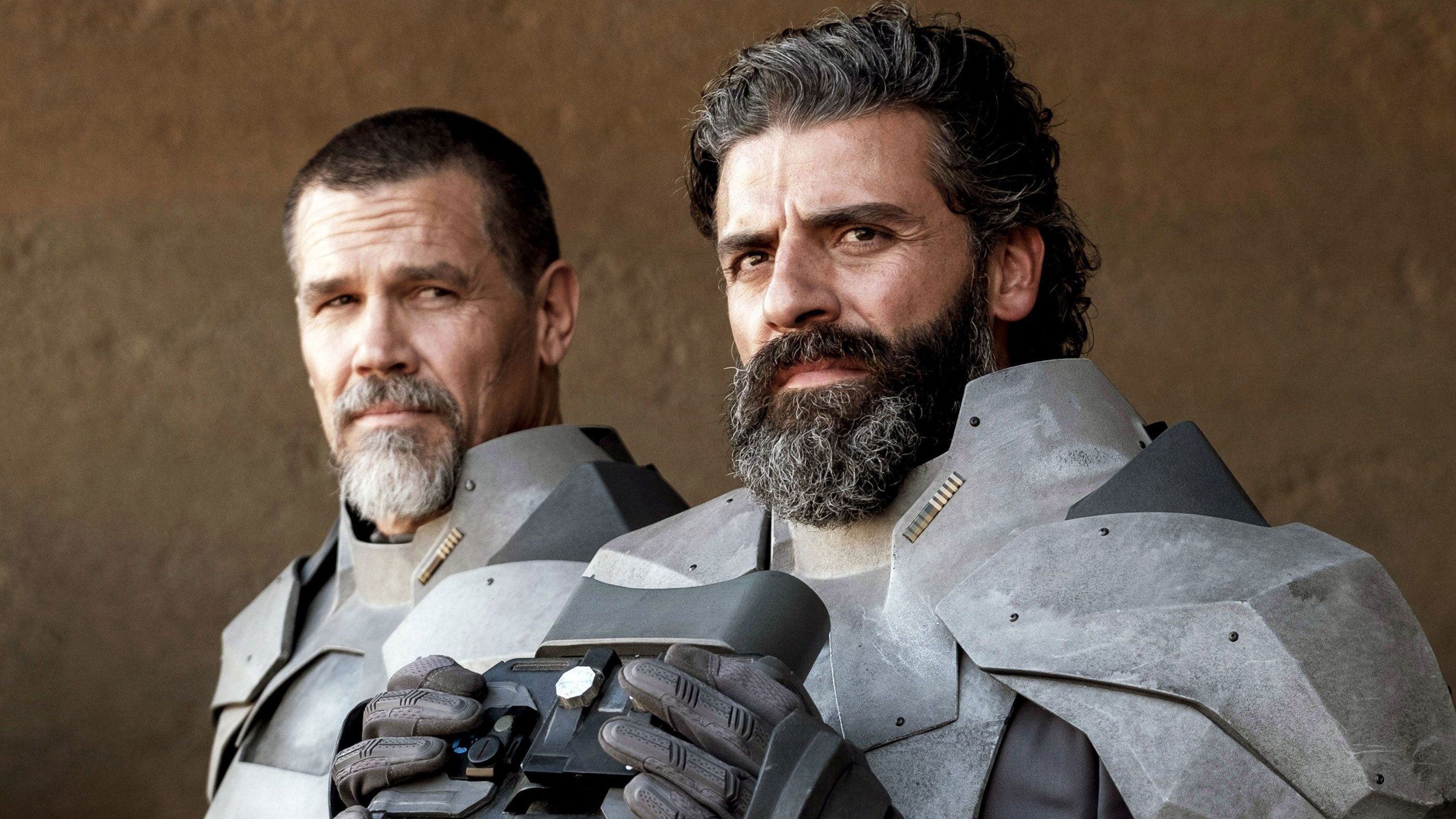
“Dreams make good stories, but everything important happens when we're awake.” The original Dune novels are landmarks of soft sci-fi, almost science fantasy, really, and Denis Villeneuve did a great job of carrying that over to his film adaptations, while still making them feel modern. He weaves a colorful, thematically rich tale of prophecy and personality cults, focused on Paul (Timothée Chalamet), the scion of House Atreides, ordered to take control of Arrakis.
Although the story takes place in a far-flung future, the vibe is mythological rather than coldly high-tech. (Indeed, we don't see any digital devices at all). We get grnithopters, shields, spice harvesting machines, and interstellar travel, but the movie doesn't get bogged down in explaining how it all works. Instead, the emphasis is on imperialism, political manipulation, ecological exploitation, religion, and Paul's growing awareness that the visions surrounding him may have horrifying consequences.
3 'The Matrix' (1999)
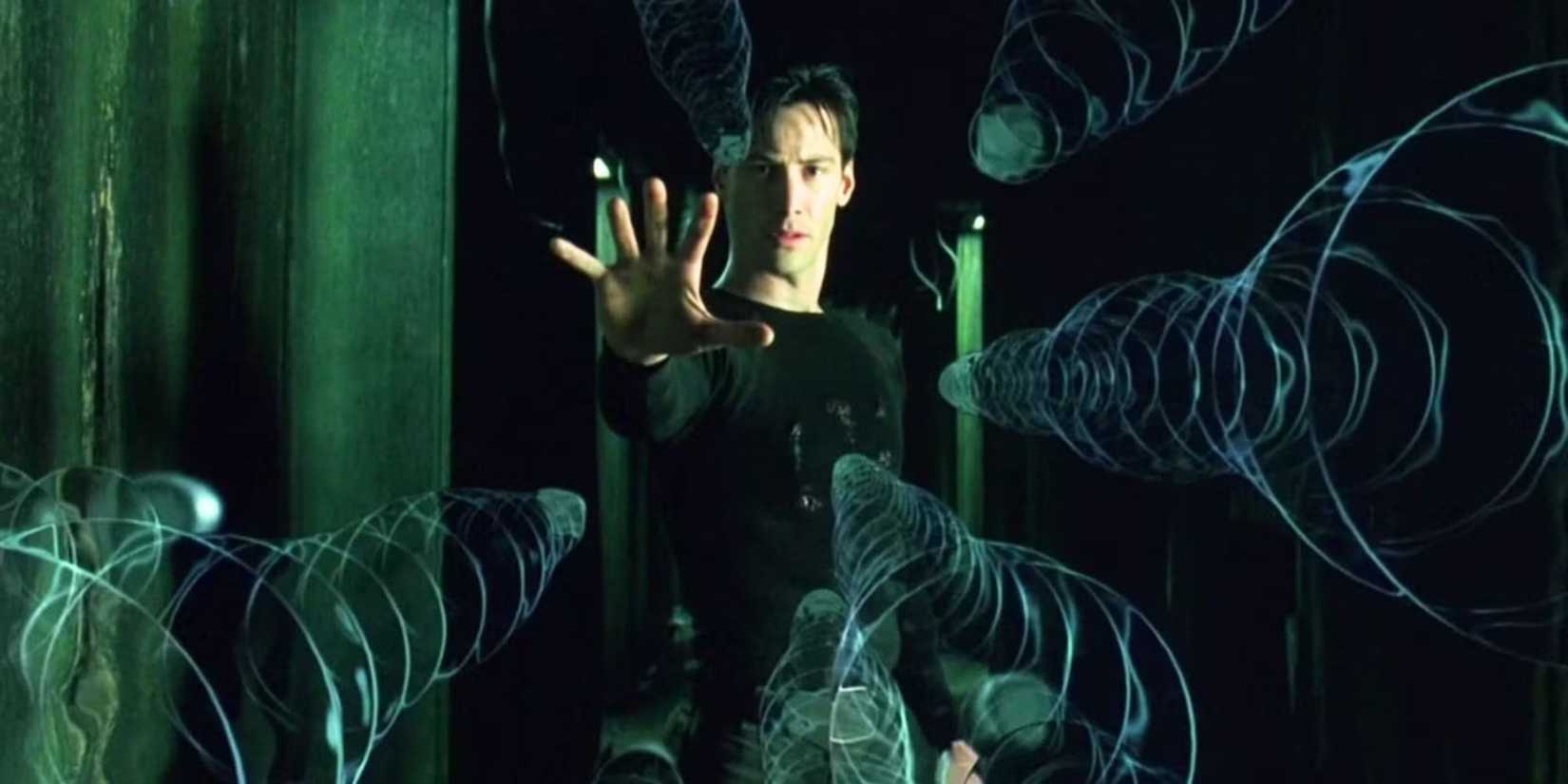
“Unfortunately, no one can be told what the Matrix is. You have to see it for yourself.” The Matrix contains enough philosophy, martial arts, cyberpunk imagery, religious symbolism, and leather coats to fuel decades of interpretation. Keanu Reeves turns in perhaps his most iconic performance as Neo, a programmer who learns that humanity has been imprisoned by machines inside a simulated reality, all so they can be exploited for the machines' ends.
It's a killer premise that draws on real problems from philosophy, which the Wachowskis gleefully fuse with ideas borrowed from anime, Hong Kong action cinema, cyberpunk literature, and mythology. So much of the movie has become world-famous (like the red and blue pills), and its vision of a future where people live entirely in an online, digital world manipulated by bots now feels uncomfortably close to home.
2 'The Empire Strikes Back' (1980)
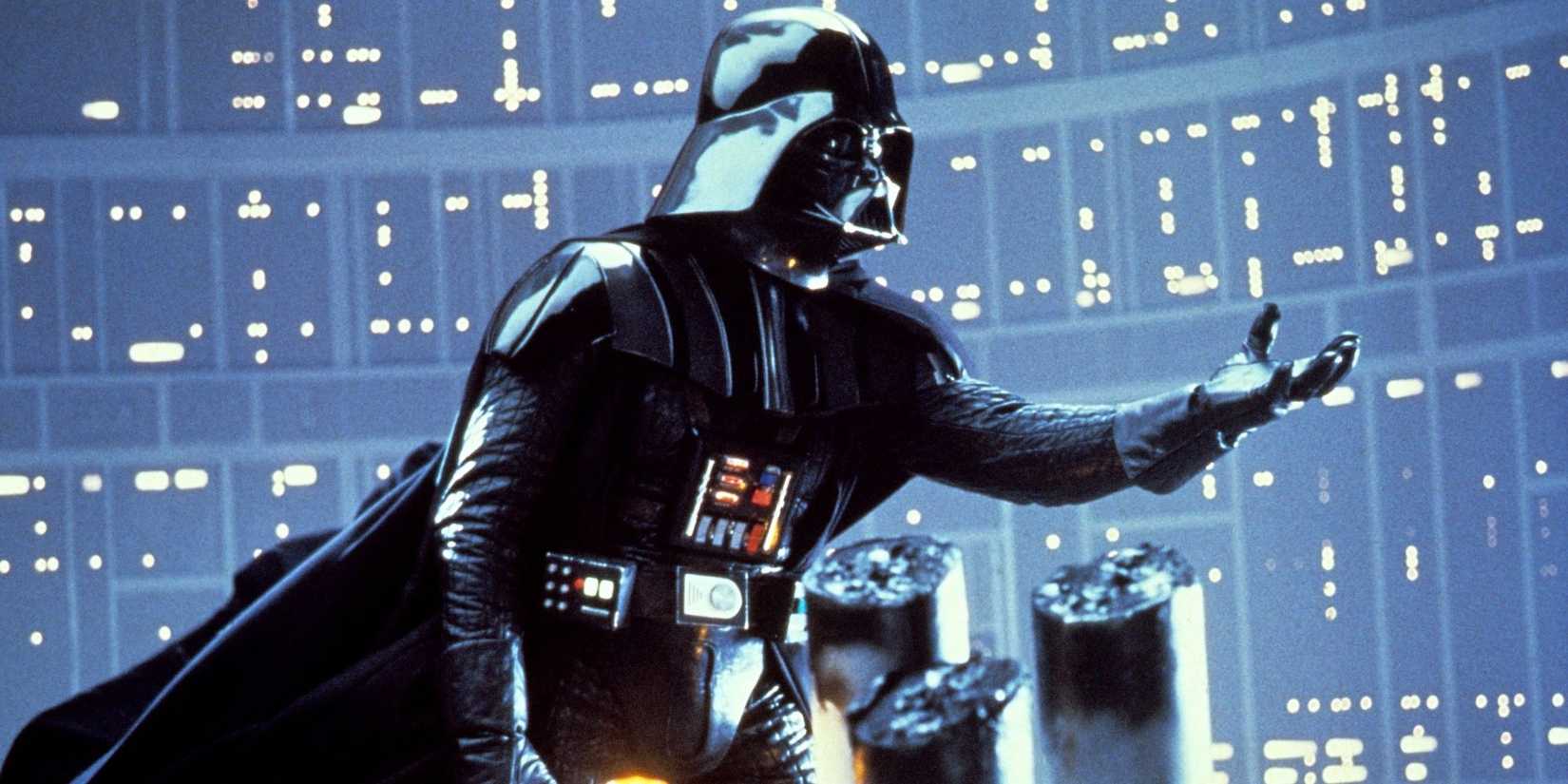
“Do. Or do not. There is no try.” Few sequels build so well on their predecessor's foundation. A New Hope gave us a galaxy of Jedi, droids, smugglers, and impossible spacecraft, and The Empire Strikes Back gave those ideas a darker, deeper treatment. Here, the heroes lose repeatedly, and those failures make their eventual journey more meaningful. After the Rebel Alliance is driven from its base on Hoth, the central characters are separated.
Han (Harrison Ford) and Leia (Carrie Fisher) flee the Empire aboard the Millennium Falcon while Luke (Mark Hamill) travels to Dagobah to train under Yoda. Again, the aesthetic verges on science fantasy. Faster-than-light travel, giant walking tanks, artificial intelligence, and inhabited asteroid fields exist alongside the mystical Force. What matters is how those elements serve the characters. Then comes one of cinema's most famous revelations, completely altering Luke's understanding of both his enemy and himself.
1 'Blade Runner' (1982)

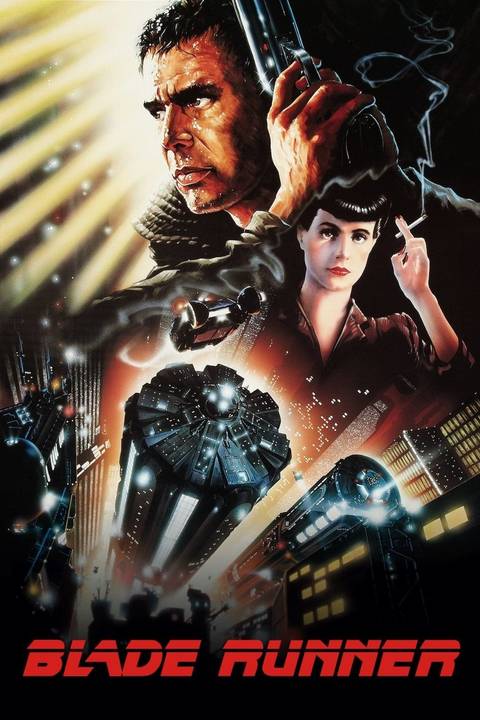
“It's too bad she won't live! But then again, who does?” The plot of Blade Runner has noir bones in a futuristic skin: former police officer Rick Deckard (Harrison Ford) is tasked with hunting replicants, bioengineered beings created for dangerous labor and prohibited from living on Earth. This mission unfolds in a future overflowing with extraordinary technology, yet Ridley Scott is far less interested in how any of it works than in atmosphere and theme.
The key question is: what does humanity mean once technology can reproduce something almost indistinguishable from a person? That idea turns a noir detective story into one of the most haunting sci-fi movies ever made. A big part of that is thanks to Rutger Hauer's brilliant performance as replicant leader Roy Batty. Roy is frightening, charismatic, and ultimately deeply tragic, making this a story of ideas rather than gadgets.
Blade Runner
- Release Date
- June 25, 1982
- Runtime
- 118 minutes
- Director
- Ridley Scott
- Writers
- David Webb Peoples, Hampton Fancher, Philip K. Dick
KioskNews shows a cleaned-up reading view extracted from the publisher’s page — the original always lives on their site, not ours.