Finding Roger Davies: how one sister’s search for her long lost brother unearthed a state’s destitute burial failures
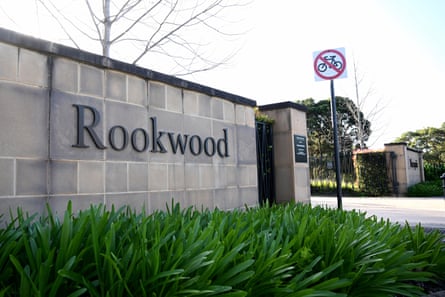
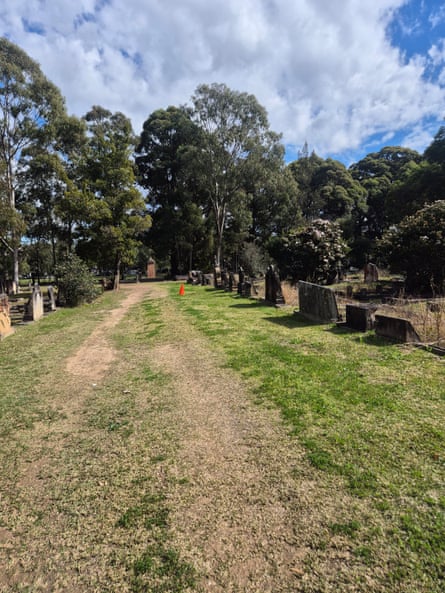
In a quiet corner of Rookwood cemetery, a grassed walkway meanders between two rows of old headstones. There’s nothing conspicuous about the spot. The grass is kept freshly trimmed.
There is no sign to warn passersby to keep off the long stretch of green, and nothing to suggest what might lay beneath.
In October 2015, at this very spot, Roger Davies and four others were buried in a communal plot by the New South Wales government. The four strangers were deemed unable to afford their own funeral, a designation that gave the state responsibility for their remains.
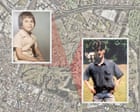
Two years ago the Guardian reported on Davies – a rough sleeper whose body lay forgotten in an abandoned house in Sydney for three years before it was discovered in 2015.
He was a key case study in our Out in the Cold investigation, and his story exposed several failings by authorities.
Davies’ family were told nothing of his death for more than two years after his body was found, neither by police nor by the state government.
A postmortem found he had sustained fractures to nine ribs about the time of his death but, despite this, police records show officers formed the opinion there was “no evidence of suspicious circumstances” and decided he had overdosed. There was no record of drug paraphernalia being found with him.
Police knew Davies was from Adelaide and had the names and dates of birth of his brother and sister, but documents suggest they first called their counterparts in South Australia seeking a family contact number on 20 November 2017.
“He had been put in a pauper’s grave by the time we found out … before we even found out that he was deceased,” Davies’ sister Chantel Dubsky told the Guardian at the time.
Dubsky had no idea where her brother had been buried.
“There was no closure, there’s never going to be any closure,” she said. “And up until now with you, there’s no one who’s cared.”
This year, as part of the Unmarked graves investigation, the Guardian found Davies’ final resting place – at Rookwood Cemetery in western Sydney.
The government didn’t mark his grave, or the many others along the same stretch of grass, despite a 2013 promise that it would do so. We found his burial record in the cemetery’s online registry.
His surviving family were never told he was there nor that he had been buried with four others.
Davies should not have been placed in the communal grave.
The NSW government is supposed to do everything in its power to find relatives, friends and organisations associated with the deceased, to check whether they wanted to pay for or crowdfund for a cremation or burial.
His sister is alive and well in Adelaide. Police in NSW had found a DNA match from Davies’ remains, confirming his identity. But she only learned of his fate after he was buried.
“We would have had him cremated and brought back to Adelaide,” she says. “We weren’t even given that opportunity. Why?
“It’s unspeakable. He shouldn’t be there in the first place. He should have had the opportunity to be laid to rest with his mother, his grandparents and the people he loved, at his home in Adelaide.”
Her two sons – James, 18, and Lucas-Jòsef, 15 – say they were robbed of an opportunity to get to know their uncle Roger because he was denied safe housing and died a premature death while sleeping rough.
Now they are dealing with the shock of realising that a state government has buried him in an unmarked communal grave.
This failing is not isolated.
A three-month investigation by Guardian Australia has found repeated instances of NSW authorities failing to give friends, family and organisations associated with the deceased the proper chance to fund a burial or cremation. It has instead sent them into communal unmarked graves.
Using evidence from homelessness workers, analysis of cemetery registries and satellite imagery, the Guardian has established that at least 18 clients of Sydney homelessness services have been put in the graves since 2016.
after newsletter promotion
Leaders within the sector say they were not given the opportunity to intervene and pay.
“The sector has never been made aware of this practice,” one homelessness service manager says. “Words that come to mind are diabolical, medieval, unacceptable. These people deserve the same dignity and care at their end of life that I would expect for myself or my loved ones.”
Davies was a client of St Vincent de Paul Society’s Mathew Talbot Hostel in Woolloomooloo.
In his case in 2015, NSW police held responsibility for finding next of kin.
A spokesperson for the police said they made repeated attempts to contact several of Davies’ family members after his death but could not because “the personal details for the man’s family were not current at the time”.
“In August 2015, a destitute burial form was submitted to the NSW Coroner’s office which was accepted [and] the man’s remains were laid to rest,” a police spokesperson said.
“In November 2017, police received updated contact information for the man’s next of kin and they were subsequently informed of his death.”
NSW Health is now responsible for the destitute burial process, either through its local health districts or pathology team, depending on the circumstances of the death.
Health workers will sometimes still involve police in the effort to find family, friends and organisations associated with the deceased before going through with the destitute burial process.
In Victoria, new and more effective means of finding relatives are available, which rely on a combination of DNA sampling and the use of international genealogy databases. The state does not use communal or unmarked graves.
Dr Dadna Hartman, the manager of the molecular biology laboratory at the Victorian Institute of Forensic Medicine, says it has a dedicated team for working on cases in which the identity of human remains cannot be confirmed or when a next of kin cannot be found.
The working group, including DNA experts and other forensic specialists working with police, first collects forensic evidence and conducts DNA comparisons against state and national databases.
If there is still no match, they can opt for a process known as forensic investigative genetic genealogy (Figg), where the sample from the unknown remains is compared against international direct-to-consumer genealogy databases, which are used by the public to study their ancestry or genealogy.
“Figg is an expensive, and quite resource intensive investigative tool, so we only consider its application when we’re at the end of the line, when you have done everything you can to identify these individuals,” Hartman says.
“Once you’ve exhausted all those avenues, and still can’t identify those individuals, that’s when you may turn to Figg.”
Hartman says whenever the institute handles a case, it now keeps a DNA sample, meaning such a sample is on file if further analysis is needed.
But Figg could also be used to analyse and develop an identification lead for people previously buried unidentified in paupers’ graves.
In such cases, Hartman says, families may wish to mark the grave with something that identifies their loved ones or for the remains to be moved to a different plot.
In the case of the so-called Sandy Point man, another case that used Figg to identify a skeleton discovered in 2017 as belonging to a man who died from drowning in 1928, his family were grateful to be able to lay him to rest.
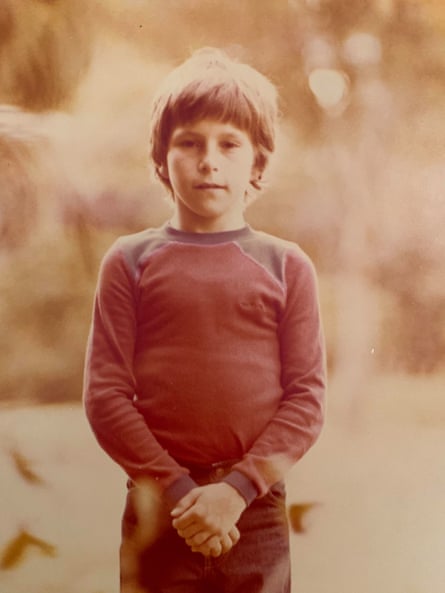
Dubsky remembers her brother as kind and protective. She says he lost his way after family trauma and being discharged from the military.
“He wasn’t just someone off the street, he was someone’s son, he was someone’s brother,” she says. “He was my brother.”
KioskNews shows a cleaned-up reading view extracted from the publisher’s page — the original always lives on their site, not ours.