New internship programme aims to draw more young Singaporeans into hawker trade
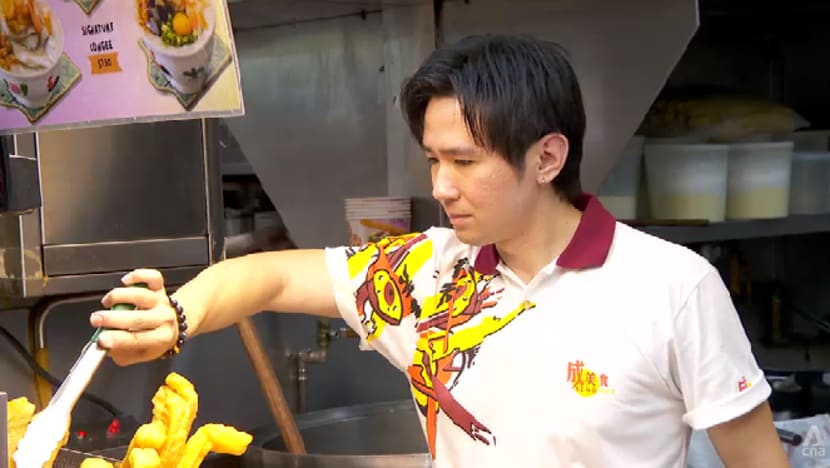
Students from ITE and Temasek Polytechnic will get hands-on experience at hawker stalls under a new initiative set to begin in April 2027, as part of efforts to preserve Singapore's hawker culture.
New: You can now listen to articles.

This audio is generated by an AI tool.


12 Nov 2026 07:06PM
SINGAPORE: Young Singaporeans will have the opportunity to learn how to run hawker stalls under a new internship and apprenticeship programme aimed at attracting more people to the trade and sustaining it for future generations.
The initiative, targeted to begin in April 2027, is part of a three-year agreement signed on Wednesday (Nov 11) between the Institute of Technical Education (ITE), Temasek Polytechnic and Hawkers of Food Centres, a non-profit society that promotes Singapore's hawker culture.
Students will receive hands-on training under the guidance of experienced hawkers, with participating stallholders paying interns an allowance. The programme's details are still being finalised.
A TASTE OF HAWKER LIFE
Mr Cornelius Tan, a founding member of Hawkers of Food Centres, said internships followed by apprenticeships after graduation could help students transition into the hawker trade.
Speaking on CNA's Singapore Tonight programme, he said the initiative would give students a better understanding of the demands of the business.
"This will also give them more peace of mind and a more steady path towards success," he said, adding that such support could also give parents greater confidence in their children's career choices.
Mr Tan said an internship would not be enough for students to master a dish, but could help them become familiar with how hawkers work.
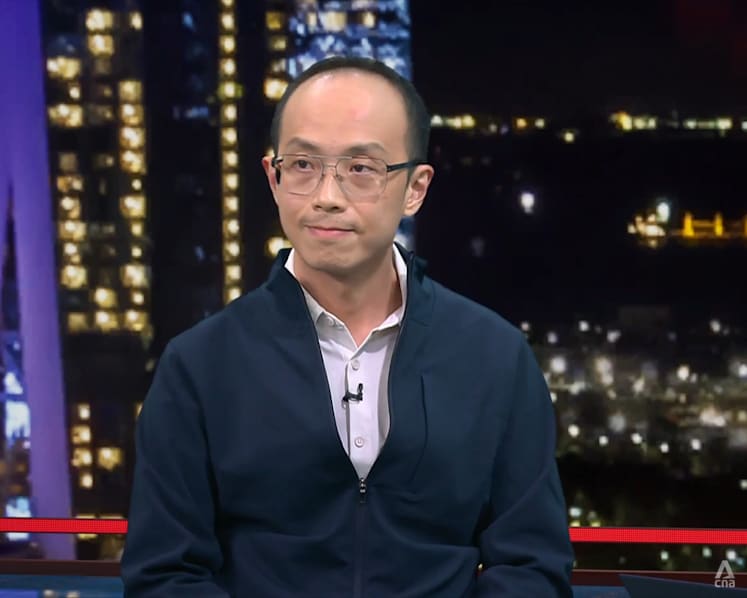
"They will be able to understand the culture … one day when they feel that they have this passion to really spin off as a hawker, they are ready to do it," he said.
He noted that aspiring hawkers often lack practical knowledge of running a stall, including how much food to prepare and how many customers to expect.
Experienced stallholders can help guide them through these challenges and teach them how to manage their businesses, he added.
"We will be able to guide them to say, perhaps this is the formula, just go with this and you will be able to craft something of your own," he said.
Mr Tan, who runs Chai Wee Cuttlefish at Chinatown Complex, said he is willing to take on an intern and that other hawkers are also keen to participate.
LEARNING TO RUN A VIABLE BUSINESS
Beyond preparing food and managing daily operations, young hawkers also need to learn how to make their businesses financially sustainable, Mr Tan said.
He noted that they may have mortgages as well as expenses to pay, and advised them to offer food at different price points, ranging from budget to premium options.
"This is normally what we advise young hawkers to do, so that when customers come, they have a choice," he said, adding that different price points also help hawkers boost earnings.
Such practical guidance could help young entrants avoid common mistakes as they establish themselves in the trade, he added.
Mr Melvin Chew, owner of Jin Ji Teochew Braised Duck and Kway Chap, also at Chinatown Complex, welcomed the new programme, saying younger hawkers need guidance from those with experience.
"You need … someone to guide you in terms of teaching you how to cook and the experience of running a hawker (stall). So I think it's quite meaningful and useful," he said.
Ms Faye Sai, a third-generation hawker and co-owner of Coffee Break, a family-run coffee and toast business, described the initiative as a significant step.
However, she said manpower remains a major challenge, with long working hours and the physical demands of the job making it difficult to attract younger workers.
"The youths are our future, and (in) Singapore all we have is our people. If our own people don't support the hawkers, what more can we do?” she asked.
ALL IN THE FAMILY
Keeping the hawker trade alive, however, comes with challenges, even for those taking over established family businesses.
Mr Xander Ng, 31, a second-generation owner of Xin Mei Congee, left his career in the army to join his wife in running her father's porridge business.
His wife had been working long hours, leaving the couple with little time together as a family.
"I felt that every time during the public holidays as well as the weekends, I was always the only one with my son. Back then, we only had one kid," he said.
"One of the pull factors is also that if I (join the) business, I will be able to see her, and then we'll also have off days together."
The couple now have three sons.
Mr Ng initially struggled to gain the respect of long-serving employees, many of whom had worked under his father-in-law.
To overcome this, he worked at the stall every day, taking on tasks that some employees were unwilling to do. He said it took between one and two years to gain their trust.
Mr Ng now oversees operations across the business's outlets and says he has no regrets about his career switch.
"For myself as a millennial, I’ve already seen a lot of first-generation owners close down their shops due to the insufficient capacity to pass down their stores to the next generation," he said.
He believes sharing his experiences on social media could help change perceptions of the trade and encourage more young people to consider it.
PROMOTING HAWKER CULTURE
Not all young Singaporeans are ready to become hawkers, but some are finding other ways to help preserve the culture.
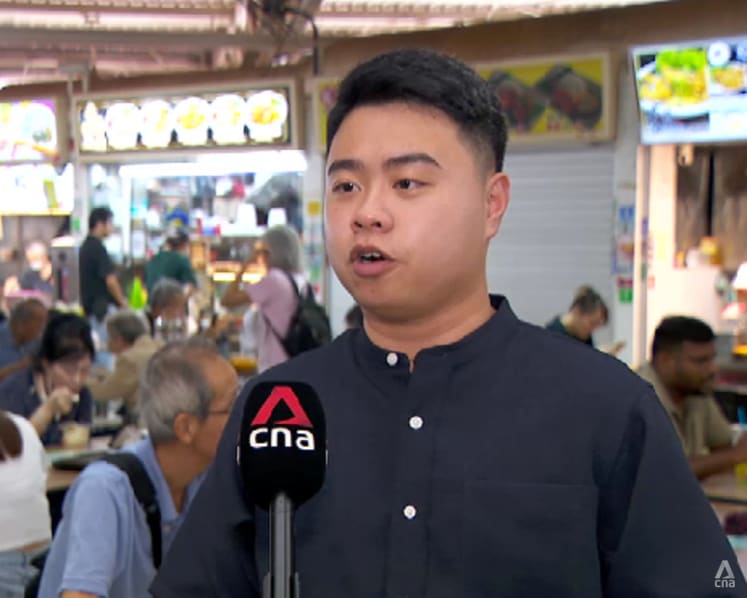
Mr Xavier Ang, 25, whose grandparents once ran a prawn noodle stall at Simon Road, knows the difficulties of keeping a family business going.
His family closed the stall after his grandfather died and his grandmother fell ill.
Although Mr Ang has no immediate plans to enter the trade, he is helping preserve hawker culture by sharing the stories of those who do.
He won first prize in the 2026 "My Favourite Hawker" video competition with a video featuring Xin Mei Congee's Mr Ng.
The competition, held for the first time this year, invited Singaporeans and permanent residents aged 15 to 35 to document their favourite hawkers and their stories.
"Young people like me can easily help to promote the hawker culture by using just their phones and their social media pages to share why they enjoy eating at this place," Mr Ang said.
While he is hesitant about becoming a hawker, he has not ruled out joining his brother in the trade if the latter decides to pursue his interest in cooking.
For Hawkers of Food Centres’ Mr Tan, the rewards of hawking go beyond earning a living.
"Being a hawker is about taking care of the community (and) at the same time, taking care of our business," he said.
"As long as we manage and juggle these two elements well, everybody who sees the effort will come forward to render some form of support. And this is the most beautiful part about being a hawker."
KioskNews shows a cleaned-up reading view extracted from the publisher’s page — the original always lives on their site, not ours.