Record global heat, rising climate risks, finance tensions dominate COP31 day one
The 12 years from 2015 to 2026 are on course to be the warmest on record, with global average temperatures between January and September this year reaching around 1.47°C above the pre-industrial average, the World Meteorological Organization (WMO) said in an update. The WMO’s State of the Climate Update 2026 was released on the opening day of the 11-day 20th UN Climate Change Conference (COP31) in Turkey’s Antalya.
The update said the years 2023-2026 were the four hottest on record, and global ocean heat content is on track to record its 10th consecutive annual high. The global mean sea level has reached its highest point in the satellite record, which began in 1993.
The WMO warned that an intensifying El Niño, a periodic warming of sea surface temperatures that affects rainfall and temperature patterns, is expected to reach significant strength by December. It could further raise temperatures and increase the risks of extreme heat, drought and heavy rainfall well into 2027.
WMO Secretary-General Celeste Saulo said the world was entering an era of increasingly severe climate extremes, with the human and economic costs continuing to rise.
The WMO update underlined the importance of sustained climate observations and early warning systems in helping countries prepare for these growing risks.
Joint presidency, ambitious promise
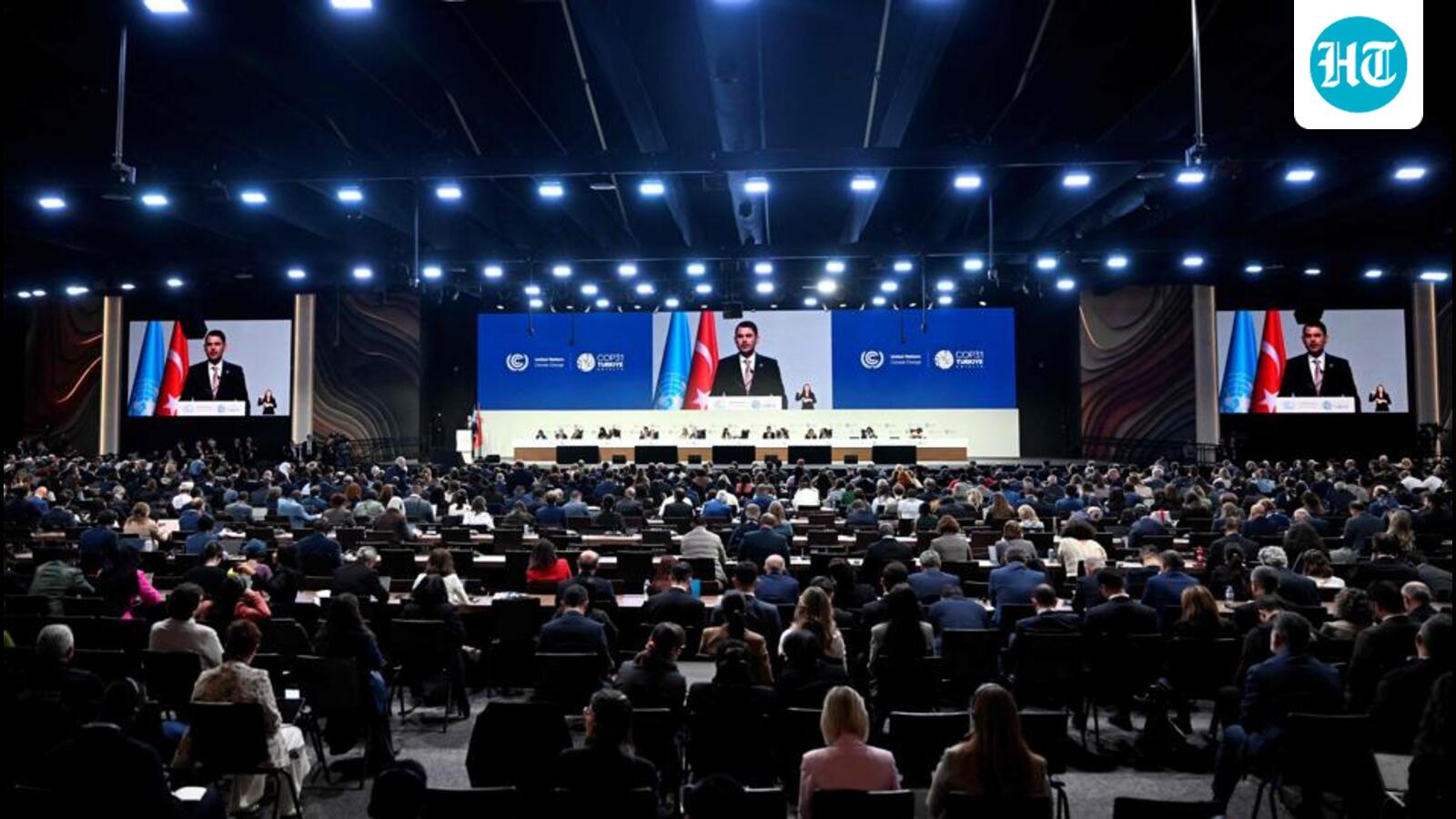
Australia and Turkey took over the COP31 presidency, marking the beginning of an unusual joint arrangement. Turkey is hosting the summit under COP31 President Murat Kurum. Australia’s Chris Bowen will lead the negotiations.
Kurum and Bowen raised their clasped hands together, signalling a united front, following the ceremonial handover from outgoing COP30 president André Aranha Corrêa do Lago.
Beyond the symbolism, the two countries have their work cut out. Kurum said he wants COP31 to be an “implementation COP,” guided by dialogue, consensus and action.
The emphasis is on moving beyond declarations and ensuring existing climate commitments translate into tangible outcomes on the ground.
Kurum said the 1.5°C goal would continue to guide the presidency. He stressed the need to bridge the gap between countries that have access to finance and technology and those that remain vulnerable.
Kurum outlined Turkey’s 35-by-35 Global Electrification Pledge, which seeks to increase electricity’s share of global final energy consumption to 35% by 2035 through renewables, stronger grids, energy storage and clean transport.
UN climate chief Simon Stiell reinforced the implementation message. He said COP31 must supercharge solutions, including faster deployment of renewables, reducing methane emissions and making committed climate finance easier to access.
Climate finance: a sticking point
The first major test for negotiations arose before substantive discussions could gather momentum. The African Group chair and negotiating team spent much of the night working through disagreements around the agenda. The Climate Finance Work Programme eventually made it onto the agreed agenda.
Finance remains one of the biggest fault lines between developed and developing countries. Vulnerable nations are demanding greater support to deal with the impacts of climate change. But questions remain over how existing commitments will be delivered and whether the money will reach countries that need it.
The tripling of adaptation finance particularly remains contentious. Countries are looking for progress on the commitments made under the new climate finance goal agreed at COP29 in Baku of mobilising at least $300 billion annually for developing countries by 2035. This was to be alongside efforts to scale up overall financing to $1.3 trillion annually.
The negotiations will test whether countries can move from broad commitments to clearer mechanisms for delivering funds.
In his opening address, Bowen noted that the countries needing climate finance most often receive the least.
Mountain-specific adaptation finance
On the opening day of COP31, the Nepalese delegation called attention to the devastating consequences of glacial collapse, floods and other climate-related disasters in the Himalayas. Sagar Dhakal, a Nepalese lawmaker, described the scale of the disaster, which left around 10,000 people dead within 10 minutes following the glacier collapse. He said the damage wiped out around 10% of Nepal’s GDP.
Dhakal’s intervention highlighted concerns that the impacts of global warming are not restricted to rising temperatures or sea levels and that mountain countries have repeatedly raised these concerns at international climate negotiations. The retreat of glaciers, unstable mountain slopes and the growing threat of glacial lake outburst floods pose serious risks to downstream communities, infrastructure and economies.
Nepal demanded mountain-specific adaptation finance, stronger early warning systems and greater international recognition of the risks facing high-altitude regions. The issue featured in the opening remarks of Stiell, who referred to the Himalayan tragedy as an example of the mounting human cost of global heating.
Climate ambition coalition warning
The question of whether the world can still limit global warming to 1.5°C, and what happens if it fails to do so, emerged as a defining theme on the opening day of COP31. Bowen acknowledged that the latest science indicated the world would overshoot the 1.5°C threshold. He said it was still possible to return to that level if countries acted with urgency, solidarity and resolve. Bowen pointed to the progress made since the Paris Agreement. He noted that projected warming had declined from nearly 4°C to around 2.6°C, but stressed that much faster action was needed.
Kurum said the 1.5°C goal remained the guiding principle of Turkey’s presidency.
The High Ambition Coalition, an informal grouping of countries pushing for stronger climate action, said the COP31 success would be judged by how effectively it responded to the looming threat of temperature overshoot.
German climate minister Heike Henn stressed the need to listen to science. She added that support for vulnerable countries remained inadequate.
Pacific envoys warned that overshooting 1.5°C was radically different from simply failing to meet the target. They called on countries to accelerate emissions cuts, scale up renewable energy and increase climate finance through regional mechanisms such as the Pacific Resilience Facility. They demanded that oceans receive greater attention in climate negotiations.
For island nations facing rising seas and increasingly severe climate impacts, the distinction is critical. Their message was that the prospect of overshoot cannot become an excuse for slowing down action.
KioskNews shows a cleaned-up reading view extracted from the publisher’s page — the original always lives on their site, not ours.