5 Perfect Children's Books That Became Even Better Movies

Diego Pineda has been a devout storyteller his whole life. He has self-published a fantasy novel and a book of short stories, and is actively working on publishing his second novel.
A lifelong fan of watching movies and talking about them endlessly, he writes reviews and analyses on his Instagram page dedicated to cinema, and occasionally on his blog. His favorite filmmakers are Andrei Tarkovsky and Charlie Chaplin. He loves modern Mexican cinema and thinks it's tragically underappreciated.
Other interests of Diego's include reading, gaming, roller coasters, writing reviews on his Letterboxd account (username: DPP_reviews), and going down rabbit holes of whatever topic he's interested in at any given point.
Sign in to your Collider account
Before the mid-18th century, books were very rarely written to entertain young minds. In the Medieval world, children were expected to enter the adult world quickly; so, texts (whether religious, historical, or fictional) were meant to help their minds come of age. It wasn't until philosophers like John Locke and Jean-Jacques Rousseau began to shift the ideas about childhood that were widely held in Europe at the time that the world began to see the publication of books that were actually meant to amuse children, as well as instill them with valuable moral lessons. Thus, where kids used to only have oral traditions like fables and fairy tales as forms of entertainment, true children's literature was born.
The genre has come an awfully long way since then, all the way until the modern day, when movie adaptations of downright-perfect children's books have become remarkably common. Of course, "the book was better than the movie" is something that is very often heard when speaking about pretty much any page-to-screen adaptation, but there have been five particular films throughout history that have taken children's books that were already perfect, and somehow made them even better. From its inherently visual nature to its tighter structure, there are qualities that only a medium like cinema can provide, and that's how we've gotten masterpieces of the caliber of The Iron Giant or Where the Wild Things Are.
5 'The Iron Giant' (1968)

Published in the United States as The Iron Giant, British writer and poet Ted Hughes' The Iron Man: A Children's Story in Five Nights is one of the best science fiction novels ever written for children. Hughes originally envisioned this modern fairy tale as a bedtime story for his young children, who were having a hard time processing the grief stemming from the 1963 suicide of their mother, legendary poet Sylvia Plath. In the '80s, rock musician Pete Townshend adapted the book in the form of the 1989 concept album The Iron Man: A Musical. The stage production of the rock opera was a mixed bag, but Warner Bros. believed it could make for a fantastic film, and the rest is history.
Beautifully heartfelt and even surprisingly sophisticated in its politics considering its target age demographic.
Brad Bird's The Iron Giant ended up becoming one of the most downright-perfect animated movies of all time, largely a product of Warner granting Bird an almost unprecedented amount of creative freedom in adapting Hughes' book. He took a novella that feels like a timeless parable, a poetic myth, and a deeply moving fairy tale; and he turned it into a masterful study of agency and heroism deeply grounded in 1950s Cold War paranoia. Beautifully heartfelt and even surprisingly sophisticated in its politics considering its target age demographic, it's a must-see for anyone who loves Hollywood animation.
4 'Where the Wild Things Are' (1963)

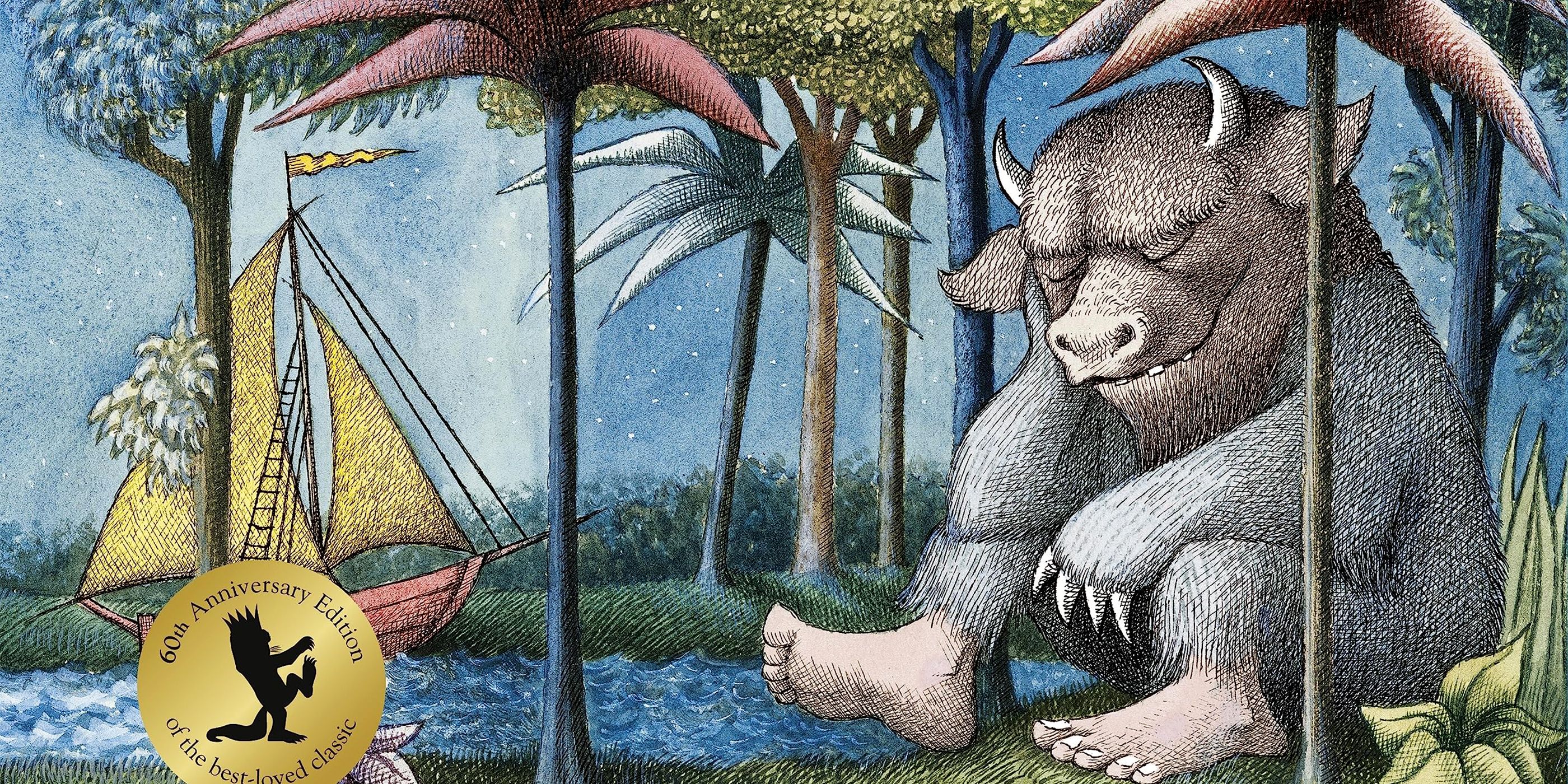
Maurice Sendak began his career as an illustrator, but by the time the mid-'50s rolled in, he had started writing and illustrating books of his own. For his sophomore solo effort, he started developing a story about a child who escapes to a land of wild horses. However, due to his inability to draw horses, he instead switched to drawing the more ambiguous Wild Things that have now become the iconic poster boys of Sendak's classic Where the Wild Things Are, one of the best children's picture books of all time. The book was then adapted into an animated short film and a 1980 opera, but it's Spike Jonze's 2009 film adaptation that's most worthy of note.
The film started development all the way back in the '80s, when it was originally a planned animated feature by Disney. After a very long stint in development hell, the film finally came together under Jonze. With its 337 words and 18 illustrations, Sendak's work is inarguably perfect by picture book standards, but the way Jonze elevates the material is remarkable. It's a potently complex cinematic representation of a child's layered emotional landscape, one of the movies that most effectively capture the melancholic nuances of growing up in a complicated world.
3 'Coraline' (2002)

Neil Gaiman started writing Coraline for his eldest daughter, who loved scary stories and found that there weren't very many good ones available for young children on bookstore shelves. Gaiman worked on the project throughout the entirety of the '90s and into the early 2000s, and by the time the novella finally saw the light of day, it proved to be one of the greatest horror books for children that the market had ever seen. Since Gaiman was such a fan of Henry Selick's The Nightmare Before Christmas, he invited the filmmaker to make a movie adaptation of his novella right as he was finishing it. Selick wrote and directed the project, which is now widely remembered as one of the best dark fantasy movies of all time.
The film feels far more successful at creating a more absorbing and terrifying world.
Gaiman's book, is a lean, masterfully crafted gothic fable that taps into primal childhood fears in such an effective way that even adult readers tend to agree that Coraline is a surprisingly scary book. With a greatly expanded narrative and Selick at the top of his game, however, the Coraline movie is on a tier all of its own. Greatly bolstered by the exceptional stop-motion animation, the film feels far more successful at creating a more absorbing and terrifying world, expanding the complexity of the characters, and tightening the structure of the story.
Collider Exclusive · 8 Questions · 2 Minutes What Fantasy World Do You Belong To? Middle-earth · Grand Line · The Continent · Camp Half-Blood
Pick your magic, your crew, where you want to wake up and who you would rather be fighting, and we will tell you which world you actually belong in. Four are open to you: an ancient kingdom living through its last good age, an endless sea full of pirates, a continent that pays people to kill monsters, and a summer camp where the Greek gods are extremely real and mostly a nuisance.
💍Middle-earth(Rings of Power)
👒Grand Line(One Piece)
🐺The Continent(The Witcher)
🔱Camp Half-Blood(Percy Jackson)
01
What kind of power do you want? Every one of these worlds runs on a completely different sort of magic.
02
Who is travelling with you? Nobody gets through any of these stories entirely on their own.
03
Where do you want to wake up tomorrow? The best fantasy is usually just somewhere you would genuinely like to live.
04
How are you making a living out there? Even in fantasy somebody has to pay for the horse.
05
There is something in the woods. What do you do about it? All four of these worlds keep something unpleasant out there in the dark.
06
Who is the villain of your story? The enemy tells you far more about a world than the hero ever does.
07
What do you actually believe in out there? Every world hands its heroes one rule and asks them to hold onto it.
08
A thousand years from now, how are you remembered? Eight questions in, this is the one that decides your world.
The Map Is Drawn Your World Is…
Four worlds and four completely different ideas of what a good life looks like. This is where you belong, what it would ask of you, and what you would get back in return.
Middle-earth
You belong somewhere old enough that the mountains have names and somebody can still tell you who gave them. Middle-earth is for people who think the right thing is worth doing even when it will not be finished in their lifetime.
- This is the only world on the list where doing good is understood as a very long defeat, fought anyway, by people who will never see how it ends.
- You are drawn to grandeur, to white cities and deep forges and the sense that almost everything you touch is older than your entire family line.
- The Rings of Power is set in the last good age before it all goes wrong, which gives every quiet scene in it a slightly unbearable weight.
- You would take the hard road, and you would take it on foot.
The Grand Line
You want the sea, a crew, and absolutely nobody telling you where you are allowed to go. The Grand Line is the world for people whose main ambition in life is finding out what is over there.
- One Piece has run for decades on one very simple engine, which is a group of people who each want something impossible and have decided to go and get it together.
- You collect people. Your ideal crew is a set of misfits who were each written off somewhere else before you turned up and offered them a better idea.
- The world is enormous and deliberately ridiculous, and the emotional gut punches land harder because of that rather than in spite of it.
- You would set sail knowing the map runs out, which is more or less the entire point of it.
The Continent
You would rather be feared and useful than liked and useless. The Continent is a world where the monsters are the straightforward part of the job and the people are where it all gets complicated.
- Witchers get paid to do what nobody else will and resented for existing at all, which is a trade most people would refuse and you would probably accept.
- You have no real illusions about which side is the good one, largely because on the Continent that question tends to have a disappointing answer.
- The best of these stories are not about the fighting. They are about somebody with a rigid code being repeatedly cornered into caring about people.
- You would take the coin, finish the job properly, and be out of town before the story got told wrong.
Camp Half-Blood
You want the myths to be real and loose in the actual world, and you want to find out at about thirteen that you were never anywhere near as ordinary as everybody kept telling you.
- Percy Jackson takes the oldest stories we have and drops them into car parks and diners, which makes the gods considerably funnier and a great deal worse.
- You would be the kid every school gave up on, who turns out to have been built for something nobody thought to test for.
- The series is genuinely about friendship rather than destiny, and it says so out loud every time a prophecy tries to get in the way.
- Camp Half-Blood is the real fantasy here: a place where the thing that made you difficult everywhere else is the thing that makes you belong.
2 'Fantastic Mr Fox' (1970)

Roald Dahl, one of the most legendary and undeniably important authors of children's literature in history, used to tell his children stories about a family of foxes living beneath the roots of a massive old tree near his home in Buckinghamshire. From that, his love for the English countryside, and his condemnation of hunting animals for sport, Dahl came up with Fantastic Mr Fox, which ended up becoming one of his most enduring successes. Since Dahl was one of his heroes, Wes Anderson signed on to direct a film adaptation of the book with Henry Selick, who eventually had to leave the project in order to work on Coraline. The result? One of the best animated comedies of the 21st century.
The book is an absolute masterclass in storytelling for kids: It's perfectly brief, full of powerful messages, and pretty much entirely devoid of fluff. Anderson took that story, made it the second act of his movie, and added further elements to make up the first and third acts of his Fantastic Mr. Fox. Though perfectly family-friendly, the movie adaptation is a surprisingly mature and emotionally complex meditation on aging, midlife crises, and suburban existential dread. Anderson added a level of depth and layeredness to the narrative that perhaps even Dahl (who famously hated movie adaptations of his work) would have at least respected.
1 'The Princess Bride' (1973)

Before he became one of the greatest screenwriters in Hollywood history, William Goldman was a novelist. By combining a bedtime story idea requested by his young daughters with a clever metafictional framing device, Goldman created The Princess Bride, one of the best fiction books ever written by a screenwriter. Rob Reiner loved the novel so much that he wanted to make a film adaptation, and in spite of previous failed attempts to bring the story to the silver screen, he was able to get it made by working closely with Goldman as a screenwriter. The result couldn't have possibly turned out any better.
Far from only shining thanks to its brilliant framing device, Goldman's The Princess Bride is packed with tender heart and masterful satire in equal measure. It's witty, it's romantic, and it can even get surprisingly dark at certain points. But as perfect as the novel is, there's a strong argument to be made in favor of Reiner's Princess Bride being among the greatest fantasy movies in history. It's the sort of crowd-pleaser that has something in it for everyone: swashbuckling action, thrilling adventure, swooning romance, an emotionally riveting revenge tale, and plenty of iconic moments.
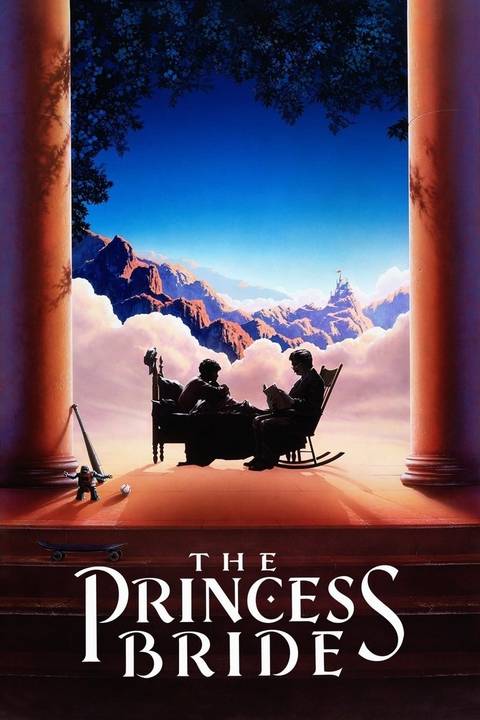
The Princess Bride
- Release Date
- September 25, 1987
- Runtime
- 99 minutes
- Director
- Rob Reiner
- Writers
- William Goldman
KioskNews shows a cleaned-up reading view extracted from the publisher’s page — the original always lives on their site, not ours.