Rural voters revolted because they wanted Republicans to help them. GOP didn’t deliver
Rural counties swung more than 15 percentage points toward Democrats in the 2026 midterms. Republicans lost rural strongholds including Iowa, South Carolina, and Kansas, where a Democrat won a U.S. Senate seat for the first time since 1932.
Republicans haven’t fully lost rural America, but they got one heck of a warning.
Just before the election, a national survey of rural voters found that about 75% rated their local cost of living as fair or poor. Nearly half worried about making their rent or mortgage payments.
FOX NEWS POLL: SQUEEZED BY COSTS, FRUSTRATED VOTERS TURN TO THE DEMOCRATS
The GOP doesn't need another consultant's postmortem to understand what happened. It needs to look at what's happening to the people who feed, build and power this country.
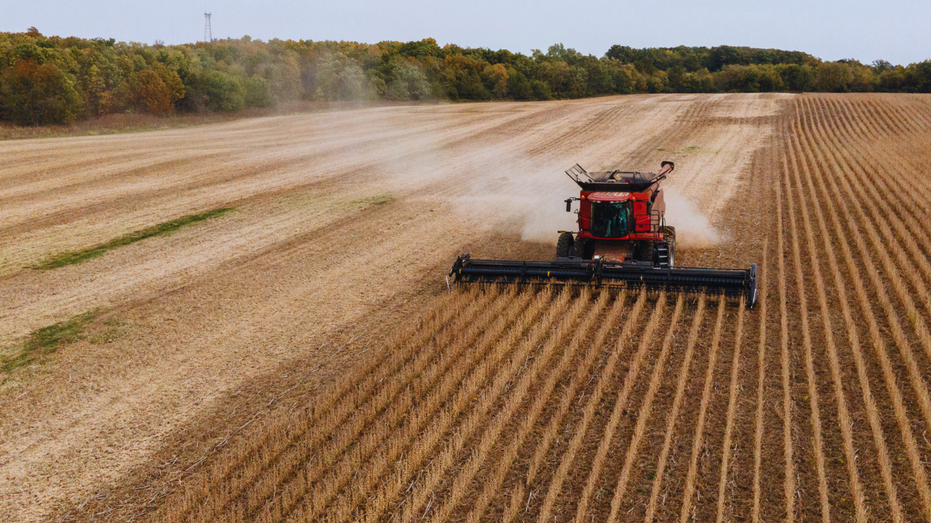
A combine harvester during a soybean harvest at a farm in Harvard, Ill., Oct. 17, 2025. (Christopher Dilts/Bloomberg/Getty Images)
Farm production expenses are projected to reach nearly $493 billion in 2026, up 4.5% in a single year, while inflation-adjusted net farm income is expected to fall 5.5%. In 2012, John Deere's flagship combine cost roughly $454,000, when wheat was $7.77 a bushel. Today, its flagship combine costs over $1.1 million, while wheat is projected at $6.91 a bushel. Meanwhile, family farm bankruptcies jumped 46% in 2025.
BROOKE ROLLINS, MONICA CROWLEY: AMERICA’S FAMILY FARMS HAVE KEPT US STRONG FOR 250 YEARS
Ranchers are seeing record cattle prices, but production costs have climbed nearly 30% since 2020.
Ranchers also face a government-enabled meatpacking oligopoly where four companies account for roughly 85% of steer and heifer purchases. Federal regulations make opening independent processing facilities prohibitively expensive, leaving ranchers with fewer buyers and little negotiating power.
CUT THE BULL: THE REAL REASON BEEF COSTS SO MUCH — AND WHAT TRUMP IS TRYING TO DO
Washington's response to agricultural hardship increasingly involves writing checks. Direct government farm payments are projected to reach $47.4 billion this year. Assistance can keep operations alive, but subsidies don't make equipment cheaper or create new markets. Too often, that money flows straight through farmers to banks, lenders, equipment manufacturers and chemical suppliers. Farmers become little more than conduits for taxpayer dollars, collecting a government check with one hand and handing it over to the industries squeezing them with the other.
Counterintuitively, tariffs have increased costs for imported machinery, steel and agricultural inputs while exposing American exports to retaliation. Farmers are expected to compete globally while the tools of competition get more expensive.
AMERICAN BUSINESSES AREN’T ALLOWED TO BUILD. IT’S TIME CONGRESS HELPED THEM
The timber industry has fared just as poorly. In 1988, America's national forests produced 12.6 billion board feet of timber. By 2024, that figure had collapsed to just 2.7 billion, a 79% decline. Federal regulations, bureaucratic roadblocks and relentless litigation have strangled timber production, shuttered sawmills and devastated communities that depended on these jobs for generations. Adding insult to injury, federal law can even force taxpayers to foot the legal bills for environmental groups that successfully sue to block timber projects.
Meanwhile, millions of acres have gone up in flames across America this year, while the sawmills that once turned those trees into lumber sit shuttered in towns now choking on wildfire smoke from timber that used to build American homes.
Republicans promised to take a chainsaw to federal bureaucracy. Instead, chainsaws are sitting idle as timber mills rust into the ground.
The Trump administration deserves credit for proposing to repeal Clinton’s 2001 Roadless Rule. But the repeal remains unfinished and would only scratch the surface of what is needed to reignite our timber industry.
Ranchers are seeing record cattle prices, but production costs have climbed nearly 30% since 2020.
Along with timber, America needs domestic copper, silver and critical minerals to power its future and create high-paying jobs. Yet it takes nearly 29 years to open a new mine, longer than anywhere in the world except Zambia.
Coal production is projected to fall 2% in 2026. Even with record American oil production, diesel is expected to average $5.25 a gallon. Coal towns face declining production while farmers and truckers pay a fortune for fuel. A Republican trifecta was supposed to deliver American energy dominance. But while D.C. loves the products of rural industry, it stands in the way of the industries themselves.
AMERICA'S TRUCKERS ISSUE DIRE WARNING AS SOARING DIESEL COSTS THREATEN 'DOMINO EFFECT'
Take all this bureaucracy, overregulation, and financial hardship together, and it’s no wonder Republicans heard a harsh rebuke from rural America on Election Day.
In 2024, voters who described themselves as financially struggling favored President Donald Trump by roughly 30 points. In 2026, voters describing the same circumstances favored Democrats by approximately 30 points.
MEHEK COOKE: REPUBLICANS FAILED THE AFFORDABILITY TEST. THIS IS HOW TO WIN VOTERS BACK
Republicans have made real progress on tax reform, preventing one of the largest tax increases in American history and proposing meaningful regulatory reforms.
But preventing a tax increase doesn't make diesel or fertilizer cheaper. Proposing regulatory reform isn't the same as delivering it. And families struggling to make ends meet aren't interested in hearing how much worse things could have been.
Republicans shouldn't mistake the midterms for rural America suddenly embracing socialist economic policies. The warning is simpler: people are frustrated with the cost of living, disappearing opportunities and a political system better at managing their problems than solving them.
The answer isn’t more government, it's freedom. Republicans need to start acting like the party that believes in it.
Keep fighting for tax cuts, American innovation and fiscal responsibility. Those battles matter. But it's time to listen to congressional Republicans who actually represent rural America and understand what’s needed to revive the communities that put the GOP in power cycle after cycle.
Coal production is projected to fall 2% in 2026. Even with record American oil production, diesel is expected to average $5.25 a gallon.
Start by passing the Bipartisan American Affordability and Jobs Act, now before the Senate, to reform the Endangered Species Act and overhaul federal permitting. Reform the Equal Access to Justice Act so taxpayers aren't footing the legal bills for groups that sue to block logging, mining and energy development. Reform the Federal Meat Inspection Act to eliminate unnecessary barriers to independent meat processing and give ranchers more buyers and greater freedom to compete.
CLICK HERE FOR MORE FOX NEWS OPINION
Put these reforms on the floor. Force votes. If Democrats kill them, put them on record, make them defend it. Republicans cannot distinguish themselves from Democrats with another federal program, subsidy, or tariff. Rural Americans don't want a handout or another promise. They want leaders who will fight for their freedom to do the work that built this country.
CLICK HERE TO DOWNLOAD THE FOX NEWS APP
The GOP lost the House and the Senate. If they lose rural America, they won’t regain power for a generation.
Jesse Ramos is a columnist covering rural America, the working class and the industries that power the nation. He also serves as State Director of Americans for Prosperity-Montana.
KioskNews shows a cleaned-up reading view extracted from the publisher’s page — the original always lives on their site, not ours.