Cannot be compelled to carry a pregnancy, says J&K High Court on 11-year-old girl’s case
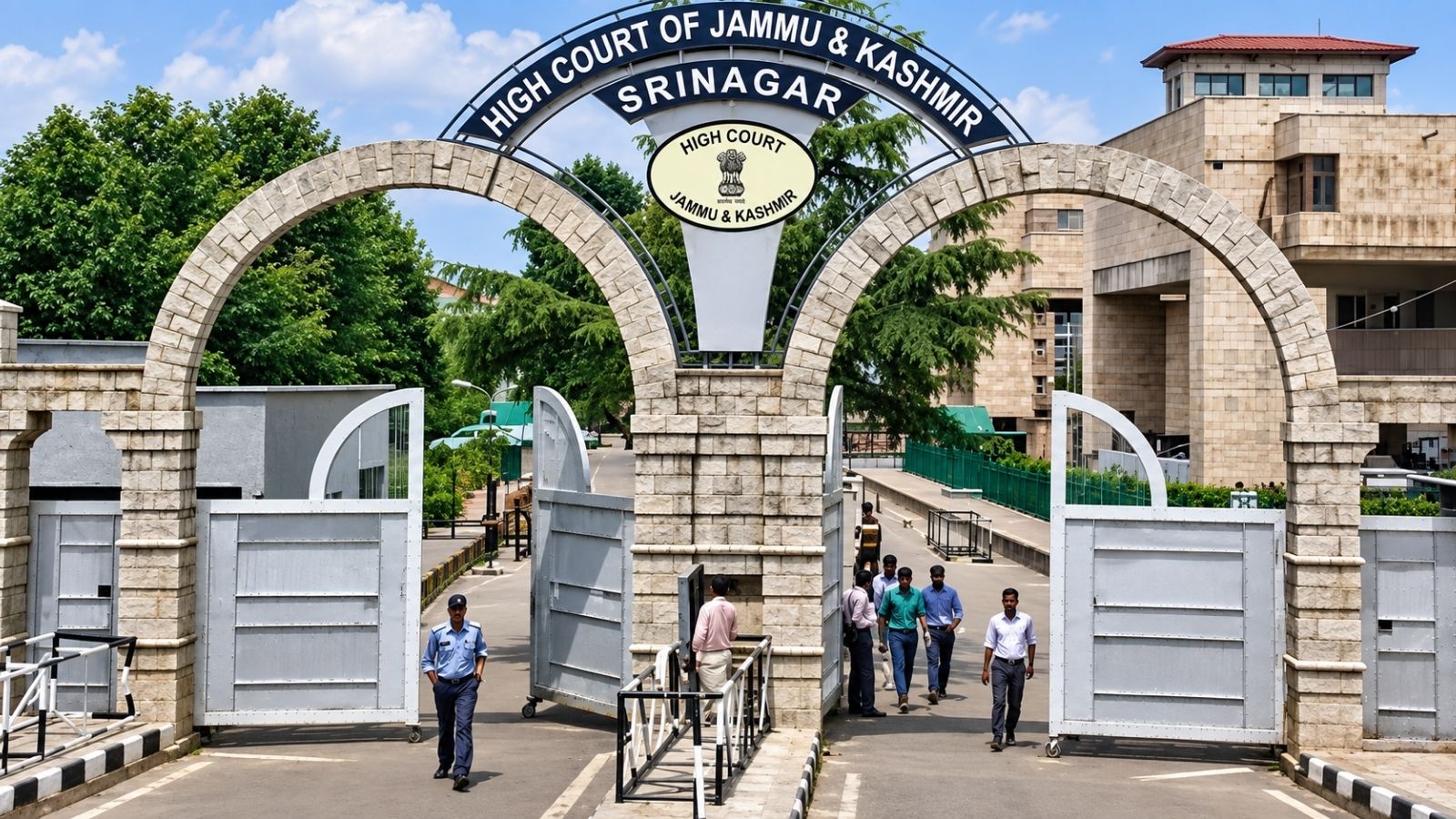
The Jammu, Kashmir and Ladakh High Court on Tuesday allowed an 11-year-old girl to terminate her pregnancy, saying the mere fact that it had crossed the statutory 24-week period prescribed under the Medical Termination of Pregnancy Act could not result in denial of constitutional protection to the child.
Disposing of a petition filed on behalf of the minor for medical termination of her pregnancy, Justice Wasim Sadiq Nargal directed the authorities to take immediate steps, saying that “the minor being about 11 years old cannot be compelled to carry a pregnancy resulting from the sexual assault committed upon her”.
The ruling came after a medical board found that the pregnancy had advanced to 24 weeks and 02 days by September 22, the date of the judgment.
Noting that the pregnancy had crossed the statutory period contemplated under Rule 3-B of the Medical Termination of Pregnancy Rules, 2003, while the matter was under judicial consideration, Justice Nargal observed that the statutory framework under the Medical Termination of Pregnancy Act, 1971 had to be read harmoniously with the constitutional jurisdiction of the High Court under Article 226.
Referring to the Supreme Court judgment dated April 24, 2026 in S versus Union of India, recognising that a constitutional remedy cannot be denied merely because the circumstances of a case do not fall within the four corners of a statutory remedy, he observed that the constitutional court is required to examine the circumstances from the perspective of the pregnant woman and her constitutional rights, rather than mechanically compelling continuation of an unwanted pregnancy merely because the statutory period has elapsed.
Applying that principle to the present case, Justice Nargal held that the statutory framework could not be considered in isolation from the constitutional protection available to the minor.
The Medical Board had examined the minor on September 11 pursuant to court orders and said she was physically and mentally fit to undergo an abortion. The Board further said an abortion at this stage was medically feasible, although it carried increased maternal and procedural risks, including haemorrhage or bleeding, infection and the need for blood transfusion.
Story continues below this ad
Noting that although the pregnancy was within the gestational period contemplated under Rule 3-B when the Medical Board assessed it, it had advanced to approximately 24 weeks and 02 days by the date of judgment, the court held that the crossing of 24 weeks could not, in view of the peculiar facts of the case, be considered in isolation or result in denial of constitutional protection to the minor petitioner.
It further recorded that the delay was not attributable to any deliberate inaction on the part of the petitioner but arose during the process of obtaining medical opinion and judicial consideration of the relief sought.
“The case stood on a particularly significant footing because of the minor’s age and vulnerability and the circumstances in which the pregnancy had arisen,” the court held, directing the Principal/Medical Superintendent, Associated Hospital, Government Medical College, Baramulla, to make all necessary arrangements for undertaking the procedure at the earliest possible opportunity.
It further directed that the petitioner be allowed to have her mother and/or lawful guardian present during the procedure, adding that she should be given the necessary psychological counselling and support before and after the procedure.
Story continues below this ad
With the alleged accused yet to be apprehended, the court directed the authorities to take appropriate steps to preserve foetal tissue/material and forward it for DNA profiling and such other examinations as the investigation may require.
It also said that if treating specialists consider that the minor requires treatment at a better medical centre, she should be immediately referred and transported there without requiring any further order from the court.
The minor, who had moved with her family to Baramulla in March this year, had developed fever, vomiting, cough and abdominal pain.
She was initially taken to a local medical practitioner and later examined at a sub-district hospital, where an ultrasound revealed that she was pregnant.
Story continues below this ad
Upon being questioned by doctors, the minor disclosed that she had been forcibly subjected to sexual intercourse by an unknown person during her stay in Kashmir. The matter was reported to the police, and the minor was thereafter taken into protective custody and lodged in a shelter home.
KioskNews shows a cleaned-up reading view extracted from the publisher’s page — the original always lives on their site, not ours.