California governor to spare lives of all 548 death row prisoners in state
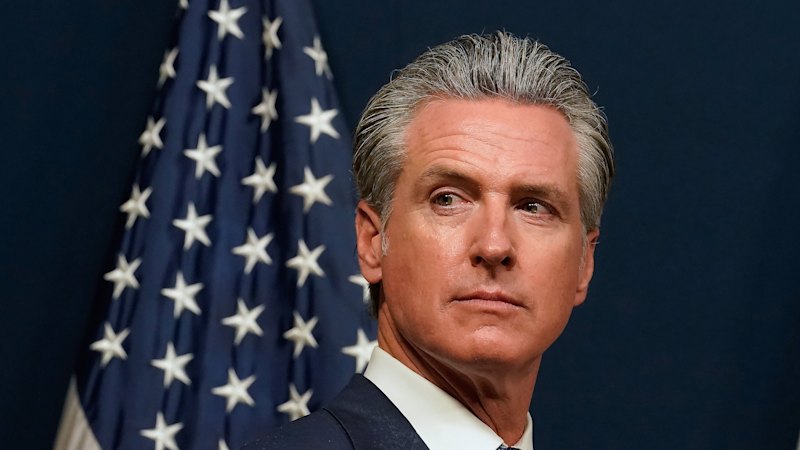
Sacramento: California Governor Gavin Newsom says he will change more than 500 death sentences in the state to life in prison without the possibility of parole, though the state Supreme Court will have the final say in hundreds of those cases.
“I take this action because I firmly believe that state-sanctioned killing is incompatible with California’s values, undermines the foundations of our legal system, and diminishes each of us,” Newsom said in an open letter on Thursday (US time).
Newsom’s decision comes as he prepares to leave office after eight years and considers a run for president. The Democrat, who’s long been opposed to the death penalty, placed a moratorium on executions in California in 2019.
His latest move came after he realised “the limits of what government can justly accomplish”, he said.
Newsom moved to grant clemency to 548 people who are currently sentenced to death in California, of which 529 are men and 19 are women, according to numbers provided by his office.
The state constitution requires the California Supreme Court’s approval to grant clemency to anyone convicted of a felony more than once, which means the court would have to approve 382 of those commutations, or about 70 per cent, according to numbers provided by Newsom’s office.
According to the Death Penalty Information Centre, Newsom’s action represents the largest mass clemency in American history. If they are all approved, it would reduce the US death row population by nearly 30 per cent, the centre said.
Americans have long been divided over the death penalty. Nearly half of US states have banned capital punishment outright, but executions are still carried out routinely around the country. On Thursday alone, Florida, Alabama and Indiana were scheduled to perform lethal injections.
Californians voted via ballot measures to uphold the death penalty in 2012 and 2016. No one has been executed in the state since 2006 and California has the largest death row in the western hemisphere.
Among the most notorious convicted killers on California’s death row are Richard Allen Davis, who kidnapped and murdered 12-year-old Polly Klaas in 1993, and Randy Kraft, the so-called “Scorecard Killer” who kept a list of his 16 victims in the 1970s and ’80s.
Other prominent killers, including Scott Peterson and the Manson family members, received death sentences that were later commuted to life in prison.
Jess Nichol, Klaas’ sister, said she previously believed Davis deserved the death penalty, but her views evolved.
“The system tells survivors that execution matters to our healing,” Nichol said in a statement. “It doesn’t. It’s a distraction from what we actually need.”
Newsom said the decision was among the most difficult choices of his career because it would surface painful memories for crime victims’ families.
“As governor, I alone bear responsibility for this decision and its impact, just as I alone would bear responsibility for each execution,” Newsom wrote.
The American Civil Liberties Union, which has said the implementation of the death penalty reflects racial bias, applauded the announcement.
“These commutations reflect what justice demands: an end to a racist, error-prone, and inhumane punishment that has burdened California for far too long,” Executive Director Anthony Romero said in a statement.
The ACLU is involved in an ongoing legal challenge to California’s death penalty statute, alleging it is racially discriminatory and unconstitutional.
Patricia Wenskunas, founder of the California advocacy nonprofit Crime Survivors, which opposed the abolition of the death penalty, criticised Newsom’s decision.
“My heart hurts for every one of the victims and every one of their family members,” she said, calling the decision “offensive” and “outrageous”.
Steve Herr, whose son Sam Herr was murdered along with his friend Julie Kibuishi by Daniel Wozniak in 2010, said he was “absolutely disgusted” by the governor’s decision. He said the death of his son’s killer would have meant closure.
“When somebody commits such a heinous crime, they do not deserve to live,” Herr said. “To hear what Newsom just did … he’s just an outright coward.”
The California District Attorneys Association condemned the decision. Last month, the group sent a letter to Newsom expressing “grave concerns” about him considering the move and warning that such a sweeping action would inflict additional pain on victims’ relatives.
“With the stroke of a pen, Governor Newsom has disregarded the decisions of hundreds of jurors and judges, and the anguish of families who lost loved ones to the worst crimes imaginable,” CDAA president Jeannine M. Pacioni said in a statement. “The victims were never given a commutation. Their families were never given a choice. They deserve far better than this.”
San Luis Obispo County District Attorney Dan Dow called the move a “sickening abuse of power”.
Dow referenced Rachel Newhouse and Aundria Crawford, two women who were kidnapped, raped and murdered by Rex Allan Krebs in 1999, and Kesha Gurke, a 19-month-old girl tortured and murdered by Michael Whisenhunt in 1995.
“San Luis Obispo County juries sentenced both men to death. A unanimous California Supreme Court affirmed both judgments. Their families have waited decades for the State of California to keep its word. Today, the Governor broke it,” Dow said.
Orange County District Attorney Todd Spitzer also condemned the decision, calling it “mercy for the wolves and while inflicting the ultimate act of cruelty on the sheep”.
Newsom has said in the past that it is wrong for the government to kill its citizens, and that capital punishment in practice has discriminated against mentally ill people and people of colour.
Other governors have granted broad clemency to all death row prisoners in their states, including Oregon’s Kate Brown in 2022 and Jared Polis of Colorado in 2020.
KioskNews shows a cleaned-up reading view extracted from the publisher’s page — the original always lives on their site, not ours.