Chalmers warns higher yields likely to kill off cost-of-living help
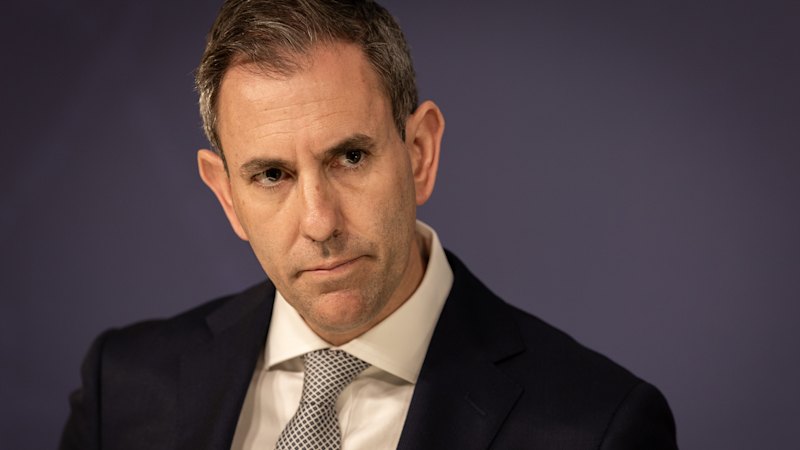
Treasurer Jim Chalmers has signalled Labor would run a “pretty tight ship” in its mid-year budget update, again warning a spike in bond yields will add billions of dollars to the federal budget and likely rule out significant new cost-of-living relief.
Chalmers said rapidly rising borrowing costs in Australia and other major economies would put “additional pressure” on the budget, with federal government debt recently passing $1 trillion.
The RBA’s decision last week to raise the cash rate to a 15-year high of 4.6 per cent has heaped further pressure on Chalmers to curtail federal government spending, which is at its highest level in four decades outside the pandemic.
Speaking on ABC’s Insiders, Chalmers said Australia’s domestic inflation challenge had been “made much worse by the war in the Middle East”, but maintained that his assessment was consistent with that Reserve Bank governor Michele Bullock.
“If you compare the last year of demand in our economy compared to the year before, what you will see is that public demand has halved over the last year while private demand has tripled,” Chalmers said.
“So what that shows is there are other factors at play here because public demand growth has been coming down at the same time as inflation has edged up.”
Economists have warned that the issue with public demand was not growth in government spending but the level, which currently sits at 26.9 per cent as a share of the economy. Australia’s 3.6 per cent underlying inflation rate is among the highest in the developed world, behind only Iceland, Lithuania and Puerto Rico.
Chalmers said it was imported to remember there was a “whole range of factors at play” and that budget settings were not the primary driver of prices in the economy. But he said the government was working on a new savings package for the mid-year update, due in about 10 weeks.
“And that’s all to recognise that even though the budget settings aren’t the primary drivers of prices in our economy - especially now, at a time of all of this global turmoil - we can and we will continue to play a helpful role in the fight against inflation, and that’s our focus,” he said.
Chalmers said whether those savings would improve the budget bottom line remained to be seen because of uncertainty over government borrowing costs, driven by fluctuations in bond yields.
The US 10-year Treasury yield reached its highest level since 2002 last week while the Australian government bond yield also hovered around 5.4 per cent, near its highest level since mid-2011.
Assistant Science Minister Andrew Charlton - widely viewed within the federal government as a potential successor to Chalmers in the role - said productivity growth was critical to bringing inflation and interest rates down, conceding domestic pressures were a major driver of price growth.
“We need higher productivity to get interest rates and inflation down. Productivity is like the speed limit on our economy. If productivity is low, then your economy can’t grow without creating inflation,” he told News24.
Charlton dismissed recent media speculation that Chalmers’ performance in the role was subject to internal unrest, saying he was doing an “extraordinary job in very difficult global circumstances”.
Coalition treasury spokesman Tim Wilson called for Prime Minister Anthony Albanese to sack Chalmers, accusing the treasurer of stoking inflation and misleading Australians about government spending.
“This is a man who’s actively stoked inflation because it gives him windfall tax revenue because he can’t manage his budget. And Australian households are poorer because he has been a disaster as treasurer,” Wilson said.
Get a note directly from our foreign correspondents on what’s making headlines around the world. Sign up for our weekly What in the World newsletter.
KioskNews shows a cleaned-up reading view extracted from the publisher’s page — the original always lives on their site, not ours.