The Greatest Sequel to This Slasher Classic Officially Rewrote the Formula

Mitchell Brown is a Wisconsin-based writer, film fanatic, and graduate of University of Wisconsin-Milwaukee who has written for various publications covering film analysis, reviews (both classic and contemporary), and movie news. He's also a screenwriter, having written multiple spec scripts. When he's not watching movies, writing movies, or writing about the films he's already seen...no, that about covers it.
The Halloween series is a mixed bag, and what doesn't work in most of the sequels is simple: Michael Myers is a fantastic one-off monster who has been spread across too many movies, with a core premise that's so straightforward, by design, that it's difficult to expand upon. That's not to say that none of the sequels have any merit: Halloween H20 has bland slasher elements, but it's an interesting look into the life of an adult Laurie Strode who's dealing with the trauma of surviving the original film and having a brother who's a serial killer. Halloween Ends also gets a lot of hate, even though it's a lot of fun (sans the last 10 minutes), and tried mixing things up by shifting the focus to a different character behind the mask (which, admittedly, people probably would've been more forgiving about if they had marketed it that way). As a franchise, the Halloween series isn't known for taking a lot of risks, and that's probably because the first time they did, it backfired critically and underperformed at the box office, in a film that has since built up a cult following: Halloween III: Season of the Witch.
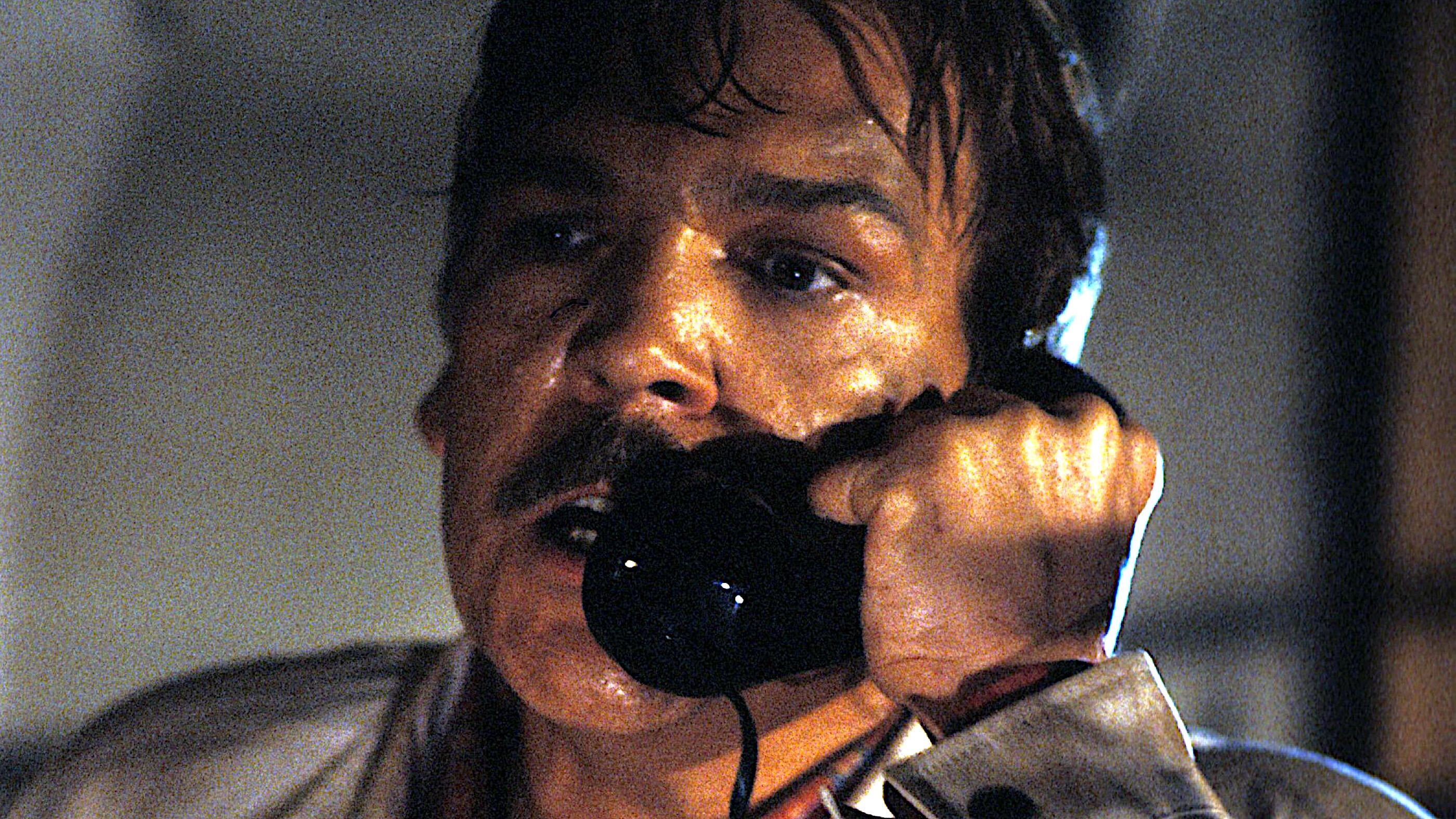
The story follows Dr. Dan Challis (Tom Atkins), an on-call doctor who, one night, has a raving patient come in to his hospital, clutching a Halloween mask, claiming that "they're going to kill us. All of us!" The man isn't able to elaborate further, because shortly after being admitted, a well-dressed, black-gloved man comes in and kills him before setting himself on fire. A few days later, the patient's daughter, Ellie (Stacey Nelkin) comes to Dan and tells him that her father's death might be somehow connected to the Silver Shamrock Novelties company, run by the mysterious Conal Cochran (Dan O'Herlihy) in the small town of Santa Mira. They both soon discover that her father might've caught onto a greater conspiracy that could lead to the deaths of millions.
Stepping Away From Michael Myers

The point of conversation that people always immediately go to about Halloween III is that it's the only movie in the franchise not to feature any key characters from the first two movies, especially Michael Myers, and exist instead as a standalone story. This was a deliberate choice by producers John Carpenter and Debra Hill to transition the Halloween franchise into a horror anthology that revolved around the Halloween season. In doing so, Halloween III not only dropped the iconic villain, but also switched the subgenre of the series from slasher film to sci-fi folk horror. They even changed locations and set the story in California to shut up the yet-to-be-invented internet about the palm trees in the background.
While the previous two films had the grounded terror of watching the director of The Last Starfighter wear a mask and engage in motive-free murders, Halloween III had the benefit of being a B-movie in all the best ways — down to how silly the threat is, and how seriously it's handled. Cochran has robot henchmen, masks that turn kids' heads into bugs via the magic of a stolen piece of Stonehenge, and witchcraft conducted with computers (cocaine-fueled creativity, brought to you by the 80s).
The story gets so weird in such fun ways, and it doesn't try to hide behind self-aware lines of dialogue or winking at the audience. It just fully embraces it, which is why O'Herlihy's turn as Cochran is the standout performance. Cochrane is like if Gene Wilder's Willy Wonka dressed formally and was more overt about his hatred of children. He works his way through all the tropes of a Bond villain, like explaining his evil plan to Dan and then leaving him alone in a room to die instead of killing him, but O'Herlihy so relishes his performance that he completely sells it.
'Halloween III's Ties to the Original

While the film has no narrative connection to the other Halloween films, going so far as to show the original movie on TV twice to make it clear that this is taking place in a different reality (and doing it 14 years before Scream made things like that revolutionary), it still has connective tissue that feels in line with the first two films. There's the obvious details, like having a pumpkin-centric opening credit sequence and appearances by Halloween cast member Nancy Loomis and an uncredited voice cameo by Jamie Lee Curtis. But this was also the last film until Halloween (2018) to feature John Carpenter in a prominent role as both producer (alongside Debra Hill) and as one of the film's composers, partnering again with Alan Howarth after Halloween II. The other notable return is cinematographer Dean Cundey, who famously created the visual aesthetic for both the original and Halloween II. While these might seem like superficial connections on paper, it gives Halloween III an added bit of cohesion that makes it fit comfortably with the other films in the same franchise, as well as like a lost entry in John Carpenter's directorial filmography.
Halloween III: Season of the Witch may turn some people off on principle due to its lack of Michael Myers— and it is fair to want a sequel that's actually a sequel. But what they miss out on is a unique and imaginative horror film that may not be a Halloween movie in the Michael Myers sense, but is a great movie that embraces the spirit and ambiance that's associated with Halloween, down to having most of the story revolve around a Halloween mask factory, and playing around with the lore behind the season (as well as giving the correct pronunciation of Samhein). So if the lack of Michael Myers has been enough to give you reservations about watching (or revisiting) it, just give it a shot as a standalone horror film, and open yourself up to possible serendipity — and if you have access to a Peacock or Prime Video subscription, it's made even easier to find.

- Release Date
- October 22, 1982
- Runtime
- 99 minutes
- Director
- Tommy Lee Wallace
- Writers
- Tommy Lee Wallace, Nigel Kneale
- Producers
- Debra Hill, Dino De Laurentiis, Irwin Yablans, John Carpenter, Joseph Wolf
-

Tom Atkins
Dr. Daniel 'Dan' Challis
-
Stacey Nelkin
Ellie Grimbridge
KioskNews shows a cleaned-up reading view extracted from the publisher’s page — the original always lives on their site, not ours.