Air Pollution Is As Big A Public Health Emergency As COVID: Former WHO Chief
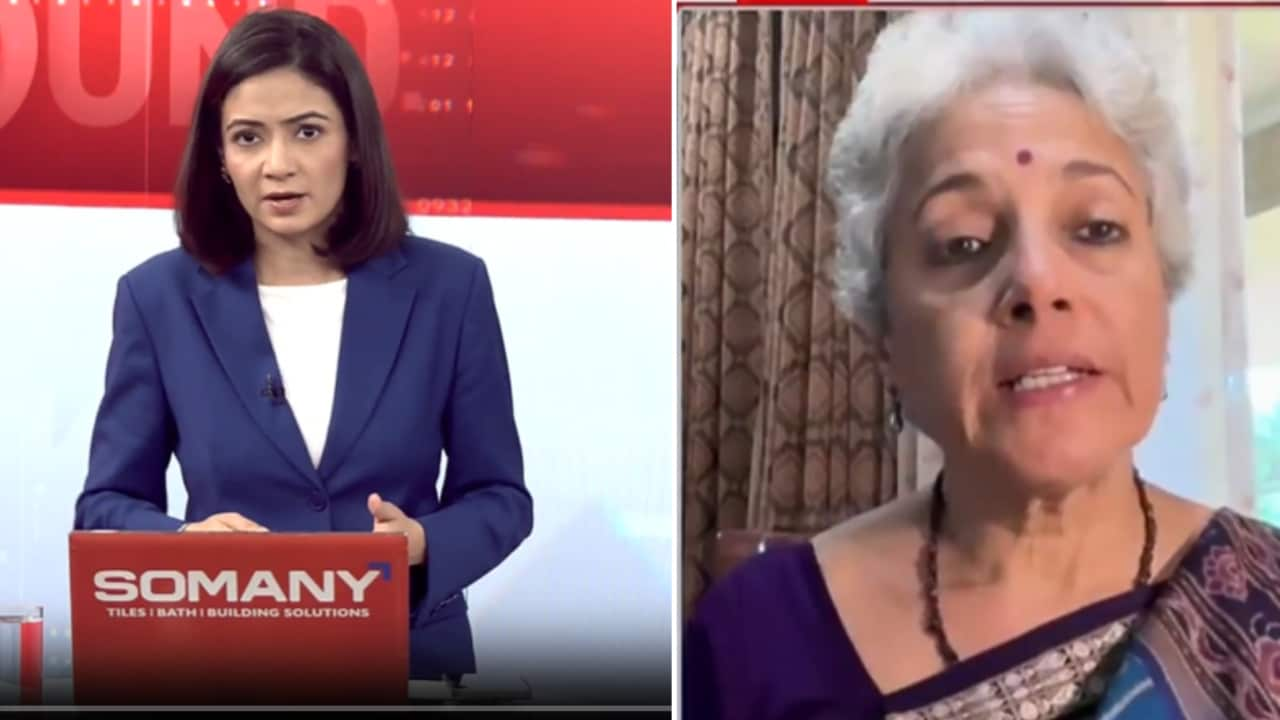
Premature mortality, predisposition to diabetes, asthma, and impacts on the brain, lungs and cardiovascular system - you name it, and air pollution has left some form of impact on possibly every organ and part of your body. Therefore, it is important that we treat it like the Coronavirus disease (COVID). It's as big a public health emergency as COVID, says Dr Soumya Swaminathan, former Chief Scientist at the World Health Organisation (WHO).
"The difference is, of course, that COVID, a pandemic caused by a virus, came out of the blue. There was a huge amount of fear of unknown. It was sudden, visible, and taking lives in front of your eyes," says Dr Swaminathan.
Air pollution, on the other hand, is invisible most of the year except in winter.
"We don't see it, we get used to the smell of it, and it is slow-moving. It does kill," stresses Dr Swaminathan.
In an exclusive interview with NDTV, Dr Swaminathan detailed how we are sacrificing the health of an entire generation by simply ignoring the irreversible damage caused by pollution.
Talking about the impact on children from the time they are foetuses, Dr Swaminathan said that the environment we grow up in is as important as nutrition, stimulation and care in the early years of life when major physical and mental growth happens.
"Particulate matter 2.5 (PM2.5) consists of tiny particles, about 1/40 the size of a human hair, which can go through the lungs, into the bloodstream and even into the placenta, affecting the child as well. They affect the blood circulation of the mother. So, even at birth, the child is disadvantaged. It has been shown that there are more premature births and low-birth weight babies being born in areas where mothers are exposed to high levels of air pollution."
Children's brains grow rapidly in the first three years of life, and they breathe faster as their organs are developing. Therefore, those who grow up in heavily polluted areas have smaller lungs, Dr Swaminathan added.
Diseases caused by long-term exposure to toxic air are often bundled with other causes because there is no way to count them separately. "There's no death certificate which has air pollution written on it," Dr Swaminathan said, stressing on the need to treat it with the same "equal, urgent, coordinated and scientific" response as COVID.
READ | 80% Of Post-Diwali Pollution In Delhi Caused By Firecrackers: Study
'Shift From AQI To AHQI'
India has much higher AQI limits than those recognised by the WHO. According to the global health body, there is no safe level of PM 2.5. Former WHO Chief Scientist suggested shifting from the regular Air Quality Index (AQI) to an Air Quality Health Index (AHQI), which looks at pollutants based on their impact on health.
The AQI is a public health tool designed to communicate air pollution levels or the quality of air in simple terms. Eight pollutants namely particulate matter (PM) 10, PM2.5, Ozone (O3), Sulphur dioxide (SO2), nitrogen dioxide (NO2), carbon monoxide (CO), lead (Pb) and ammonia (NH3) act as major parameters in deriving the AQI of an area, as per the CPCB.
"The average concentrations of each pollutant are calculated and fed into a formula to generate their respective sub-indices. The highest of these sub-indices determines the overall AQI. For instance, if PM2.5 has a sub-index of 400 and ozone is 300, the AQI becomes 400 because we take the worst sub-index," Mohan George, Consultant at the Centre for Science and Environment had explained to NDTV.
Dr Swaminathan is suggesting a change to this system.
""In your city, you might have ozone as the prominent pollutant, and that might affect a pregnant woman differently from a young child. In another city it may be PM2.5 and somewhere else it may be nitrogen dioxide," said the former WHO chief scientist, suggesting the creation of an AHQI that cities and states can use to both inform policymakers and the public.
READ | India's Oldest Industry Body FICCI Warns Air Pollution Costs $95 Billion Annually
Child Protection Air Pollution Policy
School closures, masks and air purifiers are increasingly becoming part of the conversation, but children from poorer households cannot necessarily afford such protection. Talking about an immediate scientifically sound child-protection policy, Dr Swaminathan said she is not in favour of shutting schools.
"Children missing school, especially children from poorer socioeconomic groups and families, are not better off staying at home. They're breathing the same polluted air because they don't have air purifiers in their homes and they're missing out on education, social interaction, and midday meals."
Instead, she suggested making school environments cleaner, which includes putting air purifiers in classrooms, providing a pick-and-drop bus service to every student, and asking older children to wear masks when they are outdoors.
READ | Meet Krish Aggarwal, Delhi Student Who Won Diana Award For Low-Cost Air Filter
Dr Swaminathan's 5 Non-Negotiables
Dr Swaminathan shared her five non-negotiable demands for addressing the pollution crisis:
1. The government should launch a national clean air program, or call it the Swachh Vaayu Abhiyan, similar to the Swachh Bharat Abhiyan
2. A costed plan with long-term investment is required. We should study how China dealt with pollution and contextualise those lessons for India
3. Empowered leadership, similar to how a special secretary was put in charge for Swachh Bharat Abhiyan and accountability
4. A panel of experts for science-based multi-sectoral and multi-year plan
5. Put health at the center
"Just like we're saying, let's put health at the center of climate change, the same is very much true for air pollution. The Air Quality Health Index is one but if we start looking from a health outcomes perspective, not only will it drive action, but you'll be able to measure outcomes," said Dr Swaminathan.
Before signing off, Dr Swaminathan agreed that the right to clean air be treated as a basic public health entitlement.
"The right to life is a constitutional right and the air we breathe is what keeps us alive," she concluded.
KioskNews shows a cleaned-up reading view extracted from the publisher’s page — the original always lives on their site, not ours.