North Korean mine likely behind explosion in DMZ, Seoul’s military says
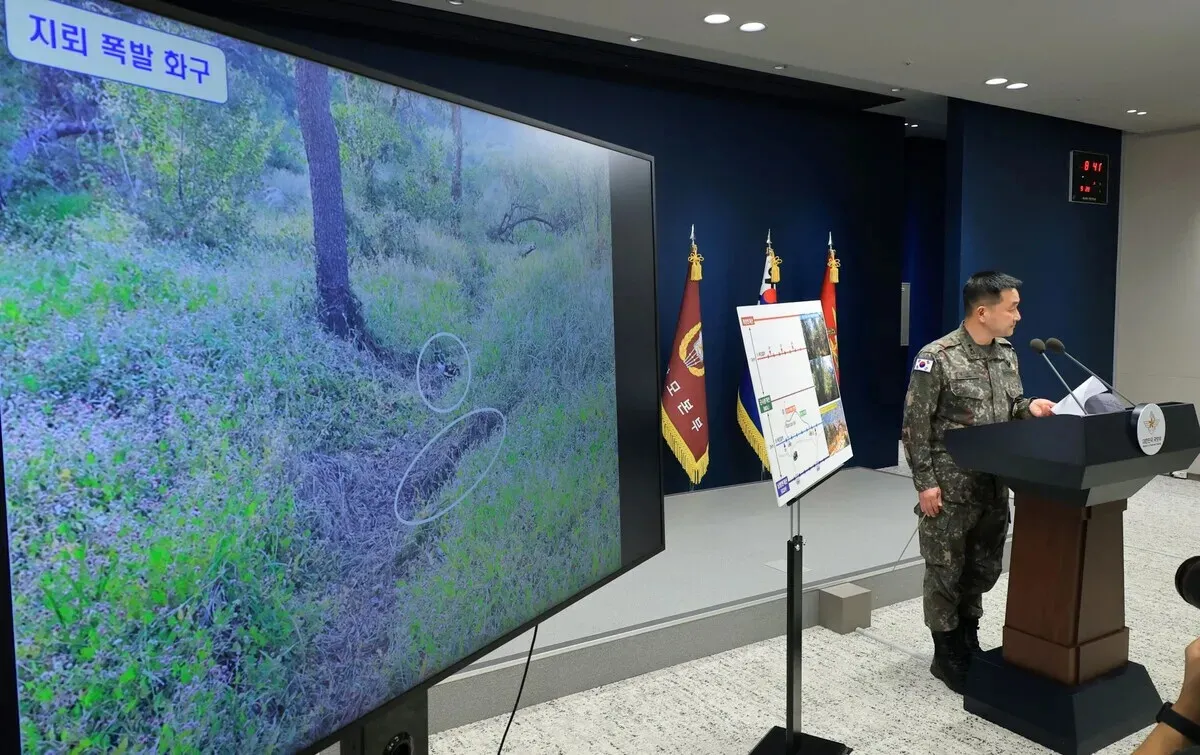
Rescuers prepare to hoist a soldier for medivac following the explosion of possible land mines in the DMZ. (courtesy Joint Chiefs)
South Korea’s Joint Chiefs of Staff said Monday that a North Korean mine was likely responsible for an explosion in the western Demilitarized Zone, or DMZ, that injured three South Korean service members on Sept. 21.
If the investigation determines that the North Korean military has been laying mines south of the Military Demarcation Line (MDL), it is likely to have serious consequences for inter-Korean relations.
“Given the blaze produced by the blast, the extent of injuries suffered by our soldiers, and the testimony of soldiers involved in the operation, we assume that this was not an allied mine and conclude it was probably a North Korean one,” vice chairman of the Joint Chiefs, Lt. Gen. Kwon Dae-won, said in a briefing about the interim findings following a second on-site survey on Monday.
Kwon noted that there was no record of allied forces laying mines in the area of the blast and that there were indications that the North Korean military was laying mines in the area in September 2025.
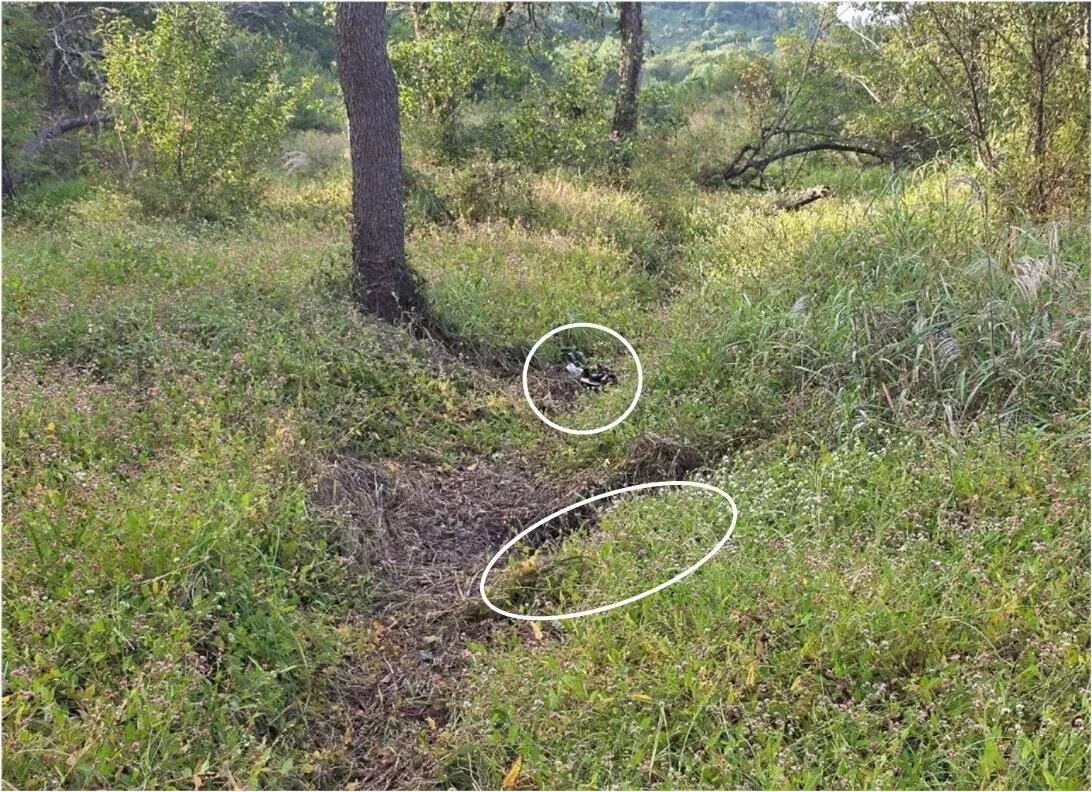
Craters created by the explosion of a landmine, as shown in materials provided by the Joint Chiefs of Staff.
Given the brown substances detected in the National Forensic Service’s initial analysis and the absence of the metal shrapnel that allied mines would be expected to produce, the military has ruled out this being an allied mine. That conclusion is also supported by testimony that soldiers found a North Korean plastic anti-personnel mine about one meter away from the spot of the first explosion.
Based on the testimony of the soldiers involved in the incident, Kwon said, the explosive is presumed to have been a brown plastic anti-personnel mine akin to the wooden-box land mines used by the North Korean military.
In regard to position, Kwon said the blast had occurred over 10 meters south of the MDL.
“The spot was just over 10 meters from alterations to the terrain presumably caused by recent installation of land mines by the North Korean military,” he explained.
“If our investigation ultimately concludes that these injuries were caused by a land mine laid by the North Korean military, that would mean that South Korean service members carrying out standard operations south of the MDL were injured by a North Korean mine — an incident for which North Korea would be fully responsible. Our military will carry out the appropriate corresponding measures,” Kwon said.
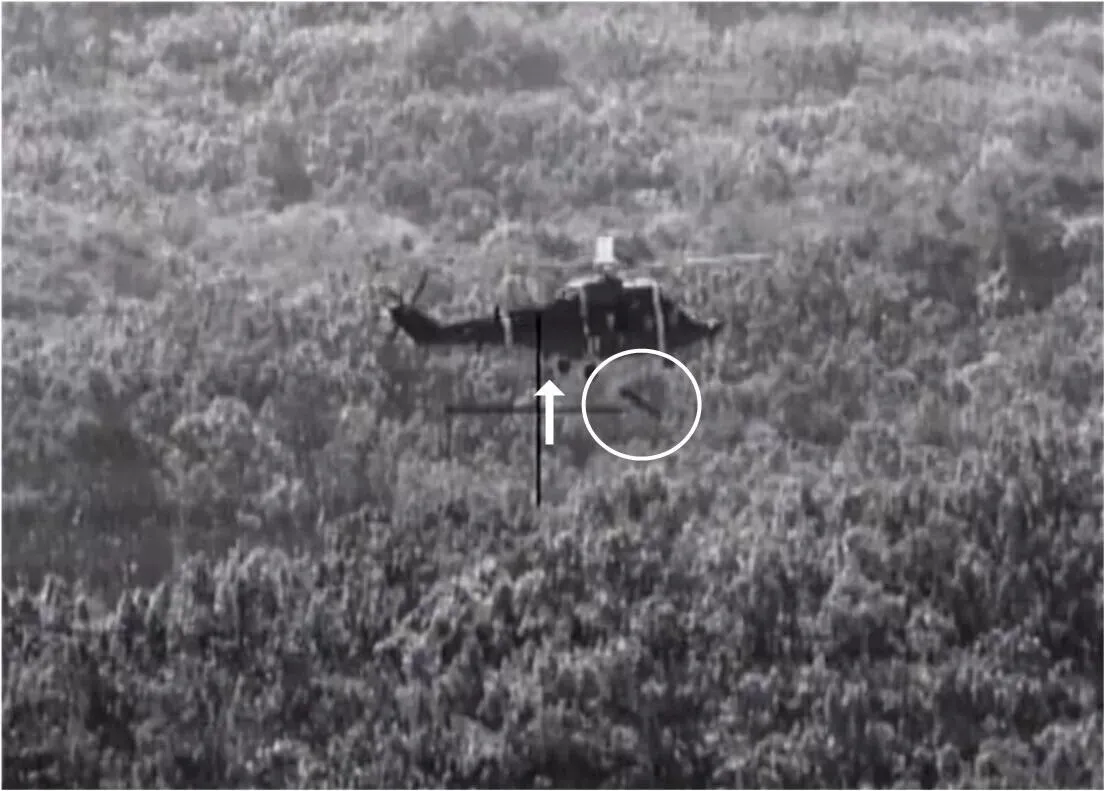
A photo of the hoist of an injured soldier shown by the Joint Chiefs regarding the explosion of possible land mines in the DMZ.
The military has twice asked the National Forensic Service to carry out a compositional analysis of the gear worn by the soldiers, gauze used to collect explosive residue, and shrapnel recovered from the injured soldiers during surgery.
South Korea’s ruling and opposition parties plan to question the military about the incident during a plenary session of the National Assembly’s National Defense Committee on Tuesday.
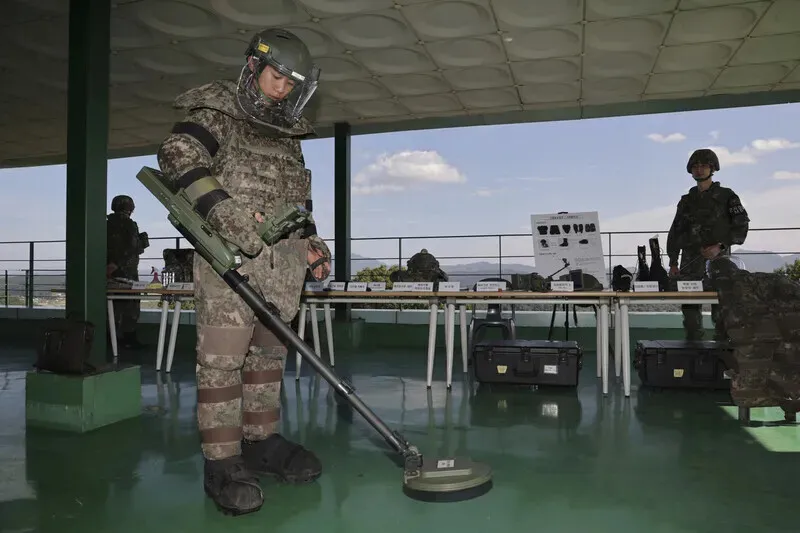
soldier gives a demonstration of minesweeping operations for lawmakers during an on-site inspection on Sept. 28, 2026. (pool photo)
By Kwon Hyuk-chul, staff reporter; Kim Hae-jeong, staff reporter; Jang Ye-ji, staff reporter
KioskNews shows a cleaned-up reading view extracted from the publisher’s page — the original always lives on their site, not ours.