Centre Approves Rs 2,814-Crore Scheme To Promote Lithium, Nickel Processing
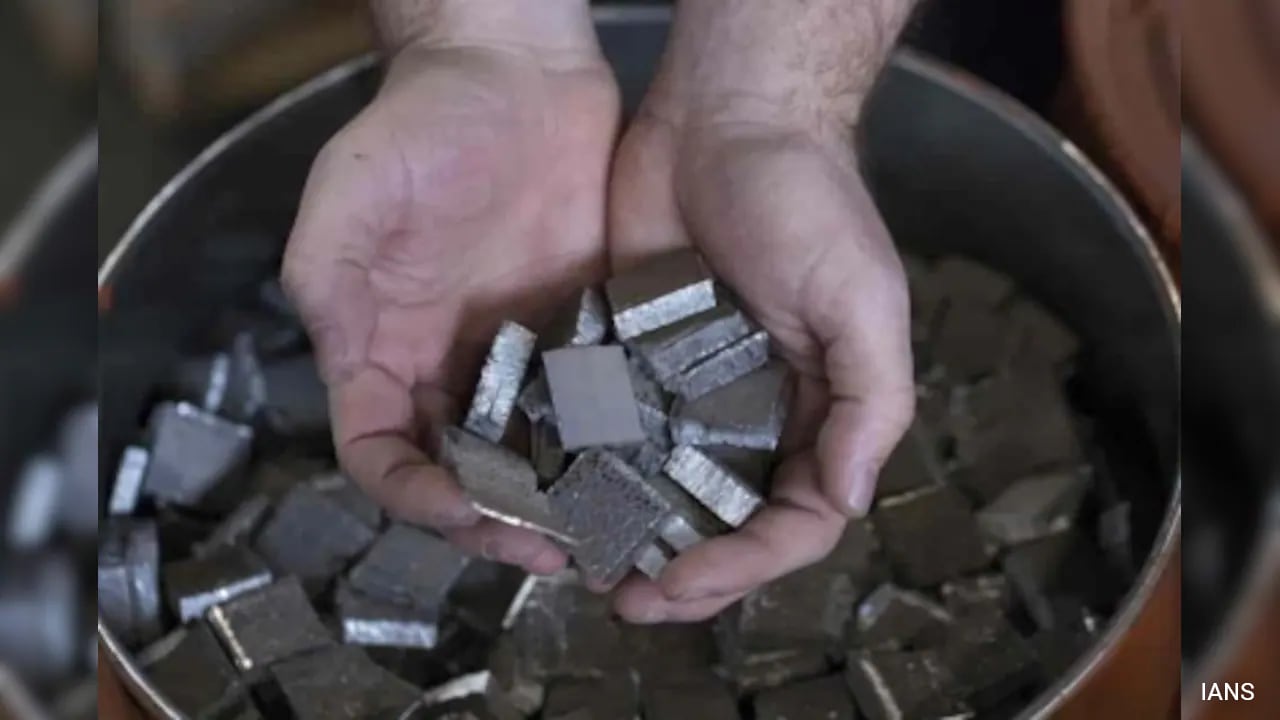
The government on Wednesday approved a capex support scheme to promote processing of critical minerals lithium and nickel with a financial outlay of Rs 2,814 crore over a period of five years till 2030-31.
The decision was taken at a Union Cabinet meeting under the chairmanship of Prime Minister Narendra Modi.
The scheme aims to develop domestic processing capabilities in India to support value addition within the country, reduce import dependence, and develop value chain.
Under the scheme, capital subsidy of 30 per cent of eligible investment will be provided for setting up four critical mineral processing plants, comprising two lithium processing plants and two nickel processing plants. The maximum capital support will be capped at Rs 500 crore per lithium beneficiary and Rs 900 crore per nickel beneficiary, respectively.
Critical minerals are vital for economic development, national security, and modern clean-energy technologies.They are key components of modern technologies and essential for a low-carbon future. From solar panels and electric vehicles to electronic devices carried in pockets, critical minerals form the foundation of a modern, net-zero economy.
"Our National Critical Mineral Mission has been progressing in a very systematic manner...A scheme for the processing of critical minerals was approved by the Cabinet today," Information and Broadcasting Minister Ashwini Vaishnaw told media.
The processing of critical minerals remains geographically concentrated in a few global locations, leaving global supply chains vulnerable to geopolitical tensions, price volatility, and export or supply restrictions, an official statement said.
This concentration threatens supply chain resilience and economic security, with serious consequences for national security, economic sovereignty, and the timely delivery of decarbonisation goals
At present, India remains substantially dependent on imports for refined intermediates and high-purity materials, owing to the nascent stage of domestic beneficiation and processing infrastructure for critical minerals, including lithium, nickel and cobalt.
Domestic processing capacity for critical minerals remains limited, with commercial-scale projects facing challenges relating to high capital requirements, limited availability of suitable technologies and constrained access to raw materials.
Domestic processing capacity is therefore imperative for maximising value addition, achieving import substitution, and establishing resilient end-to-end value chains.
Against this backdrop, the scheme has been formulated to provide targeted capital expenditure support for setting up of and operationalisation of domestic processing facilities.
The scheme aims to develop processing capabilities to support value addition within the country, reduce import dependence, and develop value chain.
The scheme targets processing of lithium and nickel ores/intermediary products into high purity compounds.
Cobalt is also expected to be recovered as a by-product of nickel production. This will support critical sectors such as electric mobility, Battery Energy Storage System (BESS), electronics, defence and speciality steel.
The proposed scheme, with an overall outlay of Rs 2,814 crore, will be implemented from 2026-27 to 2030-31.
(This story has not been edited by NDTV staff and is auto-generated from a syndicated feed.)
KioskNews shows a cleaned-up reading view extracted from the publisher’s page — the original always lives on their site, not ours.