What is the ‘cadaver skin jab’ beauty trend and does it really work?
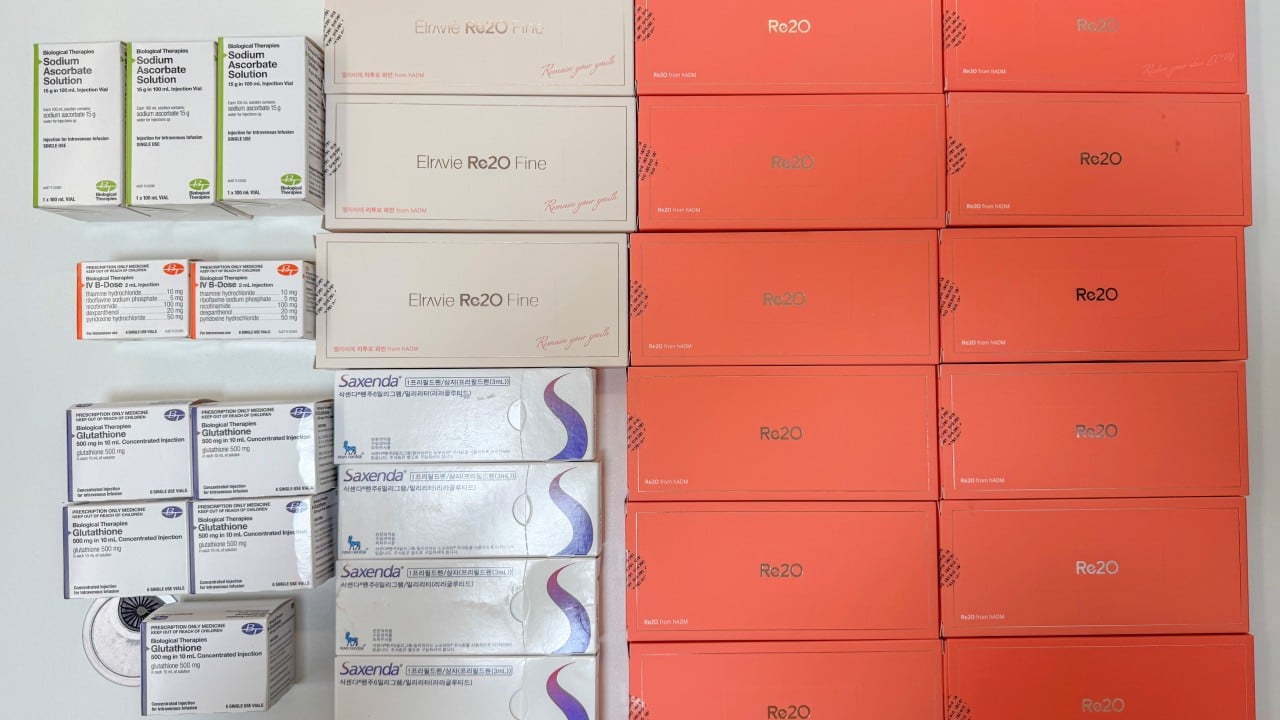
A growing interest among Hong Kong women in an anti-ageing injection containing human tissue has prompted a recent crackdown by health authorities, as the product, widely known in Chinese as the “cadaver skin jab”, has not been registered for use in the city.
The South China Morning Post examines why the injection has become a new beauty trend, what it claims to do and the risks involved.
1. What is a ‘cadaver skin jab’?
The “cadaver skin jab” refers to Elravie Re2O, a cadaver-derived skin injection marketed as an anti-ageing skin booster. It is commonly known by that Chinese nickname on social media.
Developed by South Korean biotech company L&C Bio and distributed by Humedix, the product was launched in November 2024.
According to the distributor, it contains human acellular dermal matrix – material derived from processed human tissue obtained from deceased donors through United States tissue banks.
The company claims the product improves skin condition by supplying structural proteins such as collagen and elastin. It describes the treatment as a form of “structural replenishment” for aged or damaged skin, rather than a traditional booster that provides only temporary stimulation.
2. Why is it under scrutiny?
Over the past week, Hong Kong health authorities seized 20 vials of Elravie Re2O – said to contain human tissue – during raids on four premises offering beauty services.
In a joint operation with police, a 38-year-old woman was arrested on suspicion of unlawful commercial dealing in human organs, as well as unlawful possession of Part 1 poisons and unregistered pharmaceutical products.
Dr Fung Ying, controller for regulatory affairs at the Department of Health, said the injection was classified as a “regulated product” under the Human Organ Transplant Ordinance and as a “pharmaceutical product” under the Pharmacy and Poisons Ordinance.
She said authorities had received an application for an exemption for the regulated product, but none had been granted. No application had been received to register the injection as a pharmaceutical product.
Fung warned that the product lacked clinical safety data and posed potential public health risks.
3. Where are people getting the treatment?
The Department of Health seized the 20 vials from beauty-service premises in Mong Kok and Tsim Sha Tsui. It is not yet known whether any customers received the injections locally.
However, an SCMP check found that the injection is available and approved for use in Singapore, Taiwan and South Korea. Some beauty clinics market it in Chinese, comparing it with Rejuran, another popular skin-booster injection.
Some influencers have shared their experiences of receiving the injection on social media and praised its skin-enhancing effects, although it is unclear whether those endorsements were sponsored by clinics.
Some medical professionals have also reported treating patients who suffered severe skin complications after the injections.
4. What do experts say?
Dr Peter Pang Chi-wang, a specialist in plastic surgery, warned that products containing human tissue could carry unknown pathogens.
He said that even if a product was claimed to have had all its cells removed, that did not mean it was free of bacteria, stressing that its clinical safety had yet to be proven.
Pang added that it remained uncertain whether the product worked, noting that records showed injections of medical substances or saline solution, as well as microneedling, could also improve skin condition.

Nelson Ip Sai-hung, founding chairman of the Federation of Beauty Industry, said there had been more discussion about the use of Re2O recently, but few operators were offering it because it was difficult to source.
He urged people to be cautious when trying new beauty treatments.
“It is not a bad thing to observe a bit. There must be a reason why the product has not yet been registered in Hong Kong,” Ip said.
KioskNews shows a cleaned-up reading view extracted from the publisher’s page — the original always lives on their site, not ours.