Jensen Huang’s abrupt exit stuns Nvidia’s China staff, clouding the outlook in a key market
Jensen Huang’s abrupt resignation stunned some Nvidia staff in China and raised questions about the future of the US chipmaker’s operations in a market its co-founder had spent years cultivating, according to company sources.
“It’s the end of an era. I really don’t understand why Huang was asked to resign – no one benefits from him stepping down,” one Nvidia employee in China said, declining to be named as they were not authorised to speak to the media.
A second employee said colleagues looked up to Huang, who made a point of coming to China for the company’s Chinese New Year parties and spending time with staff. It was “hard to imagine” another boss making that kind of effort and Huang was “extremely popular” among Chinese staff, the second employee said, also declining to be named.
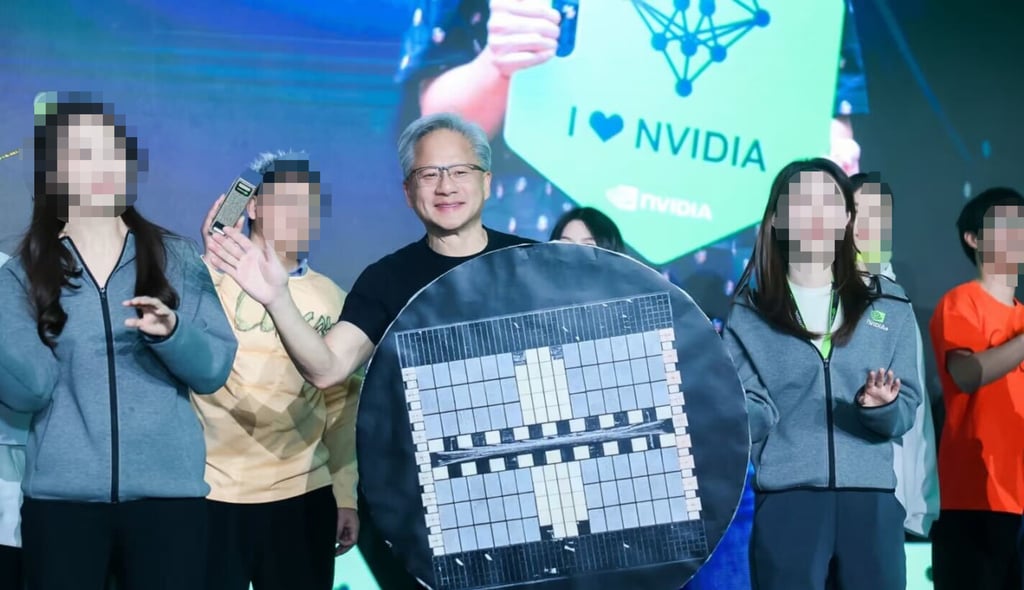
At a staff party in 2024, Huang put on a floral vest and joined employees in a northern Chinese folk dance. In Shenzhen the following January, he handed out red envelopes with cash prizes of up to 40,000 yuan (US$5,996).
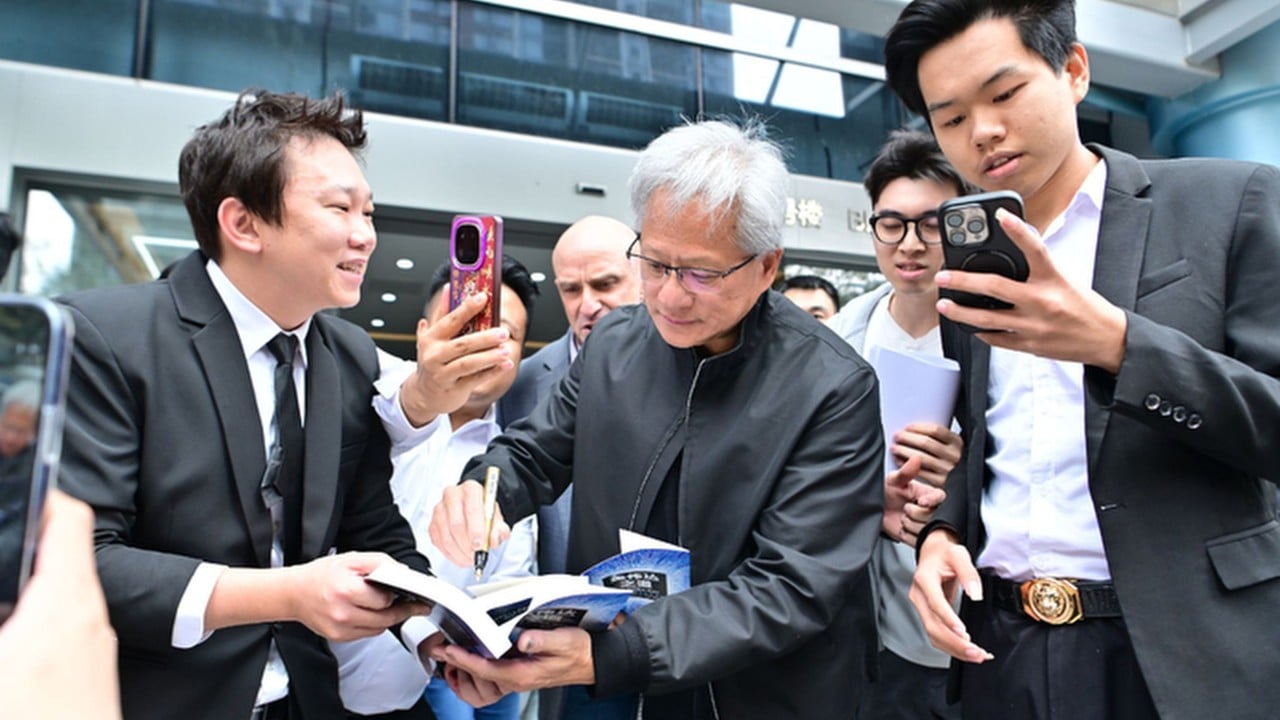
This January, he visited Nvidia’s new Shanghai office in Zhangjiang and handed out tangerines he had bought at a local market as staff rushed to get his autograph. He went on to attend Chinese New Year celebrations in Beijing and Shenzhen.
There is widespread belief among Nvidia’s Chinese employees that political pressure in the US ultimately pushed Huang out, and they worry that his departure will make it harder for American and Chinese tech companies to work together.
Nvidia announced on Thursday that Huang had resigned as president, chief executive and a board member, ending 33 years at the helm. Chief financial officer Colette Kress took over as interim CEO.
The announcement came after The New York Times reported on Wednesday that Huang had engaged in a second affair with Kimberly Powell, Nvidia’s vice-president of healthcare.
Huang had already admitted to another affair over the weekend, reportedly with the businesswoman Alice Huang, whom US officials suspect of being a Chinese operative – an allegation that Beijing has repeatedly denied.
Nvidia employs nearly 4,000 people in mainland China, and Huang has said that the country had the company’s lowest staff turnover worldwide. Nvidia has mainland Chinese offices in Beijing, Guangzhou, Shanghai and Shenzhen.
Huang made at least three trips to mainland China last year. In April, after Washington imposed a licensing requirement on Nvidia’s H20 chips, he met Vice-Premier He Lifeng in Beijing and Shanghai Mayor Gong Zheng.
He returned to Beijing in July for the China International Supply Chain Expo. During the trip, he also met Commerce Minister Wang Wentao and Xiaomi founder Lei Jun, whose ties with Huang go back to Xiaomi’s early days, when it was one of the few smartphone makers to use Nvidia’s Tegra 4 chip in 2013.
At a media round table, Huang praised Huawei Technologies’ advances in chips, computing systems and networking, saying anyone who underestimated the company or China’s manufacturing capabilities was “deeply naive”.
Huang has also repeatedly praised China’s open-source approach to AI models. At the Beijing supply chain expo, he called China’s open-source AI “a catalyst for global progress”.
At CES in Las Vegas in January, he credited DeepSeek’s R1 model with accelerating the shift towards open models. In March, Nvidia invited Moonshot AI founder Yang Zhilin to speak at its GTC conference in San Jose, where he explained how the start-up scaled its Kimi K2.5 model.

Huang has argued that Washington should let US chipmakers compete in China and that Beijing would benefit from keeping its market open to foreign suppliers. Selling to China, he said, would help American technology gain wider adoption and strengthen US competitiveness. In May, Huang joined US President Donald Trump’s trip to Beijing as Nvidia sought to clear export hurdles to H200 sales.
As restrictions on both sides constrained data centre chip sales, Nvidia put greater emphasis on robotics and autonomous driving in its China operations. Huang’s March GTC keynote featured a humanoid from China’s Galbot, and Nvidia later unveiled a research robot built around Unitree Robotics’s H2 Plus.
In June, the chipmaker advertised for more than a dozen robotics roles across Beijing, Shanghai and Shenzhen. Chinese carmakers BYD and Geely were developing autonomous vehicles using Nvidia’s Hyperion platform, the US company said in March.
KioskNews shows a cleaned-up reading view extracted from the publisher’s page — the original always lives on their site, not ours.