EVs, ACs And Deficient Monsoon: Inside Kerala's Power Conundrum
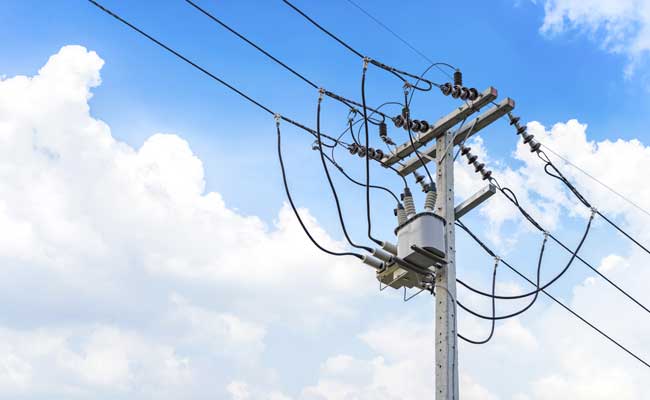
Kerala's Congress-led UDF government came to power after a decade with a promise of a new Kerala, more investment, better infrastructure, stronger finances and faster growth. Barely four months into office, however, it has run into a problem that sits at the heart of almost every one of those ambitions: power.
Kerala is struggling to meet its electricity demand. Nightly restrictions have entered a second week, peak demand has crossed 5,000 MW this September, and the government is now prepared to buy electricity at almost any available price, even if it costs as much as Rs 30 a unit.
"Right now, we are trying to purchase power by any means, as many people are saying they want electricity even if the price is high," Electricity Minister Sunny Joseph said on Monday. "Right now, money is not the priority; it is power."
That is an expensive proposition for a state already trying to put its finances in order.
Chief Minister VD Satheesan says Kerala currently spends around Rs 13,000 crore every year buying electricity from outside the state. He expects that bill to rise to around Rs 16,000 crore this year.
The government is now talking to the National Thermal Power Corporation to secure additional electricity at the lowest possible rate. Joseph admits that buying expensive power will put an additional burden on the exchequer, although the government says it is not currently considering passing that cost on to consumers through a cess.
But the problem goes much deeper than finding some extra electricity for September.
The chief minister has placed infrastructure, investment and economic growth at the centre of his government's plans. Multi-port connectivity, new industries, technology projects and large investments all depend on one basic requirement: reliable electricity.
Factories cannot be invited into a state that cannot guarantee power. New infrastructure brings additional demand. Data centres and technology businesses consume large amounts of electricity. Electric mobility is expanding rapidly. Even Kerala's homes are consuming more power as air conditioners and other appliances become common.
That is why what initially looked like a temporary September shortage is becoming one of the first major policy tests for the four-month-old government.
Kerala has a structural weakness. It produces only about a quarter of the electricity it consumes. The rest has to come from central generating stations or be purchased from outside.
This September, that dependence has become painfully visible.
KSEB Chairman and Managing Director MG Rajamanickam has said electricity demand in September would normally be around 3,900 MW to 4,200 MW. Instead, peak demand has crossed 5,000 MW, leaving the state facing a gap of around 1,000 MW during the most difficult hours.
And Kerala cannot simply go into the market and buy whatever it wants.
Other states need electricity too. Rajamanickam said the Southern Regional Load Despatch Centre had informed KSEB of a nationwide shortage of nearly 12,000 MW, linked to coal supply problems and lower generation from central stations.
There is another worry.
Kerala has received around 22 per cent less monsoon rainfall, further raising concerns over a state whose own electricity generation continues to depend heavily on hydropower.
For policymakers, therefore, the question is no longer simply how Kerala gets through September. It is how a state with much bigger economic ambitions plans its electricity needs for the next five, ten or twenty years.
The way Kerala uses electricity is changing as well.
Air conditioners are becoming an increasingly important part of the evening load. And there is another fast-growing consumer of electricity sitting inside thousands of Kerala homes, the electric vehicle.
Joseph has specifically pointed to air conditioners and EVs being charged at night as contributors to the surge in demand. He says consumption is now roughly 1,000 MW higher than last year while generation has not increased at the same pace.
The EV numbers help explain why KSEB is watching charging habits closely.
An NDTV analysis based on Kerala's available EV registration figures and the consumption assumptions used in the state's Energy Transition Roadmap suggests that around 4.28 lakh electric two-wheelers, four-wheelers and autorickshaws were registered in Kerala between 2019 and 2026.
That includes roughly 3.31 lakh electric two-wheelers, 66,000 electric four-wheelers and 30,700 electric autorickshaws.
And the numbers are rising quickly. Around 2.19 lakh EVs have been registered in 2026 so far, according to the latest available figures, including about 1.71 lakh two-wheelers, 33,389 four-wheelers and 15,479 autorickshaws.
Using the average consumption assumptions in Kerala's Energy Transition Roadmap, the existing EV fleet could require close to 0.78 million units of electricity every day, assuming the registered vehicles remain operational and follow those average usage patterns.
This makes it clear that EVs alone are not enough to cause Kerala's power crisis.
The bigger problem is when those vehicles are charged.
If around 60 to 80 per cent of that electricity is drawn between 6 pm and 11 pm, when people return home and plug in their vehicles, a near-term projection puts the average EV load during those hours at around 93 MW to 124 MW.
That is roughly around 2 per cent of Kerala's present peak electricity demand, clearly indicating that EVs are not the primary cause of power consumption. The Electricity Minister also says that air conditioners are another reason. The last available statistics of 2020 show household penetration of air conditioners to be around 13.5%. If a safe projection is made based on a 10% yearly increase, roughly 30% of Kerala's household of 90 lakh homes use air conditioners.
If a conservative projection is done based on the then it shows that roughly 20 to 25% of the consumption is because of air conditioners. This means that this could be a new emerging pattern in a state like Kerala.
This is a projection based on registration and average consumption figures, not a measurement by KSEB. Actual consumption could be lower or higher depending on how many EVs are being used, how far they travel and when they are charged.
But it demonstrates an important point.
EVs are not responsible for Kerala's roughly 1,000-MW demand gap, but air conditioners could be. But they could already be adding tens of megawatts, and possibly more than 100 MW during heavy charging periods, at exactly the time when Kerala has the least electricity to spare.
The irony is that Kerala is also producing more solar electricity.
Solar power is available during the day. Many private vehicles, however, are charged after their owners return home in the evening. By then, solar generation has fallen sharply, while people are switching on lights, air conditioners, televisions, induction cookers and other appliances.
So Kerala can have additional electricity available during parts of the day and still struggle after sunset.
That is why KSEB has asked consumers to reduce electricity use between 6 pm and midnight and, wherever possible, move EV charging and other heavy consumption away from those hours.
Storage could eventually become part of the answer. Batteries and pumped-storage projects can store electricity when it is plentiful and release it when demand rises. Former KSEB chairman B Ashok has argued that Kerala's failure to build sufficient storage capacity for surplus daytime solar electricity is one of the deeper problems behind the present situation.
For now, however, the political argument is centred on an old power contract.
The UDF government says Kerala would have been in a much better position today if long-term power purchase agreements signed during the previous Oommen Chandy government had not subsequently been cancelled during LDF rule.
"If that much supply was available, the state would not have had to borrow electricity in March-April, and we would not have had to return that borrowed power currently," Joseph said.
The government has moved the Supreme Court in an attempt to revive the arrangement and has engaged senior advocate Kapil Sibal.
Leader of the Opposition Pinarayi Vijayan rejects the government's version.
He says the agreement was drawn up by KSEB during the Oommen Chandy government's tenure but ran into regulatory problems. The Kerala State Electricity Regulatory Commission eventually refused approval in 2023, citing issues including the process through which the tariff was fixed and deviations from standard bidding procedures.
"The legal problems in the agreement unilaterally entered into by KSEB led the regulatory commission to cancel it," Vijayan said.
He has also asked a politically uncomfortable question of the government.
Last April, Kerala's daily electricity consumption touched around 115 to 116 million units and peak demand reached around 6,100 MW, according to Vijayan, yet the state managed without power cuts through purchases and power-swap arrangements.
Demand today is lower. Why, he asks, are there restrictions now?
The government says the circumstances are different, electricity availability outside Kerala has tightened, and the state is simultaneously returning power that it had borrowed earlier.
The argument over who is responsible will continue.
But the government also knows that blaming its predecessor cannot produce electricity.
That is why attention is increasingly turning towards October.
Satheesan has said his government will announce a new power policy during the coming Assembly session, with renewable energy and solar power at its centre. He has also publicly questioned resistance to renewable projects within KSEB itself.
"Some KSEB officials get annoyed when we talk about promoting renewable energy projects," the chief minister said while addressing a KSEB expo in Kochi.
For a government promising a new era of investment and infrastructure, the October policy could therefore become much more important than another announcement about electricity.
The big question is: how will Kerala meet the power needs of the industries and investments it wants to attract? And how much longer can the state afford to spend thousands of crores every year buying electricity from elsewhere?
As for the Left, out of power after ten years, the outages have meanwhile provided its first major issue against the new government. Consumer complaints have filled television screens, protests have been reported in several districts, and the Opposition has aggressively pushed the crisis on social media.
The chief minister had indicated that a solution could be found by September 15. KSEB's own chairman has subsequently indicated that restrictions may have to continue until the end of September, with additional short-term power expected only from October 1.
The immediate challenge is therefore to keep Kerala's lights on through September. With viral AI videos on crises centred around the Kerala chief minister and KSEB, the crisis has a global reach which also has embarassed the newly formed government vying for ambitious transformation of the state's economy.
A government can announce roads, ports, industries, investment corridors and a new economic future. But every one of those promises ultimately requires the same thing -- power.
KioskNews shows a cleaned-up reading view extracted from the publisher’s page — the original always lives on their site, not ours.