Worst ever outbreak of bluetongue hits British farms
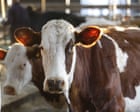
British farmers are experiencing the worst bluetongue season on record, with the number of cases surpassing the past three years combined.
The viral disease, which affects sheep and cattle among other animals, can cause fevers, ulcers, a swollen head and lameness. The tongue may go blue and even protrude from the mouth. In the most severe cases, the animal can die.
The virus, which is transmitted via biting midges and originated in Africa, has spread to Europe over the past two decades, a development the World Organisation for Animal Health links to climate breakdown. The particular strain of bluetongue currently affecting livestock, serotype 3 (BTV-3), was first found in England in 2023.
Academics have said the transmission is inextricably linked to the temperature of the surrounding environment, with hotter temperatures, caused by the climate crisis, contributing to a rise in cases being recorded farther north.
Bluetongue does not affect people or food safety, but Robyn Munt, the vice-president of the National Farmers’ Union, said farmers were having to keep “constant vigilance” and continually check their livestock for symptoms.
So far in this year’s bluetongue season, which runs from 1 July 2026 to 30 June 2027, Defra has recorded 2,201 cases, 1,103 in September.
Despite being just three months old, the 2026-27 season has already seen more cases than the past three seasons combined.
Defra defines a case as a premises where at least one animal with bluetongue is present, so the total number of animals affected is likely to be higher than the number of reported cases.
Farmers can vaccinate their livestock against the disease but Munt said it had been “really challenging” for them to get hold of the vaccines, as it was a “demand-led process”.
“During a year where livestock businesses, due to the climate impact of drought, have carried a whole load of cost in their business that they might not have been expecting, dealing with vaccinating animals and then potentially having to treat animals with bluetongue is just more labour pressure and stress on a farm business,” she said.
This summer the disease has crossed into Scotland for the first time and has been found as far north as Aberdeenshire.
With temperatures still consistently high enough in many parts of the UK for the virus to develop inside the midges, Tom Cantillon, a senior analyst at the Energy and Climate Intelligence Unit, said this year’s record outbreak was a “harbinger of things to come”.
“With climate change increasing the likelihood of milder winters and hotter summers, pests and pathogens that were once unable to survive here can now make their home. This will profoundly impact not only farmers, but the wider public,” he said.
Earlier this summer mosquitoes capable of transmitting Zika virus and dengue were found breeding in homes in east London, with experts predicting that the rapidly warming climate could lead to greater “incursions of invasive mosquitoes”.
Cantillon said: “Adequate preparation for these pests and pathogens is necessary, including vaccinations for farm animals. But, ultimately, we cannot vaccinate against the kinds of climate that encourage these outbreaks. They will only get more likely until we reduce our emissions to net zero and stop warming altogether.”
KioskNews shows a cleaned-up reading view extracted from the publisher’s page — the original always lives on their site, not ours.