Democratic party poised to switch to investigative mode — Phar Kim Beng
NOVEMBER 5 — The Democratic Party’s sweeping electoral victories in the November 2026 midterm elections have opened a new chapter in American politics.
The immediate consequences extend beyond the balance of power in Congress.
They concern the ability of Congress to investigate President Donald Trump, his administration, his family and the corporate interests surrounding his presidency.
The next two years could therefore become a period of sustained congressional scrutiny.
At the centre of this emerging confrontation is Congressman Robert Garcia of California, a Democrat preparing to exercise the investigative authority associated with leadership of the House Oversight Committee.
His election-night warning was unusually direct: “Lawyer up.”
These two words convey the confrontational mood among Democrats who believe the Trump administration has operated without sufficient congressional scrutiny.
Yet the significance of Garcia’s declaration goes beyond political theatre.
It reflects the constitutional authority of Congress to demand documents, summon witnesses, conduct hearings and investigate the conduct of the executive branch.
For Trump, whose second presidential term runs until January 2029, this presents a potentially difficult institutional environment.
The Democrats’ electoral gains have changed the political calculations in Washington.
During periods of unified Republican control, congressional investigations into the administration faced political obstacles.
A Democratic-controlled House would create substantially greater opportunities for oversight.
The House Oversight Committee is especially important because its jurisdiction extends across federal government operations.
It can investigate alleged misconduct, administrative failures, conflicts of interest and the use of public resources.
Garcia has already identified several possible areas of investigation.
They include the Trump family’s business activities, alleged corporate corruption, the conduct of the Department of Homeland Security, Immigration and Customs Enforcement, and the federal government’s handling of records connected to Jeffrey Epstein.
Each subject carries different legal and political implications.
Investigations into the Trump family’s business interests could examine whether private commercial relationships intersected improperly with public decision-making.
Investigations into corporate corruption could explore whether government contracts, regulatory decisions or other official actions disproportionately benefited politically connected interests.
Scrutiny of Homeland Security and Immigration and Customs Enforcement could focus on the legality of enforcement operations, detention practices and adherence to constitutional protections.
The handling of the Epstein files could raise questions about transparency, document retention and whether federal authorities followed appropriate procedures.
None of these investigations would establish wrongdoing merely by being launched.
Allegations would need to be supported by evidence, and those investigated would be entitled to challenge the claims against them.
Nevertheless, the cumulative burden of multiple investigations could be substantial.
Congressional oversight is not limited to public hearings.
Committees can issue subpoenas seeking testimony and documents.
They can request records from federal agencies and examine the conduct of senior officials.
Where witnesses refuse to cooperate, Congress may pursue enforcement through established legal mechanisms.
However, congressional authority is not unlimited.
The executive branch can assert privileges, contest the scope of subpoenas and challenge investigative demands in court.
Such disputes can consume months, sometimes years.
This means Democratic control of the House would not automatically translate into unrestricted access to presidential communications or confidential executive records.
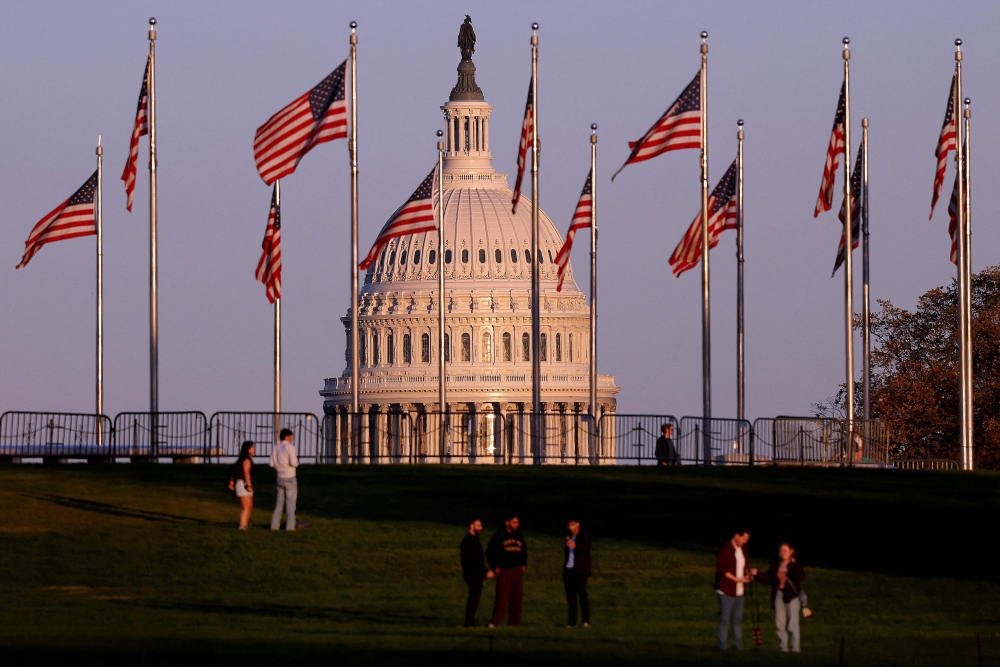
The US Capitol is seen at sunset on Election Day in Washington, DC, on Nov 3, 2026, as Americans vote in midterm elections that could determine control of the House and Senate for the remainder of President Donald Trump’s second term. — AFP pic
But even contested subpoenas can generate political pressure.
Cabinet secretaries may face repeated questioning. Senior officials may be required to explain administrative decisions.
Private individuals connected to government business may become subjects of congressional inquiries.
The administration would have to devote legal resources, personnel and political attention to responding.
The resulting tension could become a defining feature of Trump’s final two years.
Impeachment Is Not the Only Instrument
Much attention will inevitably turn to the possibility of another impeachment proceeding against Trump.
Although the most likely candidate to face impeachment proceedings would be Peter Hegseth, the Secretary of War.
The House of Representatives possesses the constitutional authority to impeach a president by a simple majority.
Conviction and removal, however, require a two-thirds majority in the Senate.
That distinction is fundamental.
Investigations can produce findings and referrals without necessarily culminating in impeachment.
Democrats may therefore face a strategic choice between pursuing impeachment proceedings and conducting sustained oversight of individual agencies, Cabinet officials and executive decisions.
The two approaches are not mutually exclusive.
But they have different consequences for congressional time, public attention and legislative priorities.
For an administration entering its final two years, the prospect of continuous investigation could become an important constraint even without impeachment.
The international consequences deserve equal attention.
For Asean, Japan, South Korea, Australia and other American partners in the Indo-Pacific, congressional scrutiny could complicate the conduct of US foreign policy.
The Trump administration remains responsible for diplomacy, national security and the management of international crises.
Yet senior officials dealing with trade negotiations, defence commitments, sanctions and immigration policy may simultaneously be required to defend their domestic decisions before congressional committees.
This does not mean American foreign policy will cease functioning.
Nor does it mean Congress can simply dictate the president’s diplomatic agenda.
But greater institutional friction could make policy coordination more complicated.
Countries in Asia should therefore distinguish between the authority of the American presidency and the increasing assertiveness of Congress.
For Malaysia and Asean, the appropriate response is to broaden and deepen engagement with the United States across both political parties and multiple institutions.
Relationships with the White House remain important.
So do relationships with congressional leaders, committees, federal agencies and state governments.
The lesson is that American power is distributed across institutions that can compete with one another.
The emerging congressional investigations also highlight a broader feature of American constitutional government.
Presidents possess considerable executive authority, especially in foreign affairs.
But that authority exists within a system of legislative oversight, judicial review and constitutional constraints.
Congressional investigations can reveal administrative failures and provide information needed for legislation.
They can also become instruments of partisan confrontation.
The distinction depends on the seriousness of the evidence, the fairness of investigative procedures and the willingness of lawmakers to apply consistent standards.
Democrats will have to demonstrate that oversight serves a public purpose rather than simply extending electoral competition into committee hearings.
Republicans, meanwhile, will have opportunities to challenge investigations they regard as excessive, politically motivated or unsupported by evidence.
The courts may ultimately determine the permissible boundaries of some congressional demands.
For Trump, the central change is that the executive branch may face more sustained institutional resistance from a newly empowered opposition.
The Democratic Party is poised to move from electoral campaigning into investigative mode.
Garcia’s warning of “Lawyer up” captures that transition.
But the lasting significance will be measured not by the number of subpoenas issued or the intensity of televised hearings.
It will be measured by whether congressional oversight produces credible findings, strengthens accountability and clarifies the boundaries of presidential power.
The final two years of Trump’s presidency could thus become as much a contest over constitutional authority as a struggle over the political direction of the United States.
* Phar Kim Beng, PhD is the Professor of Asean Studies at International Islamic University of Malaysia and Director of Institute of International and Asean Studies (IINTAS).
** This is the personal opinion of the writer or publication and does not necessarily represent the views of Malay Mail.
KioskNews shows a cleaned-up reading view extracted from the publisher’s page — the original always lives on their site, not ours.