China-linked battery projects could receive UK funding despite security warnings
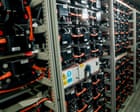
A string of battery projects linked to China are expected to be granted UK state subsidies despite deepening fears over the risk of foreign interference they could pose to Europe’s energy systems.
Ofgem, Great Britain’s energy regulator, published a provisional shortlist for a new “long duration” energy storage scheme in June. The list was dominated by projects relying on lithium-ion batteries, which are typically manufactured in China and operated with Chinese software.
The low cost of lithium-ion batteries meant 11 projects were able to outcompete homegrown renewable energy storage technologies to make Ofgem’s 16-strong shortlist in line for financial support. The energy watchdog is expected to confirm the final projects selected for financial support in the coming weeks.
The shortlisted projects include some backed by developers that routinely rely on Chinese battery makers, one of which was recently the subject of an “ethical hack” by a German cybersecurity company that claimed to have accessed hundreds of thousands of solar installations across Europe.
Ofgem is under pressure to bring forward investment in battery projects that can store renewable energy and release it back to the grid for at least eight – hours at a time to help reduce the cost of balancing the grid.
But senior industry sources have said that the regulator’s assessment criteria for its new battery support scheme have not adequately considered the security and economic benefits of backing British storage technologies over cheaper Chinese imports.
Invinity Energy Systems, a British producer of vanadium flow batteries, threatened to reconsider its plans to manufacture batteries in the UK after Ofgem selected just one project that uses its alternative energy storage technology in its shortlist.
The regulator is expected to finalise the scheme months after a report by Michael Collins, a former deputy head of national security strategy at the UK Cabinet Office, warned that Europe was “sleepwalking” into a series of economic and national security problems because of an overreliance on Chinese-made green technology.
Ofgem’s assessment is heavily weighted towards the cost of each project. Although the regulator considers each project’s proposed IT and security measures, this is based on the extent to which these systems might delay “their stated delivery timelines” in the early 2030s.
The regulator does not appear to specifically consider the risk of security breaches during the lifetime of the projects once they are delivered, although developers would be expected to comply with the government’s general cybersecurity guidance.
A spokesperson for Ofgem said: “We assessed projects against the legal and policy framework set by government and parliament, and are carefully considering consultation responses before reaching final decisions.”
Battery developers Field Energy and Statera Energy, which are behind seven of the lithium-ion projects shortlisted by Ofgem, both have long-established links to Chinese manufacturers which provided the batteries used in past projects.
after newsletter promotion
Field Energy is behind five projects on the shortlist and has typically sourced its battery technology from Envision Energy, one of six companies closely linked to the Chinese Communist party according to US senators.
Statera had three projects shortlisted, including one pumped hydro power project and two lithium-ion batteries, and in the past sourced batteries from Envision, as well as the Chinese solar and battery maker Sungrow. Sungrow was the company targeted in the ethical hack earlier this year.
Both companies said they took security seriously and complied with all national security guidance at their sites. Amit Gudka, the chief executive of Field and the former boss of collapsed energy supplier Bulb, said the company wanted to play a part in creating a UK-based battery manufacturing industry to support future projects.
A UK government spokesperson said: “The security of our energy system is our priority and we are taking action to build secure and resilient battery supply chains and reduce vulnerabilities, while investment in the UK’s energy sector is subject to the highest levels of national security scrutiny.”
KioskNews shows a cleaned-up reading view extracted from the publisher’s page — the original always lives on their site, not ours.