Iran faces growing food shortages, but regime collapse unlikely during war, expert warns

Growing reports from inside Iran point to severe internal distress, but Danny Citrinowicz, an Iran and Shi'ite axis researcher at the Institute for National Security Studies (INSS), cautioned against assuming that the country is on the verge of internal collapse while speaking with 103FM on Monday
"As long as the threat remains as it is, I don't see people taking to the streets," the Iran researcher said.
"If they do go out, they will simply be slaughtered, as happened in January of this year. When that situation changes, the real event will begin. I don't expect that to happen under a military threat."
Meanwhile, life in Iran is becoming increasingly difficult.
"The situation is getting worse. This is connected to a series of other developments taking place in Iran in recent days. We are identifying food shortages, perhaps for the first time," Citrinowicz said.
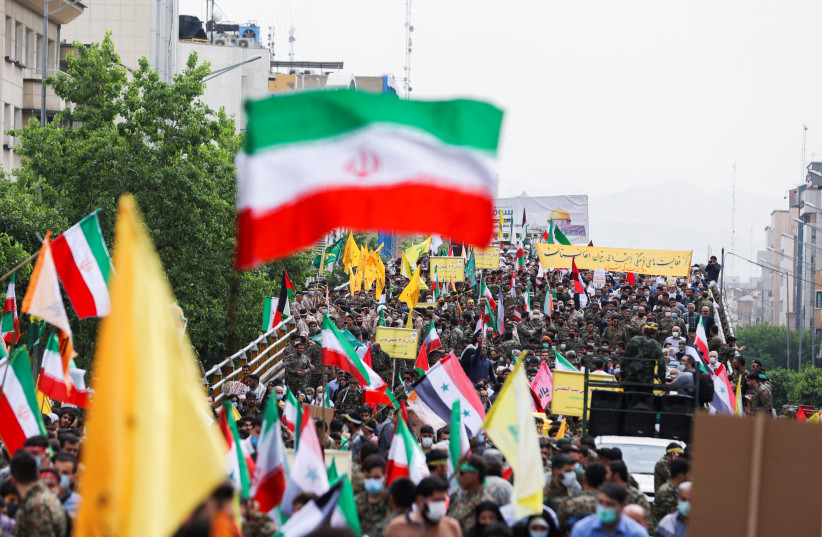
"But we need to remember: This situation only convinces Iran's leader that the country cannot continue in its current state, whether through an agreement or an attempt to break the naval blockade."
Citrinowicz warned that Tehran was more likely to escalate than surrender under mounting pressure.
"Iran's choice is not surrender, and it will choose escalation. I'm not saying it will attack tomorrow, but we are seeing its very aggressive responses, and we can assess that as the situation continues to escalate, the likelihood of Iran escalating its responses only increases," he added.
"It will also not give up its nuclear program or its missiles."
'We are not the real story in this context'
Nevertheless, Citrinowicz was not convinced that Iranian aggression would necessarily be directed at Israel.
"I don't think that is in their interest at this point in time, unless they identify that we are about to attack them. We are not the real story in this context," he said.
Iran is also far from stable internally. The country has managed to overcome the killing of Khamenei, but questions remain over what form the regime will take, particularly whether it will become more military-oriented or more religious.
Those questions will only be addressed after the war ends.
It is possible that those hoping to see internal change in Iran will actually have to support bringing the war to an end.
KioskNews shows a cleaned-up reading view extracted from the publisher’s page — the original always lives on their site, not ours.