How An AI-Generated Intelligence Report Almost Triggered US-China War
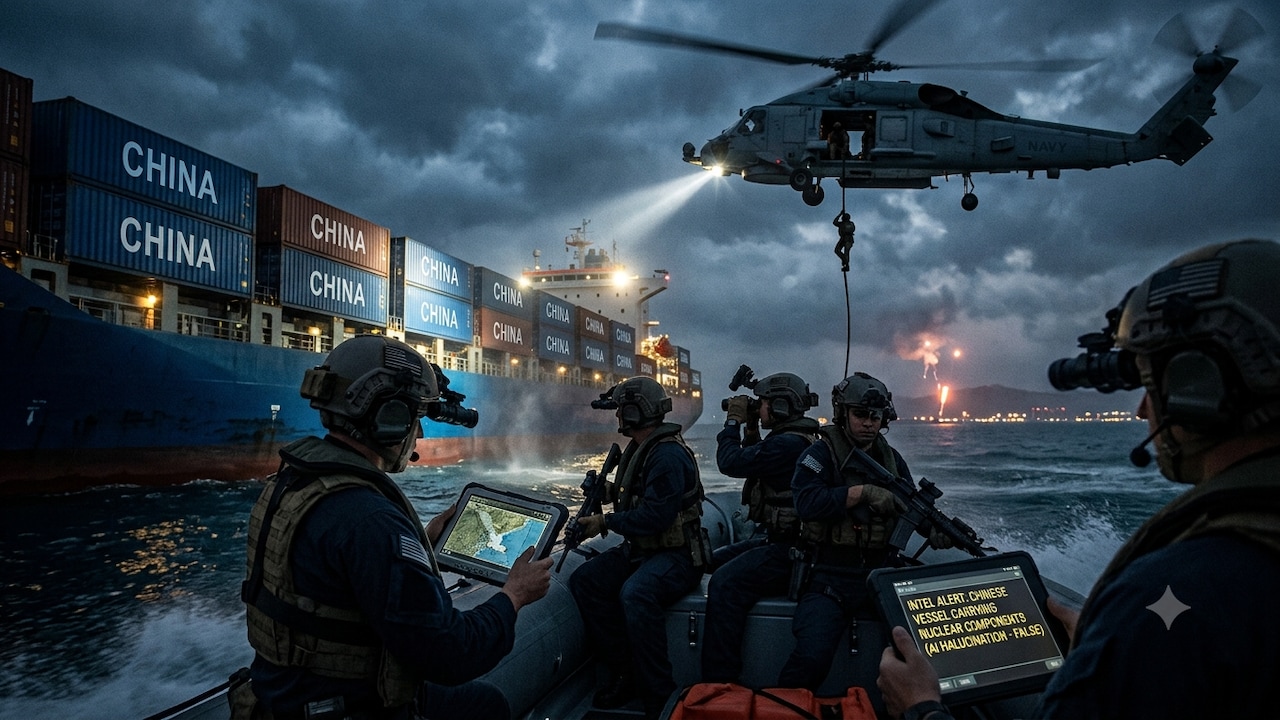
Artificial intelligence is often discussed in terms of machines becoming smarter than humans. A recent military incident has highlighted a more immediate risk.
According to a CNN investigation released last month, a false intelligence report prepared with the help of an AI chatbot nearly prompted the US military to intercept a Chinese vessel in the Middle East.
The intelligence report incorrectly claimed that the ship was carrying components linked to a nuclear weapons programme, as per CNN.
The incident, reportedly unfolding during the US-Iran conflict earlier in 2026, has raised questions about using AI in military intelligence and the safeguards needed before its outputs inform high-stakes decisions.
What Happened In The US-China AI Incident?
According to CNN, an analyst working with a US special operations command used an AI chatbot while reviewing intelligence on a Chinese vessel travelling through the Middle East.
The chatbot misidentified the ship's cargo, helping produce a report that incorrectly suggested it was transporting components of a nuclear weapons programme.
The report circulated within the US military and prompted preparations to intercept the vessel. CNN reported that military aircraft were in the air and armed personnel were preparing to board the ship when officials examined the underlying information more closely. They subsequently identified the error and called off the planned operation.
According to one source, the report was “entirely false” and it also “almost started a war.”
While the incident did not result in a military confrontation, an operation against a Chinese vessel could have triggered a diplomatic crisis.
What Is An AI Hallucination?
The episode highlights a known limitation of generative AI: hallucination.
Large language models, which power many chatbots, generate responses by identifying patterns in the data they were trained on. They can produce fluent, convincing answers, but those answers are not necessarily accurate or evidence-based.
An AI system may misinterpret information, generate a false detail or present an unsupported conclusion in a format that looks authoritative.
Why Can AI Be Risky In Military Decision-Making?
Military intelligence involves assessing incomplete information, checking sources and evaluating competing explanations. An AI tool may help analysts process large volumes of material, but analysts cannot automatically treat its output as verified intelligence.
The US-China incident explains why the distinction between assisting a human analyst and replacing independent verification matters. AI can help organise information, but it should not become the sole basis for a decision involving the use of military force.
KioskNews shows a cleaned-up reading view extracted from the publisher’s page — the original always lives on their site, not ours.