Dear Prime Minister: Are you really going to let Kiwi kids best us?
Dear prime minister (and come to think of it, all state and territory leaders), I write for urgent action on something that appears to have fallen off the government’s agenda: the nous of our children when they are released into the financial “wilds” at the end of their schooling.
We used to have a national financial literacy strategy. This lapsed pre-COVID. We used to have the Australian Government Financial Literacy Board. This was abandoned around that same time.
Governments here – of both flavours – used to take Australia’s collective money smarts seriously. After all, it’s make or break stuff for our lives. But let me get back to that.
In 2022, responsibility for financial literacy was transferred from ASIC – which I believe was doing a bang-up job reaching many children via its lesson plans for teachers – and shifted to Treasury.
Sure, there have been some commendable efforts from the ATO. The Tax, Super + You high school competition is of special note, as is the portal’s curriculum-aligned digital learning platform and simulation games.
But it is not enough. Some 70 countries now have an active financial capability strategy. And many of these have begun teaching money as a mandatory part of the school curriculum, often delivered in social sciences all the way up to year 10.
Yet 8.5 million Australian adults – nearly half of us – lack basic financial literacy.
We are talking Ireland, Finland, 30 states in the US, and the United Kingdom from 2028. Goodness, even New Zealand is doing it from January next year.
Yet, there is no official, top-down move to fix this for Aussie kids. Don’t get me wrong, there are many excellent initiatives by many independent bodies and charities, designed to help. But there is zero guarantee that a child will receive these.
There is also a smattering of financial literacy peripheral in the curriculum today, a victory I cheered of ASIC and the previous Financial Literacy Board.
But my son has just proven my fear that it’s possible to weave a wonderful path through the curriculum and miss this. He finished year 10 last year and received only one money lesson in high school.
Why does this matter? Well, a Deloitte report for Iress recently quantified that inadequate money education causes a $123,000 detriment in a person’s life. Worse, they give up about fivefold that amount in lost upside benefit. In finance terms, that’s a pretty steep opportunity cost.
But looking bigger picture, we now know there is potential cost – or upside – to the economy, too. A July 2025 study comparing data from 143 countries demonstrated a strong positive association between financial literacy and GDP per person.
What’s more, it is becoming widely understood that financial and mental health are heavily related. Indeed, there’s now a documented bi-directional link: one can cause the other, and it can go both ways.
It’s not just wealth, it’s wellbeing. And it impacts relationships and families. Yet 8.5 million Australian adults – nearly half of us – lack basic financial literacy, says new UNSW analysis of the 2016 Household, Income and Labour Dynamics in Australia Survey (HILDA).
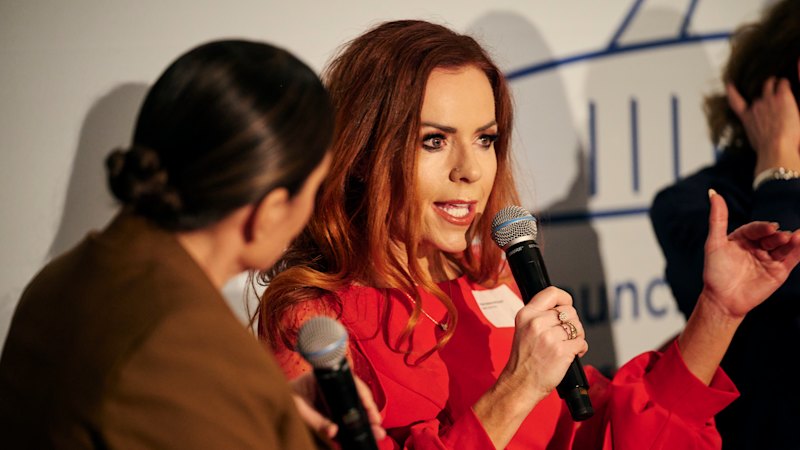
But I was heartened by, and honoured to speak at, the first-ever Parliamentary Friends of Financial Capability event at Parliament House this week.
The event was convened by Labor senator Richard Dowling and Liberal senator Jessica Collins to bring together some 200 people who believe this is a neglected issue, and never before have I been in a room where there was such agreement about the outcome needed, if not the path there.
No, it’s not as simple as it is in New Zealand to introduce mandatory money lessons into schools here – we have federation, and national curriculum changes take agreement between six states and two territories. But it is now vital.
It’s not like when many older generations graduated – when the cash was gone, the cash was gone. Today, young people are the targets of technology designed to assist/relieve them of money.
Indeed, until roughly 15 years ago, it was only credit cards that presented an overspending challenge, but now there is a proliferation of buy-now-pay-later and early pay services and more, amid a cost-of-living crisis. Dare I open the housing can of worms?
Our kids need help. How are they to know how to forge themselves a secure future otherwise? Because many parents feel ill-equipped to, and even anxious about, imparting these skills themselves.
Please, Mr Albanese, lead the charge to get the states and territories to agree to a revised national curriculum that elevates money lessons to be mandatory. Practical, relatable, real-life ones.
Further, I ask that you urgently implement an – appropriately updated – national financial capability strategy. And I would suggest re-engaging ASIC to steer it.
Of course, there needs to be funding. But surely, with the bipartisan support demonstrated at Parliament House this week, the country’s money smarts is worth it. And why would we let NZ kids get an edge on ours?
Nicole Pedersen-McKinnon is author of How to Get Mortgage-Free Like Me, available at nicolessmartmoney.com. Follow her on Facebook, X and Instagram.
- Advice given in this article is general in nature and is not intended to influence readers’ decisions about investing or financial products. They should always seek their own professional advice that takes into account their own personal circumstances before making any financial decisions.
Expert tips on how to save, invest and make the most of your money delivered to your inbox every Sunday. Sign up for our Real Money newsletter.
KioskNews shows a cleaned-up reading view extracted from the publisher’s page — the original always lives on their site, not ours.