Festive Season Is Here, But Why Is India's Smartphone Demand Slowing

India's festive season is usually a good time for smartphone makers. New launches, discounts and sale events often push sales up. But this year, shipments are falling even as the festive season gets underway. What's going wrong?
One reason is that phones are getting more expensive. With prices rising, consumers are being careful about spending and may be putting off an upgrade. Phone makers and retailers are also taking fewer chances, keeping a closer watch on how much stock they bring into the market.
Not just that, Diwali's timing has also played a part. The festival falls later this year, so some of the stock that brands would normally send to retailers in September is being pushed into October and November.
Also Read | Layoffs Are Rising In Tech, But These Skills Are Helping People Unlock Better Pay
The numbers show how sharply the market has slowed. India's smartphone shipments fell 26 per cent year-on-year to 35.8 million units in the July-September quarter of 2026, according to Omdia. It was the lowest shipment volume for a third quarter since 2016.
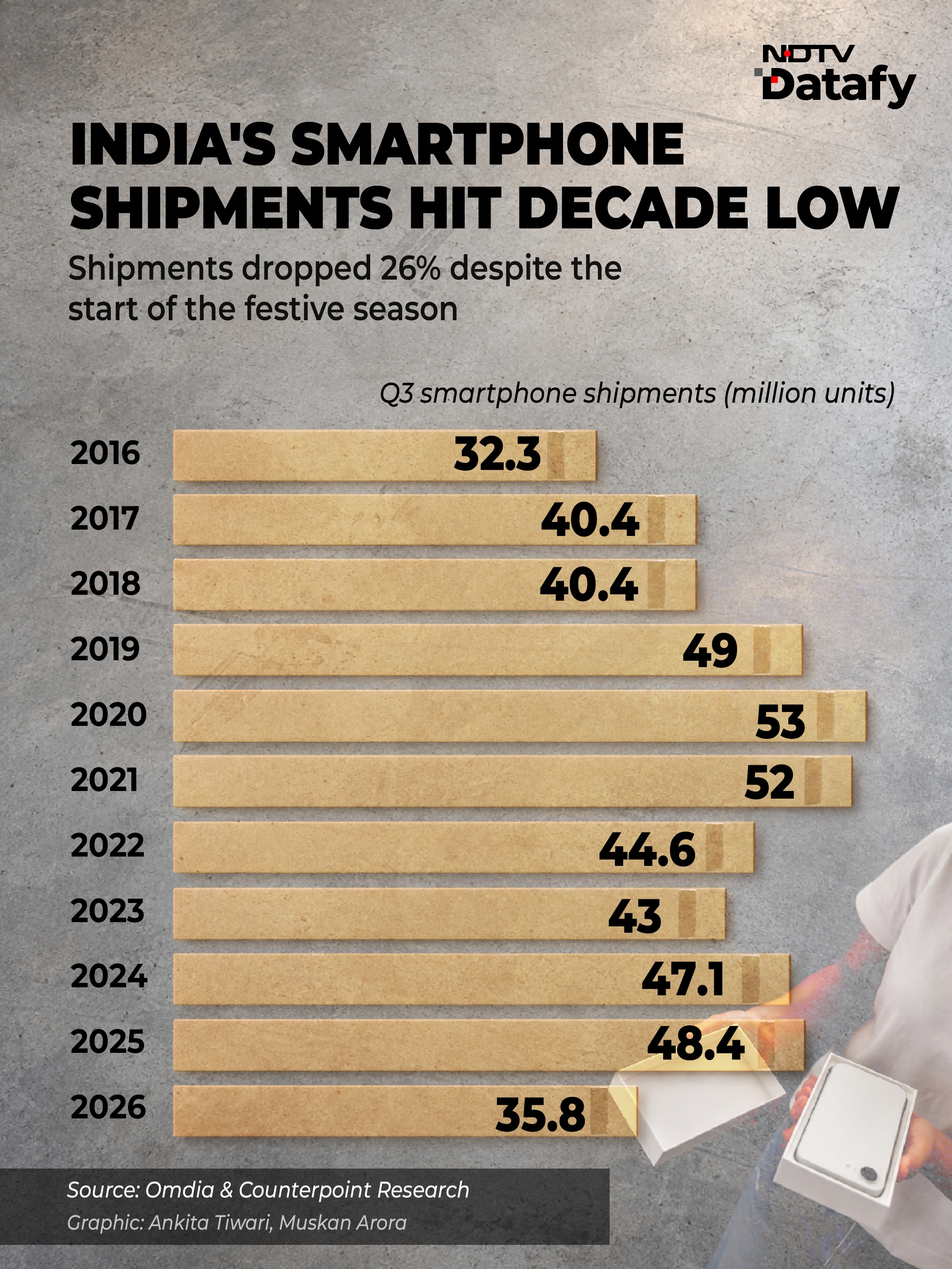
The fall was not limited to one or two brands. Of the five largest smartphone vendors, four recorded a double-digit annual decline in shipments. Samsung was the exception, with shipments falling just 1 per cent.
Samsung shipped 6.7 million units, overtaking vivo to regain the top position for the first time since the first quarter of 2024.
Its share of the market rose from 14 per cent in the year-ago quarter to 19 per cent in Q3 2026. The company's performance was supported by its Galaxy A-series phones, along with cashback, exchange benefits and financing options that helped consumers spread the cost of an upgrade.
vivo, which had led the market in several recent quarters, slipped to second place. Its shipments fell 34 per cent to 6.4 million units, the sharpest decline among the top five brands.
OPPO and Xiaomi also recorded declines. OPPO shipped 4.9 million units, down 24 per cent from a year earlier, while Xiaomi shipped 4.7 million units, a fall of 28 per cent. Both companies faced pressure from rising prices and cautious retailer stocking.
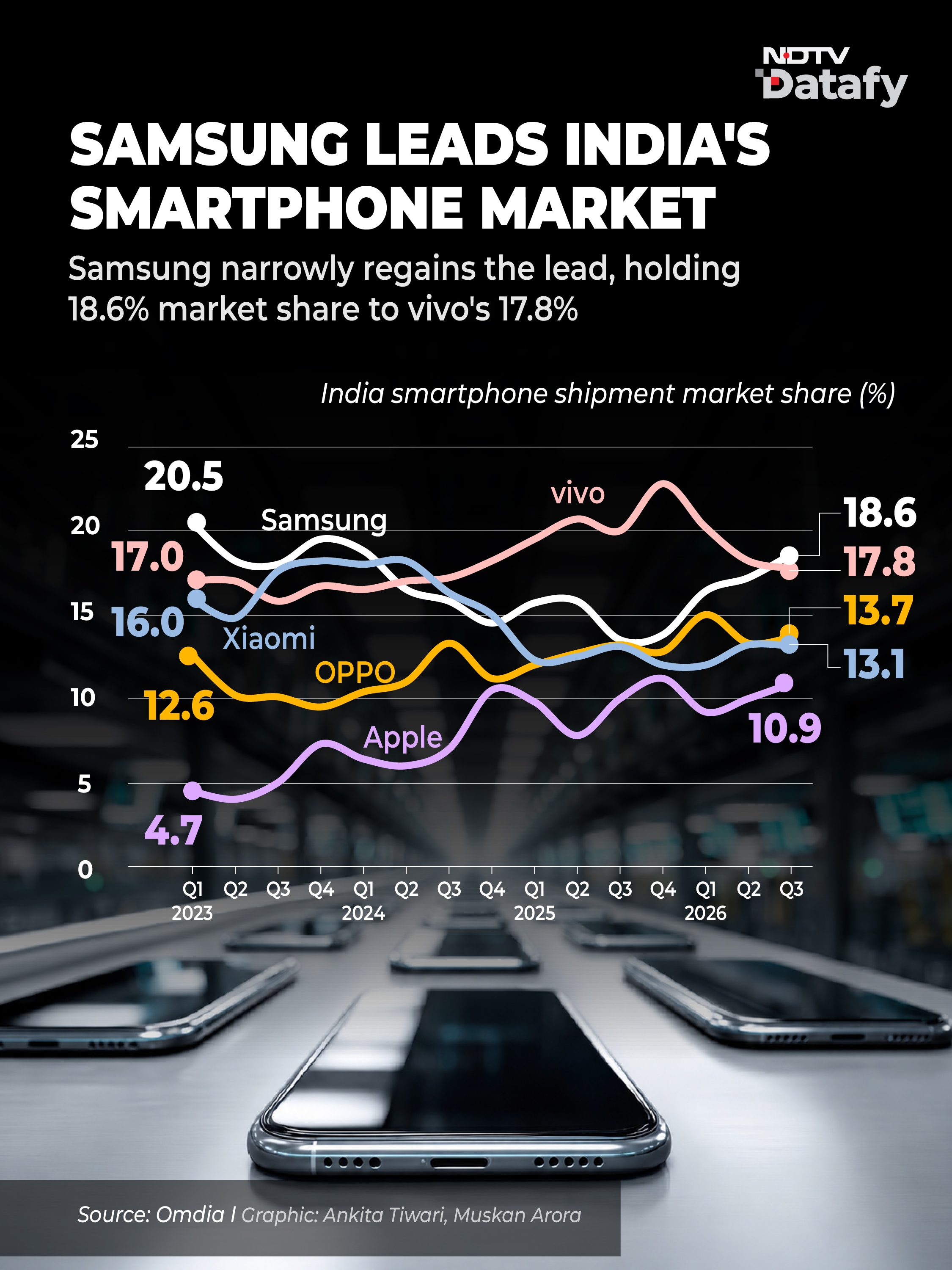
Apple's shipments fell 20 per cent to 3.9 million units. Yet its market share increased from 10 per cent to 11 per cent. This is because market share depends not only on how many phones a company ships, but also on how much the overall market shrinks.
The question now is whether this is mainly a timing issue or a longer-term slowdown. Omdia expects India's smartphone market to decline by a further low-single-digit percentage in 2027. For phone makers, the challenge will be to give consumers a clear reason to upgrade, whether through affordable devices, better financing or features that offer more than incremental hardware changes.
KioskNews shows a cleaned-up reading view extracted from the publisher’s page — the original always lives on their site, not ours.