‘As an outsider, you feel you’re not liked’: Sonia Gandhi explains memoir title ‘Belonging’
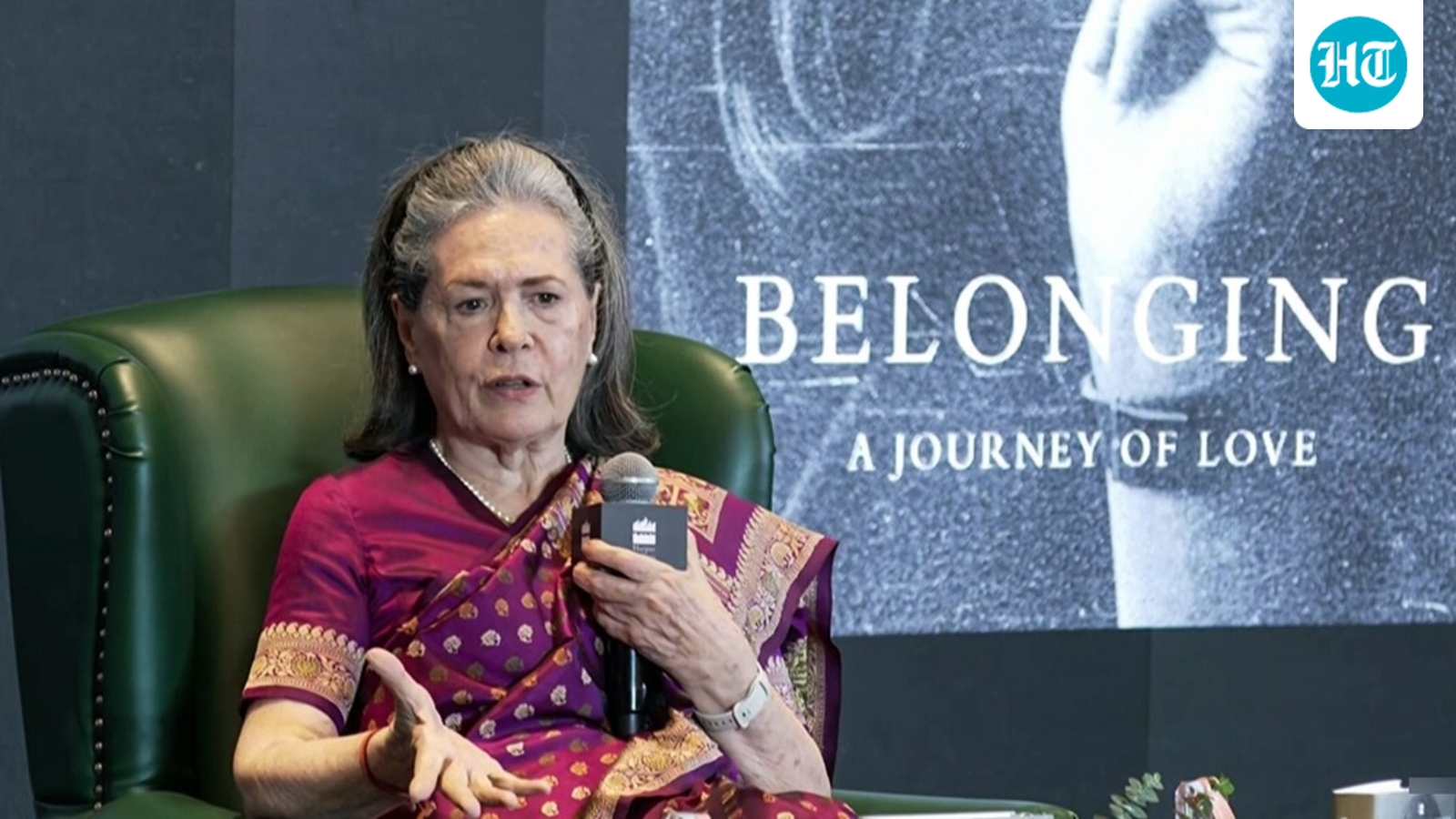
Congress Parliamentary Party (CPP) chairperson Sonia Gandhi on Monday formally launched her debut memoir, Belonging: A Journey of Love, in the presence of her children, Rahul and Priyanka Gandhi, and several leaders of the Opposition INDIA bloc. A short film chronicling Sonia Gandhi's life and journey was screened during the launch.
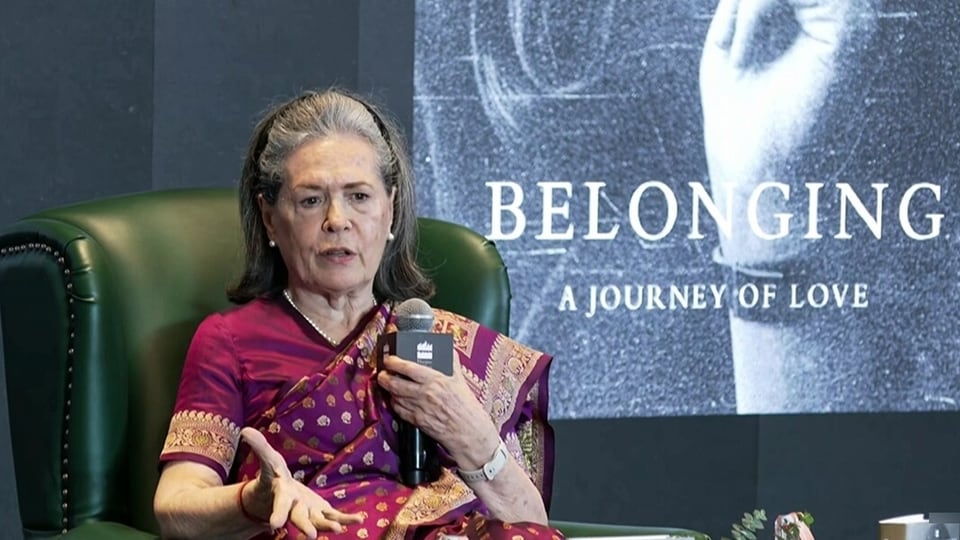
Speaking at the launch, Gandhi explained the significance of the book's title, saying that belonging was about feeling accepted, while being an outsider could leave a person feeling unwelcome and constantly watched.
“‘Belonging’ means you belong. When you're an outsider, you feel you're not liked and you're always watched,” she said.
Gandhi also spoke about what prompted her to write the memoir, despite having kept her personal life largely private over the years. She said one of the reasons was the amount of speculation and discussion surrounding her, much of which she felt was far from reality.
“The reason (to write) is because so much is being said about my family, my mother-in-law, my husband, my son, my daughter, and myself. And most of what they say is quite unreal. It really has nothing to do with the way we are,” she said.
Gandhi added that stories and untruths were often circulated about public figures, with hurtful comments being made that had little connection with the truth.
“My colleagues and my friends in politics probably must have experienced the same. Stories are woven around you, untruths are woven around you, and hurtful things are said which are nowhere near the truth. I thought this was a way of bringing out my feelings, what I know of my family and maybe people will be open to listening to my story too,” she said.
The Congress leader also spoke about the loss of her husband, Rajiv Gandhi, after his assassination in 1991 and how her children helped her cope with his death. “I was totally devastated after Rajiv's death. My children came to my rescue,” she said.
Gandhi also recalled the moments when she began to feel accepted in India. She said her first such experience came when she visited her husband Rajiv Gandhi's constituency and saw how people welcomed her.
She identified another significant moment in 2004, when the Congress-led UPA won the Lok Sabha elections, saying she felt accepted then as well.
Speaking about the future of politics, Gandhi said she wanted more young people to enter public life and participate in politics.
“I feel more young people should come forward and join politics,” she said.
Asked whether she had found anything particularly touching or interesting in the criticism and affection directed towards her, Gandhi said she had not followed all the comments but had come across some of them.
“Well, I haven't followed a lot of it or everything, but some. Yes, why not? Some are sort of on the nasty side. Some are more genuine and they say exactly what they think, what they should have said, what they shouldn't have said. But, on the whole, interesting, that too,” she said.
Explaining why she eventually agreed to share her life story, Gandhi said several friends had encouraged her to write about her journey. However, she had initially been reluctant because she was uncomfortable discussing her personal feelings and experiences.
“Many of my friends kept telling me that you must write your story. It's a very interesting story. You came from there, from outside. But I have always been very reticent to disclose my inner feelings and what I feel about things and people and places. So I sort of brushed it aside,” she said.
She added that she eventually agreed to write the memoir following repeated encouragement from Rahul Gandhi, Priyanka Gandhi and a close friend, Manjulika Dubey.
The book launch was attended by several senior Congress leaders and Opposition figures. Among those present were Tamil Nadu chief minister Joseph C Vijay, Samajwadi Party chief Akhilesh Yadav, Jammu and Kashmir chief minister Omar Abdullah and former Punjab chief minister Captain Amarinder Singh.
Rahul Gandhi, the Leader of the Opposition in the Lok Sabha, and Priyanka Gandhi were also present, along with Telangana chief minister Revanth Reddy, Himachal Pradesh chief minister Sukhvinder Singh Sukhu and senior Congress leader Pawan Khera, among others.
KioskNews shows a cleaned-up reading view extracted from the publisher’s page — the original always lives on their site, not ours.