In drought-hit Maharashtra, Mumbai civic body moves to revive wells for water
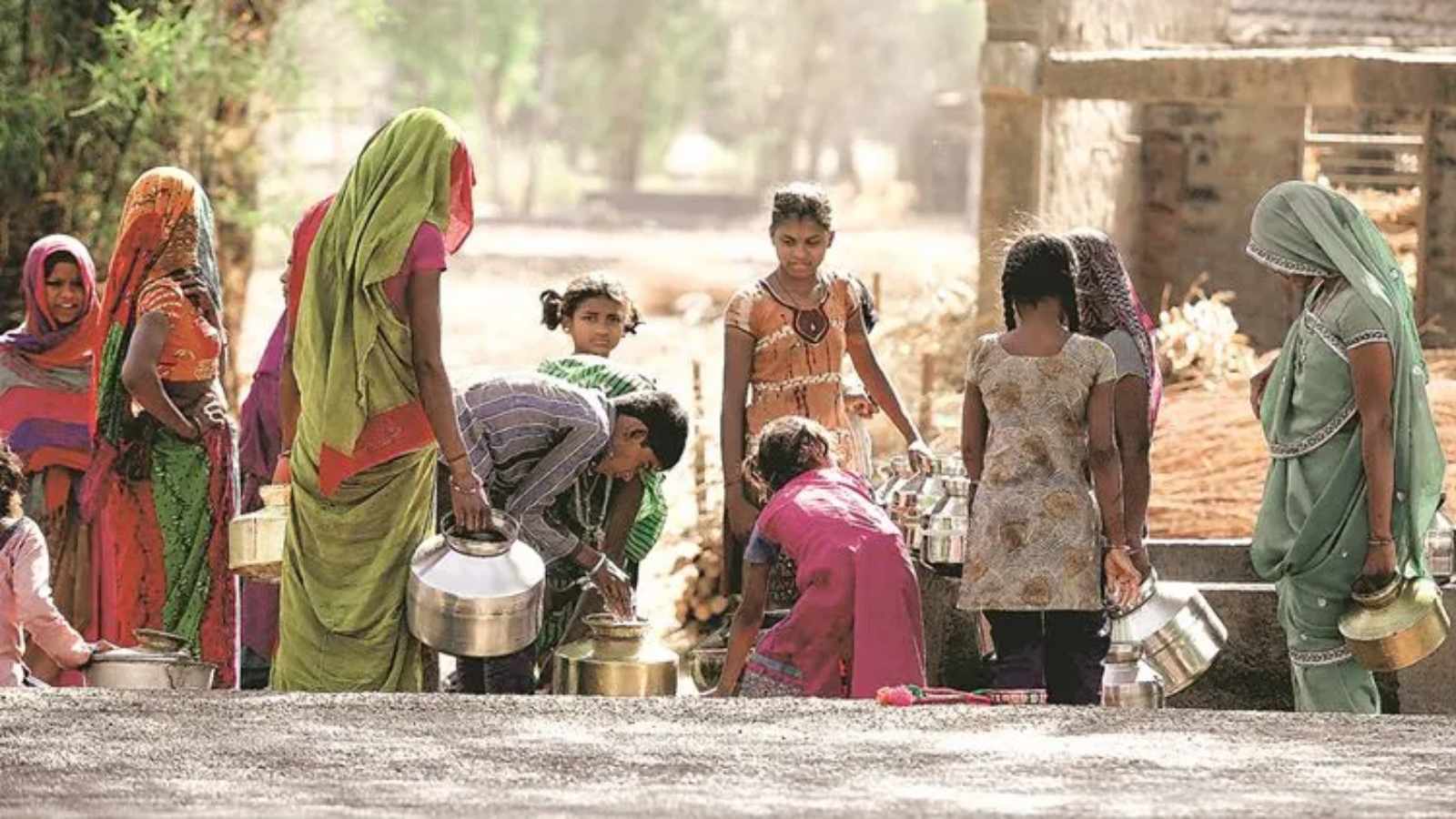
Amidst concerns of an abysmal monsoon and warmer summers, the Brihanmumbai Municipal Corporation (BMC) has launched projects – from desilting of groundwater resources to study of salination levels in wells – to restore wells across Mumbai in a bid to develop alternative means of water resources.
The revival of Mumbai’s groundwater resources has gathered pace, with the state government on Saturday declaring drought in 265 of the state’s 358 tehsils — about three-fourths of Maharashtra.
Surrounded by the seas in three directions, Mumbai relies primarily on rainfall brought in by the southwest monsoon winds to cater to its annual water demands. The city draws its potable and industrial water supply through seven lakes, which are replenished during the monsoon season.
Before the lakes formed, Mumbai traditionally drew water from a network of borewells and dug wells that served as a key source of water supply. However, with the development of water schemes and dams from the late 1860s, wells became the secondary source of water. In recent years, ground water resources have fallen into disrepair owing to concerns of pollution due to sewage and saline water ingression.
However, with the El Niño climatic patterns resulting in below-average rainfall and further raising alarms over warmer weather through February, the BMC has now launched efforts to revive its wells as alternate sources of water and ensure adequate supply until the onset of the next monsoon spell in 2027.
Bracing for a likely water crisis, the BMC has currently commenced revival of wells across Mumbai’s island city as well as suburban pockets. According to senior civic officials, the well revival project is being executed at the ward level through the hydraulic department, with the funds released on the basis of pre-approved rates.
Well revival plan
The revival plans entail desilting of the wells to augment their carrying capacity while also opening the natural streams within the wells to permit flow from the underground water bed.
Story continues below this ad
“Since most wells have fallen out of use over the past decades, the natural sources of streams inside the wells have closed up. Furthermore, the stagnant water in several wells have become laden with silt which further obstructs the flow of water and reduces the carrying capacity of the structures,” a senior official told The Indian Express.
According to officials, the restoration will be carried out across 3,000 wells identified across the suburban and island city divisions. The city-wide efforts were launched after Mumbai’s civic chief, Ashwini Bhide, issued directives in June to audit groundwater resources like wells to develop alternate means of water.
“While efforts to revive the existing wells are fast unfolding, we have also called for construction of new recharge structures so that groundwater can be extracted for potable and industrial consumption. We are eyeing to build approximately 10,000 recharge structures,” a senior official said.
Furthermore, the BMC has also roped in the All India Institute of Local Self Government to study salinisation levels of the groundwater resources across Mumbai over concerns of coastal water intrusion into the groundwater bed.
Story continues below this ad
The agency will conduct the study through collection of water samples across the city’s wells. According to senior officials, the consultant was appointed after an internal audit highlighted salinization of groundwater resources because of intrusion of seawater from the coasts.
“The consultant has been tasked with analysis and submission of a detailed roadmap to curb the salination of groundwater resources, which renders the water inaccessible for human use. Once the plan is submitted, we will be able to assess the extent of seawater intrusion as well as determine the costs and scope of work to regulate the salination levels,” an official told The Indian Express.
The objective, sources said, is to desalinate the groundwater resources in a bid to augment access to fresh water ahead of the upcoming summer season, when the city could experience above-normal temperatures and faster depletion of lake levels.
Why the civic body is scrambling to augment its water resources
Mumbai draws its potable water supply from seven lakes, which supply 3,850 MLD every day even as the city has an actual requirement of 4,200 Million Liters Daily (MLD).
Story continues below this ad
Even as the seven lakes are replenished after monsoon showers and have reached a total stock of 97 percent, Mumbai’s existing daily water shortfall faces an additional burden owing to the El Niño climatic system – associated with below-average monsoon and above-normal temperatures in its active phase.
Taking stock of the government directives to ensure adequate water supply over the strong El Nino projections, the BMC has retained its 10 percent water cut despite the total stock in seven lakes touching their full capacity.
“While we have retain the water cut to ensure that the lake stock suffices through the year, we are focusing on reviving our groundwater resources which can serve as a supplementary source of water in times of shortage,” an official said.
KioskNews shows a cleaned-up reading view extracted from the publisher’s page — the original always lives on their site, not ours.