Mumbai to get India’s largest tunnel boring machines in January; tunnelling to begin by May 2027
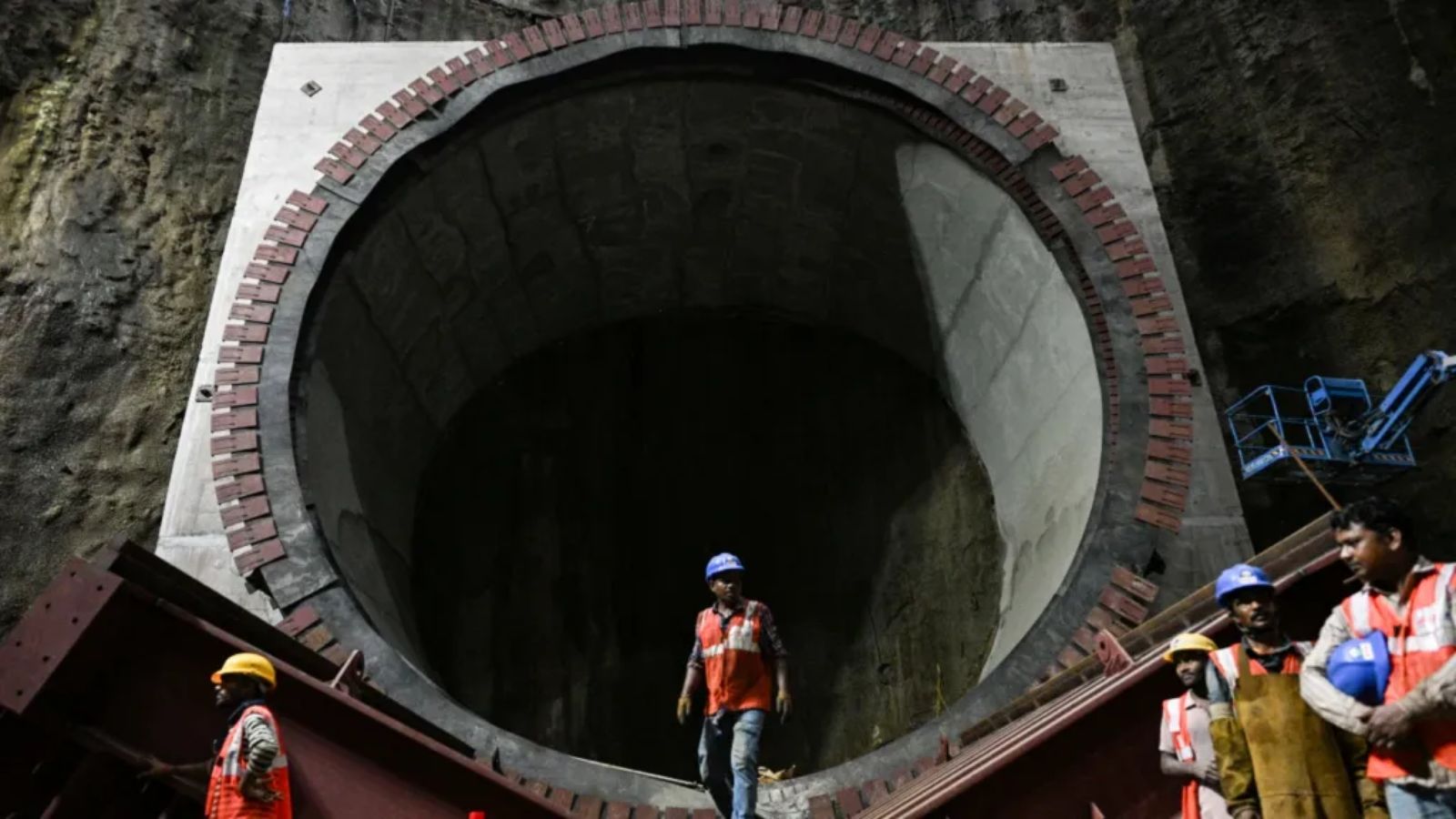
Mumbai’s next major underground road link is moving closer to construction, with parts of two of India’s largest tunnel boring machines (TBMs), which will dig the 3.9-km twin tunnels between Malad and Kandivali, expected to arrive in the city by January 2027. The Brihanmumbai Municipal Corporation (BMC) has completed the factory acceptance test of the machines in Chennai, with tunnelling scheduled to begin by May next year.
The tunnels, which will run around 40 metres below the surface, will connect Mindspace in Malad with Charkop in Kandivali and form a crucial part of the 22.93-km Mumbai Coastal Road North project, being developed as an alternative high-speed north-south corridor between Versova and Dahisar.
The BMC has engaged Megha Engineering and Infrastructures Ltd (MEIL) to execute the tunnel works, while the machines are being manufactured by Germany-based Herrenknecht. Each TBM will have a diameter of 15.6 metres, making them among the largest machines of their kind deployed in India.
The completion of the Factory Acceptance Test (FAT) marks an important step towards dispatching the machinery. The test checks the functioning of the machine’s key systems before it is dismantled and transported to the construction site.
“After the consignments arrive, the machinery will be assembled at the Charkop site. We are aiming to commence tunnelling with the first TBM by May 2027,” a senior BMC official said.
Unlike several other road tunnels being constructed in Mumbai, the Mindspace-Charkop stretch passes close to creeks and mangrove areas, where the soil conditions are more complex and groundwater ingress is a concern. The BMC has therefore opted for mixshield slurry TBMs, which are designed to operate in unstable, water-bearing ground conditions.
A slurry TBM excavates the soil while maintaining pressure at the tunnel face to prevent the surrounding ground from collapsing or groundwater from entering the excavation. The excavated material is mixed with water to form slurry, which is transported through a pumping system to a treatment plant. The machines being deployed for the project will have a slurry handling capacity of 2,900 cubic metres per hour, an official said.
Story continues below this ad
“While other road tunnel projects in Mumbai have largely used earth pressure balance machines in hard-rock conditions, this stretch runs close to creeks. A slurry TBM is better suited to the unstable ground and water-bearing conditions here,” the official said.
Slurry TBMs have previously been deployed in Mumbai during the first phase of the Coastal Road project, where the tunnel passes beneath the coastline near Girgaon Chowpatty.
Ahead of the machines’ arrival, the BMC is carrying out piling work and constructing the launching shaft at Charkop, from where the tunnelling operation will begin.
The Coastal Road North project, estimated to cost Rs 16,621 crore, is planned as a 22.93-km corridor between Versova and Dahisar. It comprises multiple packages involving elevated roads, bridges and underground tunnels. The 3.9-km Mindspace-Charkop twin tunnels are among its key components, with the northbound tunnel costing Rs 2,911 crore and the southbound tunnel Rs 2,910 crore.
KioskNews shows a cleaned-up reading view extracted from the publisher’s page — the original always lives on their site, not ours.