Historians uncover more questions for insurers over their role in the slave trade
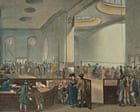
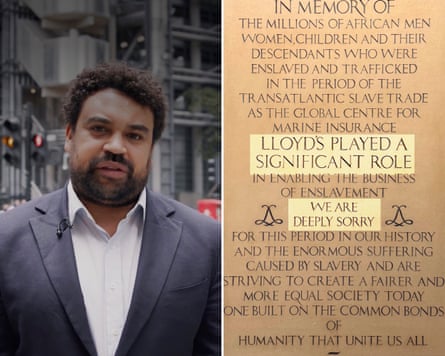
While the UK government is considering a formal apology for Britain’s role in the transatlantic slave trade, Lloyd’s of London said it was “deeply sorry” six years ago. The historic insurance marketplace said it was deeply sorry for the “significant role” it played in the trafficking of enslaved people and for the enormous suffering caused. It has since installed a commemorative plaque at its London headquarters.
Perhaps more consequential was the research that followed. Through an independent collaboration with Johns Hopkins University in the US, researchers Alexandre White and Pyar Seth examined Lloyd’s archives.
The resulting Underwriting Souls project laid bare how merchant insurers – some linked through predecessor businesses to major insurers operating today – underwrote ships carrying enslaved people across the Atlantic and, in some cases, the enslaved people themselves as “human cargo”. But historians interviewed for a podcast by specialist news title InsuranceERM say the full extent of the insurance industry’s involvement is still far from understood.
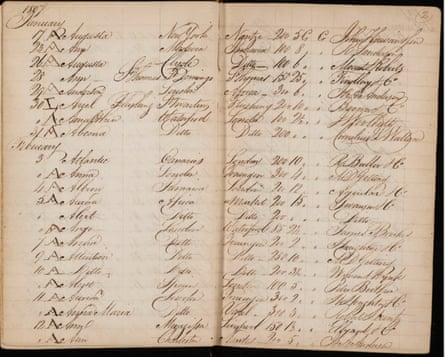
White, now an assistant professor at the University of Cambridge, said part of the problem was the fragmented surviving evidence. Risk books, the ledgers in which individual underwriters recorded their business, are particularly rare and provide only a snapshot of an underwriter’s activity.
“There could be tons,” White said when asked how much more evidence remains to be uncovered. “It’s possible we’ll find more. It’s possible much has been destroyed … or lost to time.”
White said researchers were nevertheless getting “a much clearer sense of the scale and importance of insurance to slavery”, with work in London, Liverpool and Bristol helping to piece together the financial networks that supported it.
One place where researchers are breaking new ground is Liverpool, through the Connector Project, a £1m initiative funded by the Lloyd’s Register Foundation – an independent charity that is separate from Lloyd’s of London but has historical links to enslavement – and facilitated by National Museums Liverpool. Its first pilot study, Overwriting Underwriting, is already piecing together fresh evidence about the role of insurers.
Lucy Moynihan, a PhD student and research associate on the project, has been examining the 1797 risk book of John Gladstone, the enslaver and merchant who later became the first chair of the Liverpool Underwriters’ Association.
Moynihan said previous histories had overlooked Gladstone’s role as an underwriter in the trafficking of enslaved people. Her research has identified voyages in his risk book connected to enslavement, adding underwriting information missing from existing datasets.
Central to the research is reconstructing the networks behind this business. Malik Al Nasir, an academic, author and Connector Project manager, said Liverpool’s merchants, shipowners, bankers and underwriters were often connected through their families and commercial interests. Because the merchants acted as underwriters, evidence can also sit in private family and business collections. Moynihan said private archives had a responsibility to “do a review of what they have” and give the public access to their records.
Al Nasir’s own research, which has involved sourcing material from disparate repositories and even eBay because of gaps in established archives, led him to a letter referring to insurance for the sloop Speedwell, which he says does not appear in the widely used Slave Voyages database.
“If I can just find randomly from one letter one slave ship that’s not mentioned on the Slave Voyages database, then there must be many others as well,” he said.
after newsletter promotion
Historians also believe more remains to be uncovered after Britain outlawed the transatlantic slave trade in 1807. “British insurers are pretty openly still involved with the insurance of foreign slave voyages after 1807,” said Hannah Farber, an associate professor at Columbia University in New York City.
As enforcement tightened, Farber said that involvement became harder to trace, with financiers finding more covert ways to take on the risks of slave voyages without formally underwriting them.
“It’s a lot easier to stop slave ships than it is to stop slave insurance,” she said.
Farber believes there is still substantial work to be done connecting the financial centres of London, Liverpool and New York with Brazil and Cuba, where enslavement remained legal later into the 19th century. “There’s so much more to learn about insurance in the slave trade,” she added.
White said the records also revealed that enslaved people were reduced to financial assets within the insurance system. “African lives at this time could still provide value not just from their bodies, not just from their labour, but also in their death,” he said.
A deeper examination of the research and what it means for insurers can be found in the InsuranceERM podcast episode, Why insurance’s reckoning with the transatlantic slave trade is far from over, released on 10 November.
KioskNews shows a cleaned-up reading view extracted from the publisher’s page — the original always lives on their site, not ours.