Installing Solar Rooftop? 5 Ways To Avoid Buying A Poor-Quality Panel
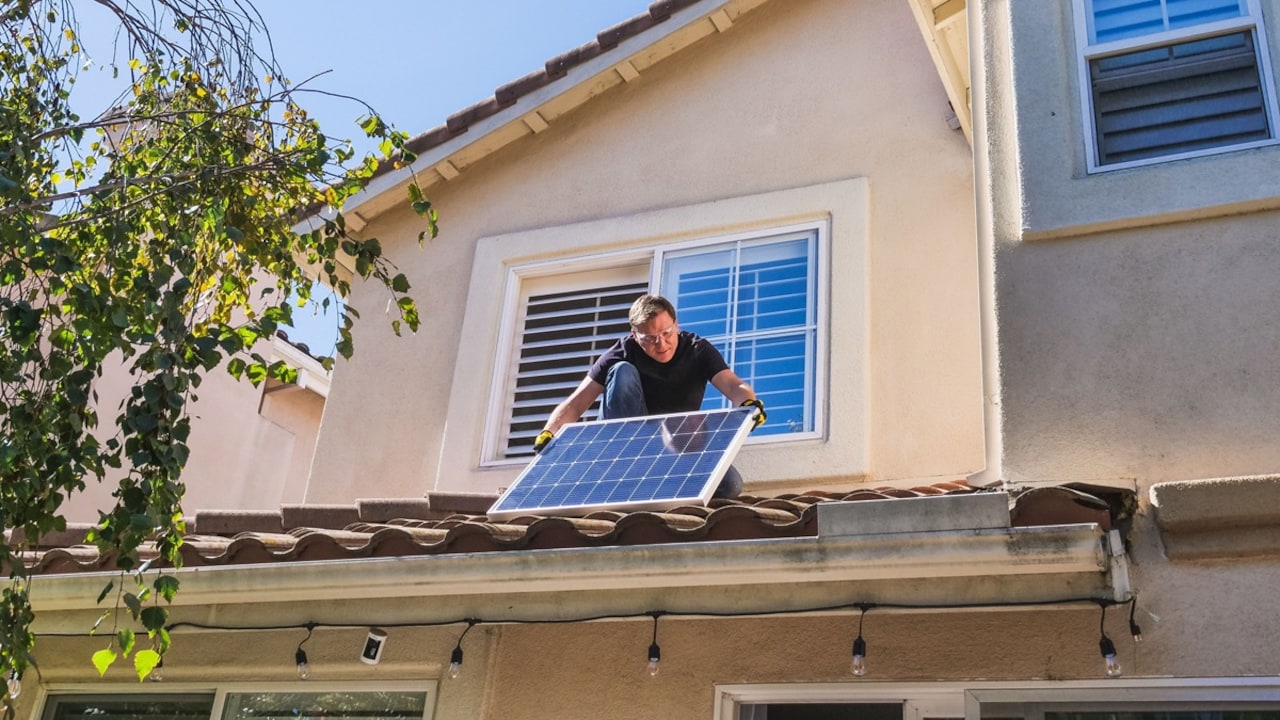
As rooftop solar adoption grows, consumers are increasingly looking at solar as a long-term investment rather than simply a way to reduce their monthly electricity bills. Since a solar panel is expected to perform for decades, buyers should look beyond the upfront price and evaluate the quality, reliability, and support behind the product.
"Solar is a long-term investment, so the lowest price should not automatically determine the buying decision. Consumers should look at certification, performance data, warranty terms, manufacturing quality, and after-sales support together. The objective should be to choose a panel that can deliver reliable performance throughout its operating life," Vineet Mittal, Director, Navitas Solar, told NDTV.
According to Mittal, here are five key factors consumers should consider before purchasing a solar panel:-
Also Read | Layoffs Are Rising In Tech, But These Skills Are Helping People Unlock Better Pay
1.Check Certifications, Compliance
Consumers should verify whether the module meets applicable BIS requirements and carries relevant BIS, ISO, & IEC certifications, including IEC 61215 for design and qualification testing and IEC 61730 for safety. For projects under government-supported schemes, buyers should also check the applicable ALMM requirements and whether the specific module model is listed.
2. Look Beyond Efficiency
Higher efficiency is useful, but it should not be the only deciding factor. Buyers should compare the temperature coefficient, degradation rate, performance under low-light conditions and expected energy yield. In India's varied and often high-temperature conditions, how consistently a module performs can be as important as its peak efficiency rating.
3. Understand Warranty Terms
Consumers should distinguish between the product warranty and the performance warranty. It is important to understand what each warranty covers, how the module's power output is expected to decline over time, and the process for making a claim. A longer warranty should also be assessed in terms of the manufacturer's ability to honour it over the long term.
4. Evaluate Manufacturer's Quality Controls
The manufacturer's track record and quality-control processes matter. Buyers can ask about cell and module sourcing, testing processes, traceability and whether each module has a unique serial number. Quality checks such as electroluminescence testing can help identify defects that may not be visible to the naked eye.
5. Check After-Sales Support
A solar installation requires support well beyond the date of purchase. Before buying, consumers should understand who will handle warranty claims, whether service support is available locally and what the expected response timelines are. Ultimately, choosing a solar panel should be about long-term value rather than the lowest upfront cost. A well-informed purchase that considers quality, performance, durability, and the manufacturer's ability to provide support can help consumers maximise their investment and avoid unexpected costs over the life of the installation.
KioskNews shows a cleaned-up reading view extracted from the publisher’s page — the original always lives on their site, not ours.