Hong Kong police arrest 123 and uncover 108 cases in anti-fraud operation

Hong Kong police have arrested 123 people and uncovered 108 fraud cases involving about HK$68 million (US$8.7 million) as part of a two-week operation against phone scams and money laundering.
The citywide crackdown was conducted by the commercial crime bureau and regional units. Officers arrested 95 men and 28 women aged between 14 and 75.
Police said on Thursday that most of those detained held stooge bank accounts or were registered users of telephone numbers linked to scams.
The suspects were arrested on suspicion of conspiracy to defraud, obtaining property by deception and money laundering.
Investigators also froze about HK$1.8 million believed to be linked to criminal proceeds.
Superintendent Shirley Kwok Ching-yee of the bureau said fraud remained Hong Kong’s most prevalent crime category.
Police recorded 34,679 fraud reports between January and September this year, accounting for about half of all crimes reported in that period.
Nearly 10,000 cases, or 28.8 per cent of the total, involved telephone scams, with losses amounting to about HK$1.9 billion.
August alone saw a record monthly high of more than 2,000 reports of phone scams.
Impersonation frauds involving customer service representatives remained the most common tactic, accounting for about 60 per cent of all cases.
Fraudsters typically pose as customer service staff or logistics company workers linked to retailers and online shopping platforms. They claim there are problems with orders and offer compensation before persuading victims to transfer money for “identity verification”.
“Fraudsters are using genuine personal information to lend credibility to fabricated stories and swindle members of the public,” Kwok said.
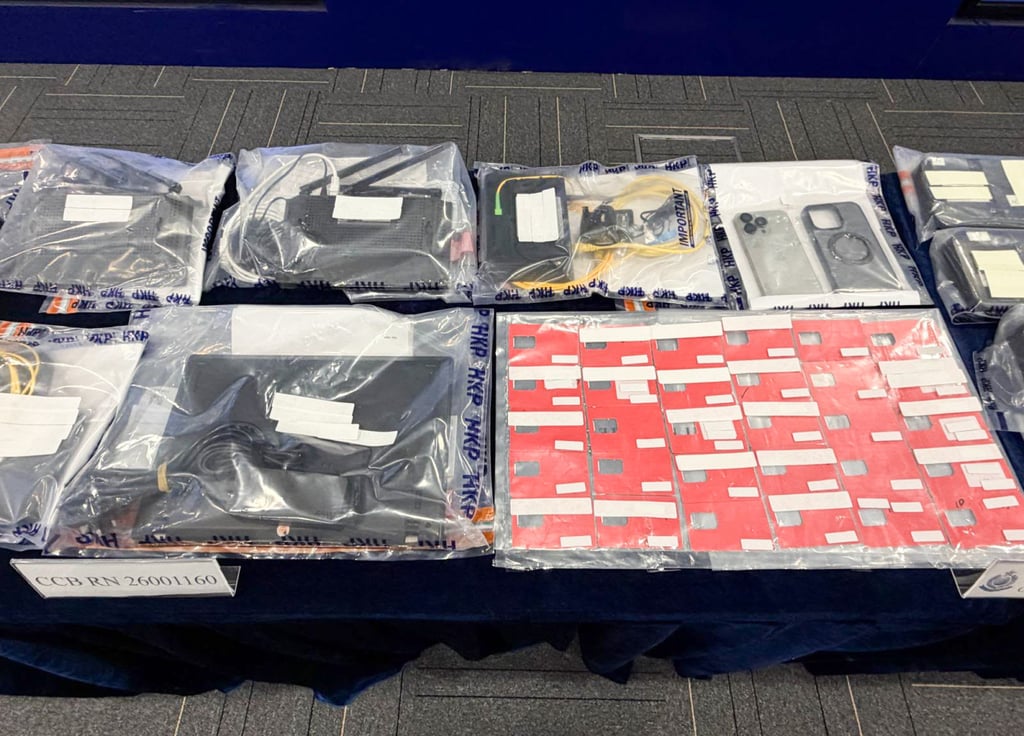
Police said officers also dismantled scam call centres concealed inside industrial buildings in Kwun Tong and Hung Hom during the operation. A 47-year-old local man was arrested.
Investigators seized two modem pool devices, which use large numbers of SIM cards to route telephone calls. One of the machines had generated 217 outgoing calls in a single hour, according to police.
Officers said syndicates increasingly relied on internet-based telephone systems and local numbers beginning with “2” or “3” to make scam calls appear to originate from legitimate Hong Kong customer service hotlines.
Kwok said the industry also had a role to play in tackling the problem.
“Telecommunications providers should step up monitoring of abnormal usage patterns and suspicious numbers linked to fraud,” she said.
Police and the Office of the Privacy Commissioner for Personal Data have launched investigations into potential data leak risks tied to the scams.
KioskNews shows a cleaned-up reading view extracted from the publisher’s page — the original always lives on their site, not ours.