ANALYSIS: SA turns right as Ramaphosa hands economic levers to the private sector
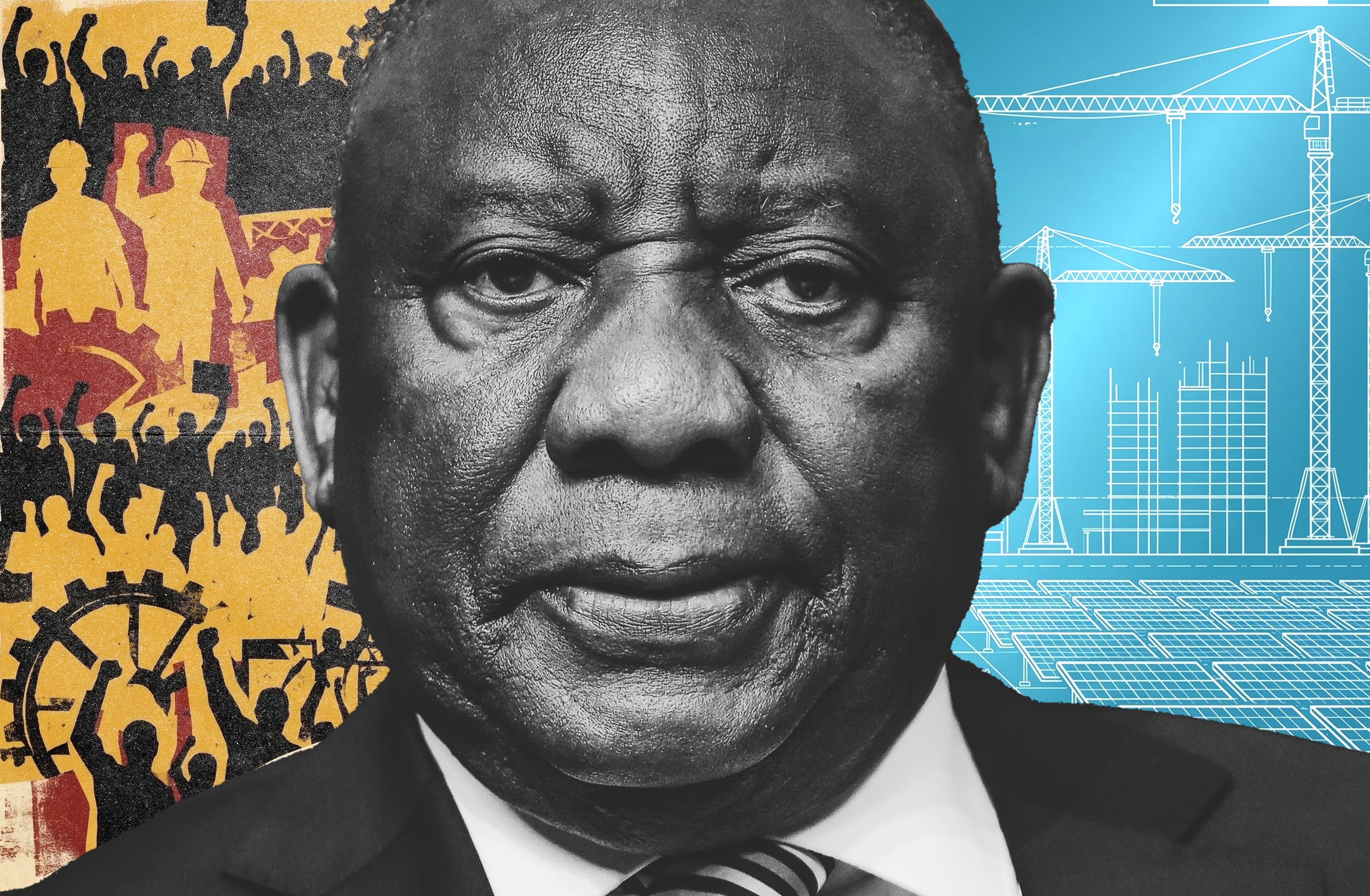
On Monday, President Cyril Ramaphosa released his weekly newsletter. It was carefully timed to coincide with the release of Eskom’s annual results and a joint statement between Eskom and Business Leadership SA that they had buried the hatchet over Eskom’s unbundling process.
In the newsletter, Ramaphosa strongly advocated for unbundling Eskom, asserting it will lead to increased competition and cheaper power for consumers.
He noted that when Telkom had a fixed-line telecommunications monopoly, a telephone connection “was expensive, access was limited and millions of South Africans, particularly in poorer and rural communities, were effectively excluded”.
He continued: “The opening of the telecommunications sector to new operators fundamentally changed this picture. Competition brought massive new investment …the cost of communicating fell dramatically.”
His core message was clear: state monopolies restrict progress, whereas private-sector competition drives it.
It may well be the strongest gesture of support for a free market economy from any president and ANC leader since 1994.
And this is not happening in isolation.
As has been noted several times, the great trend of the period since at least 2019 has been to open up to the private sector areas previously controlled by the government.
The most obvious examples are Eskom and Transnet, where the private sector has greatly improved services.
The real reform
It could be argued that the real “reform” carried out by Ramaphosa’s government has been to bring in the private sector at the expense of the government.
No doubt critics of this process will point to Operation Vulindlela and suggest the real intent is to strengthen the role of the private sector while weakening the state.
Intentional or not, the outcome is clear: the government’s grip on the economy has loosened as the private sector’s influence grows.
The private sector now wields more influence over vital public infrastructure – like electricity, ports and railways – than at any time since the colonial era. Certainly, the apartheid state built up industry through the state, controlling logistics, electricity and even iron and steel manufacturing.
What makes this massive shift so striking is the sheer lack of organised pushback. Parliamentary opposition has come solely from the EFF and MK. However, MK has yet to mount a substantive policy response to anything, while the EFF has not launched a campaign on the issue.
In the past, the real opposition, which would have prevented this process from gaining any momentum, would have come from within the ANC.
However, the ANC does not appear to be conducting any substantive policy discussions. It is embroiled in bitter internal battles over candidates for positions in metros and councils, to the point where it cannot even announce its official lists.
In the past, the other main source of opposition to this move within the Tripartite Alliance would have come from the SACP and Cosatu.
While Cosatu doubtless opposes the changes, it has launched little public pushback, and its affiliated unions in the affected sectors have been powerless to stop them.
The SA Transport and Allied Workers Union has clearly had to accept that a private operator will now control Pier Two at Durban Port.
Meanwhile, Ramaphosa has had personal conversations with the National Union of Mineworkers (NUM) about the unbundling of Eskom. While many NUM members might well oppose this, it will be difficult for them to argue with the person who was so involved in the founding of their union.
Collapse of state capacity
There is another, critically important reason that this process has unfolded so quickly and with so little response: through an ultimate irony, the governance of the “leftist” Jacob Zuma led to the collapse of state capacity.
The State Capture era directly triggered the collapse of critical public services. Heavy looting at Eskom and Transnet – orchestrated by figures like Brian Molefe and the Guptas, and enabled by individuals now in MK – left these state enterprises severely weakened.
The other major factor that accelerated state breakdown was the Covid-19 pandemic, which further drained public resources.
Shifting control to the private sector depended on corporate willingness to invest capital.
Through initiatives like Business For SA, companies provided the necessary expertise and resources.
Of course, they stood to benefit from improved services – there was a profit motive.
But many of the executives involved were also motivated by a desire to help improve South Africa’s economy, and by extension, the lives of millions of people.
It is astonishing to think that less than 20 years ago, when Jacob Zuma was ascending to the leadership of the ANC at Polokwane, there was great concern that the SACP would have a negative influence on the ANC, and thus the government.
As late as 2023, the Institute for Race Relations’ Anthea Jeffery published the book, Countdown to Socialism, suggesting that the ANC was pursuing “the most direct route to socialism”.
Nothing could be further from the truth.
For the moment, the argument about whether South Africa will go left or go right is over.
We are moving to the right.
And it will take a major political change to alter the course. DM
KioskNews shows a cleaned-up reading view extracted from the publisher’s page — the original always lives on their site, not ours.