Levi’s, Vans, Timberland: Bangladesh’s pre-Christmas factory shutdown threat hits close to home
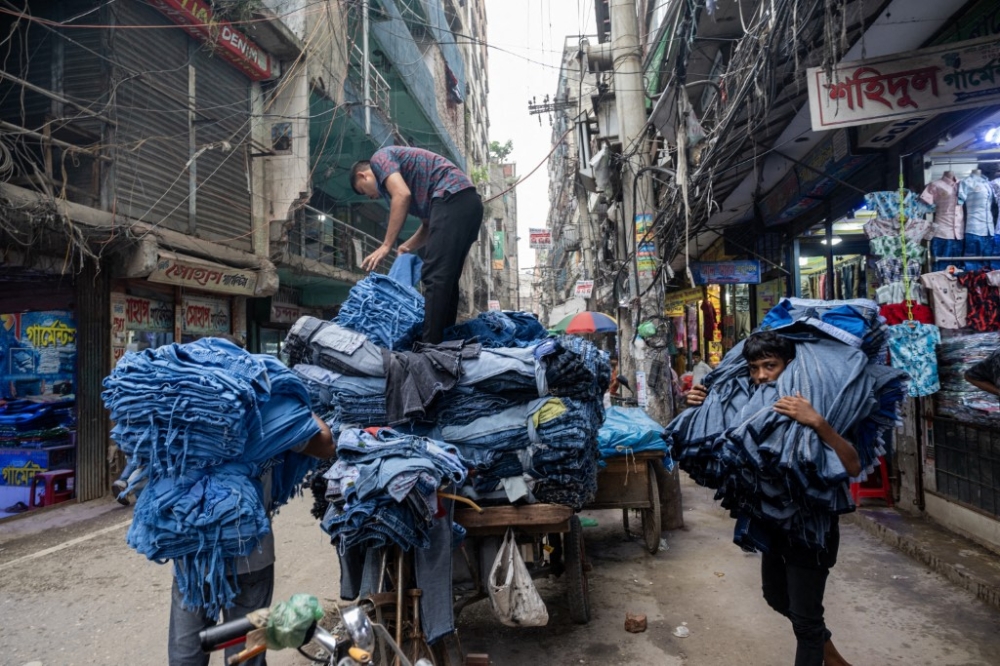

Bangladeshi workers haul bundles of denim through a crowded market in Kaliganj, Dhaka, on October 7, 2026. — NurPhoto pic via AFP
First Published: Monday, 16 Nov 2026 7:00 AM MYT
DHAKA, Nov 16 — Unions representing Bangladeshi garment manufacturers threatened on
Saturday to walk away from wage negotiations and shut factories indefinitely if protesters kept vandalising them during demonstrations for higher pay.
Bangladesh is the world’s second-largest garment exporter after China, producing clothes for major international brands like Fruit of the Loom, Levi Strauss and VF Corp, whose labels include Vans, Timberland and The North Face.
Worker unrest over wages began in October and has occasionally turned violent, with demonstrators torching police vehicles and damaging property during clashes this month.
The two main manufacturing unions – the Bangladesh Garment Manufacturers and Exporters Association (BGMEA) and the Bangladesh Knitwear Manufacturers and Exporters Association (BKMEA) – sharpened their rhetoric on Saturday.
“BGMEA and BKMEA have questioned the justification of continuing to participate in wage board negotiations without any assurance that the factories will be protected,” BGMEA President Mahmud Hasan Khan said at a news briefing in the capital Dhaka.
“If the situation persists, we must reconsider,” Khan said.
“Garment factories that have been unable to continue production due to the ongoing unrest will remain indefinitely closed from tomorrow under... Bangladesh’s labour law,” he added.
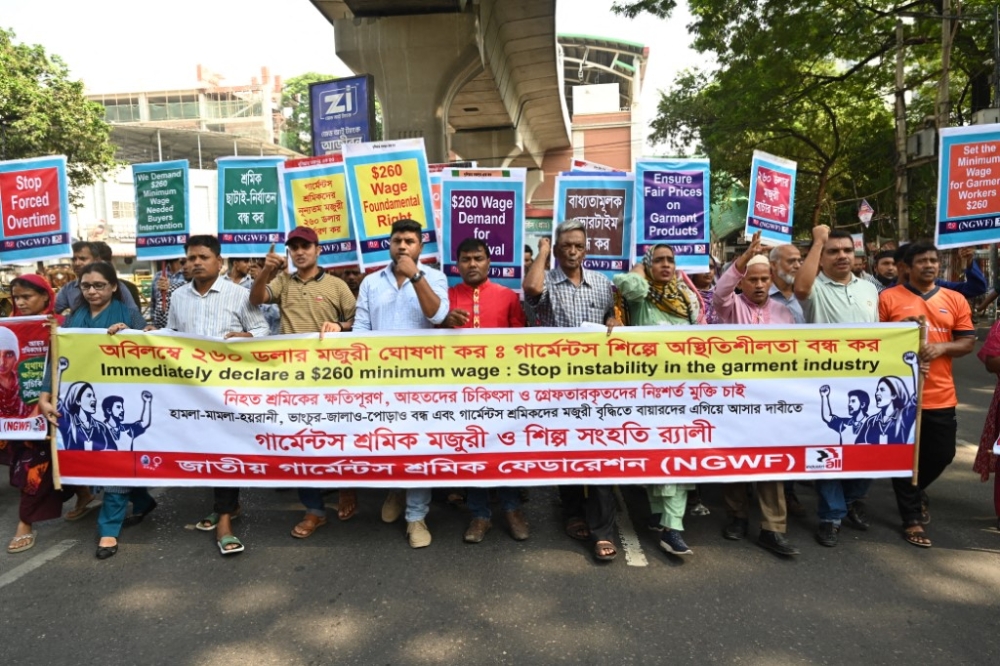
Garment workers rally in Dhaka on November 13, 2026 demanding a US$260 (RM982) minimum wage. — NurPhoto pic via AFP
The “no work, no pay” provision of Bangladesh labour law allows factory owners to suspend operations without paying workers.
Workers say rising food, housing, transport and healthcare costs have eroded their purchasing power in a country where inflation is running at around eight per cent.
Shutdown notices
They are demanding a minimum monthly wage of 30,000 taka (US$240; RM982) — a 140-per cent increase on the current 12,500 taka (RM409).
The protests have threatened to disrupt an industry that earns around US$38 billion (RM155.4 billion) annually, accounting for four-fifths of Bangladesh’s export earnings and employing more than four million workers.
Some 147 factories remained closed on Saturday in Savar, Ashulia and Gazipur – the country’s main garment manufacturing hubs.
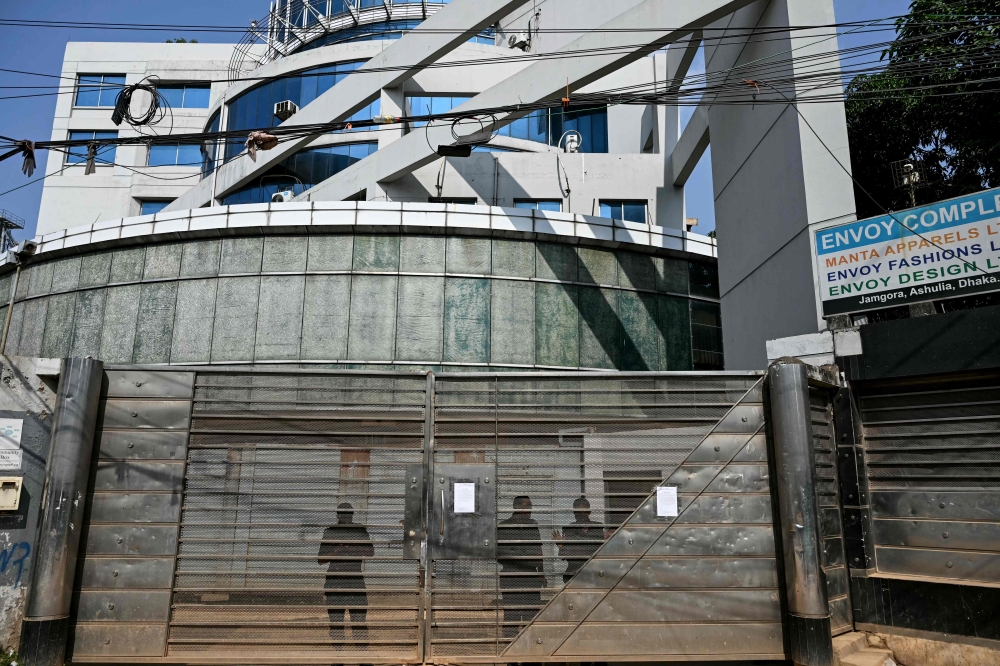
Security guards keep watch at the gate of a closed textile factory in Dhaka on November 14, 2026, amid garment workers’ protests for higher pay. — AFP pic
More than 4,500 factories are registered with trade bodies like the BGMEA.
Workers staged fresh demonstrations in Gazipur on Saturday, blocking traffic for more than an hour before they were dispersed by law enforcement officers.
Managers at some of the dozens of closed factories in Ashulia posted notices announcing indefinite shutdowns.
Mazharul Islam, general manager of S-21 Apparels Limited, said a group of workers had disrupted operations despite most employees reporting for duty.
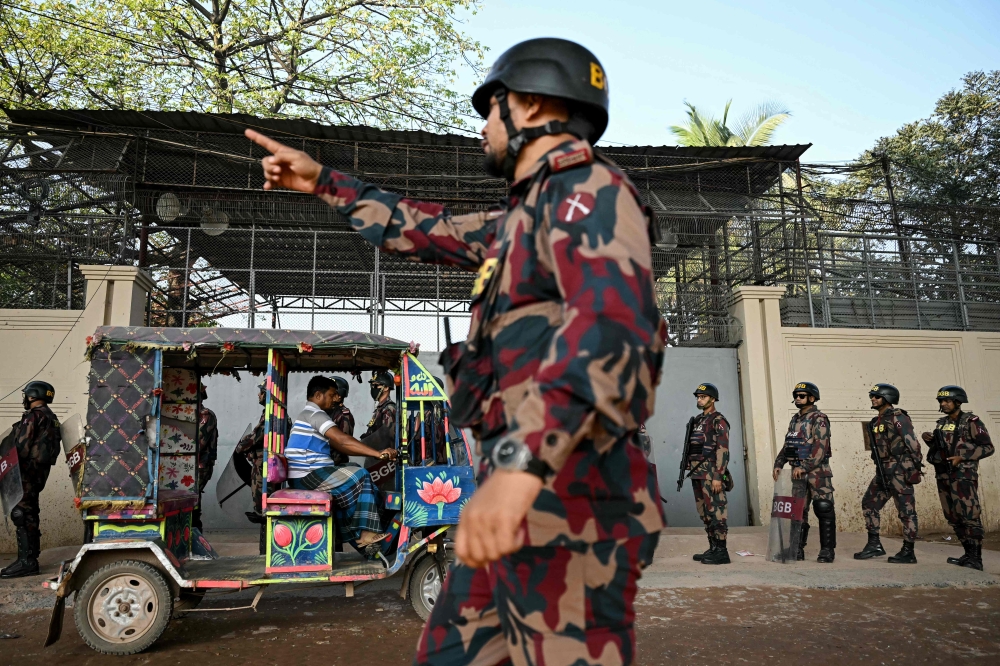
Bangladesh border guards patrol a street outside a textile factory in Dhaka on November 14, 2026, amid garment workers’ protests for higher pay. — AFP pic
“Around 95 per cent of workers came to work as usual on Thursday morning, while a few angry workers started shouting and forcing others to leave the factory,” he said.
“They vandalised the facility, and we had to announce its closure to protect the factory.”
The disruption comes during the run-up to Christmas, the busiest export period for Bangladesh’s garment industry.
“Due to the war (in Middle East), it takes an additional 10 days for shipments to reach their destinations, and now with this unrest... the sector is surely under threat,” Islam said.
Security has been tightened across industrial zones, with Border Guard Bangladesh and police personnel patrolling areas near factories. — AFP
KioskNews shows a cleaned-up reading view extracted from the publisher’s page — the original always lives on their site, not ours.