How AI ‘world models’ are helping robots learn to adapt in the real world
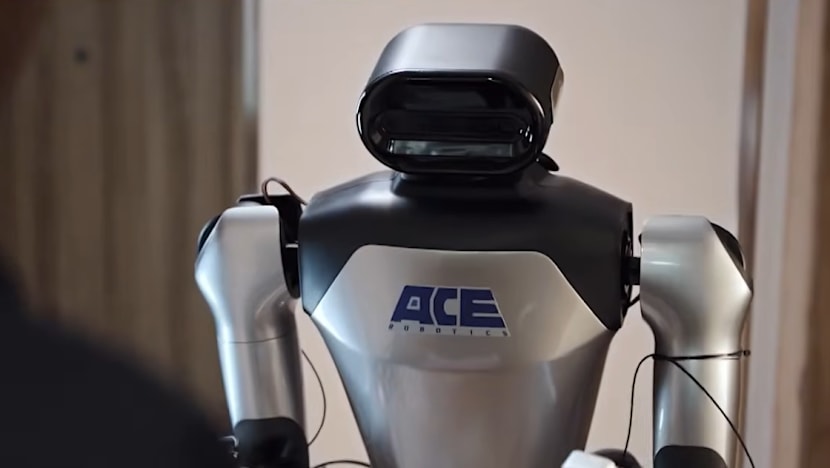
ACE Robotics is among a growing number of Chinese firms developing the technology.
“Traditional models can only accomplish certain predefined and simple tasks. But if you give the robot a new task, it doesn't know how to accomplish it,” said its chairman Wang Xiaogang.
“With the world model, because it can understand how our world has evolved, it can accomplish some new tasks.”
Rather than simply learning which action to take in a given situation, world models aim to build an understanding of the environment, predicting how it could change and using that information to decide what to do next.
Wang said such capabilities would be important as AI moves beyond the digital world and into machines operating in physical environments.
“Large language models answer our questions, do programming and code the agents. All that happened in the digital world,” he said.
“Now we are hoping that it comes to our physical world to help us operate tools and improve our productivity.”
ACE Robotics recently launched an updated version of its Kairos world model at the World AI Conference in Shanghai, targeting applications including hospitality and retail.
But teaching machines to understand the physical world requires vast amounts of data.
While large language models can be trained on huge quantities of text, world models need data on physical movement and how people and objects interact.
Wang estimated that about 10 million hours of data could eventually be needed – around 100 times the amount his company currently has.
To gather more data, the company is partnering with businesses, shops and factories to record people carrying out everyday tasks.
Participants can wear sensors while cameras record movements such as the positions of their hands and fingers. That information can then be used to teach robots how to perform similar tasks.
In a retail setting, for example, the firm can record a person picking up products and placing them in a basket, then extract information about the person's body and hand movements.
Mistakes can also provide useful training data.
If a person drops an object while performing a task, the system can learn not only how the task should be completed, but also what failure looks like, Wang said.
KioskNews shows a cleaned-up reading view extracted from the publisher’s page — the original always lives on their site, not ours.