Philippines’ uranium find a ‘vital’ boost for nuclear energy ambitions
Researchers have identified a potential source of uranium in a long-explored mining district in the southern Philippines, as Manila moves to establish nuclear power and expand its critical minerals industry.
The discovery, which could provide uranium for the nuclear fuel cycle if further exploration confirms its viability, was made in the Larap-Paracale mining district in Camarines Norte province, where exploration began in the 1950s.
Researchers from the Philippine Nuclear Research Institute (PNRI), the University of the Philippines Diliman and Akita University in Japan confirmed that surface deposits collected from the area contained uraninite as the main uranium-bearing mineral, and that the material could be processed into a product with higher uranium content.
“The findings are vital as uranium may become important in the country’s foray into nuclear energy,” PNRI said in a statement on Friday.
The researchers said the material could potentially be processed into uranium concentrate, commonly known as “yellowcake”, an intermediate product in the nuclear fuel cycle.
Although the Larap-Paracale district has been explored for decades, the latest samples came from the Bessemer area, a newly identified zone of uranium mineralisation.
About 180kg of material was collected and tested in their laboratory, where uraninite grains were found among other minerals.
PNRI said more work was needed to determine their economic significance, which would include “detailed geological, radiometric and geophysical surveys followed by systematic drilling and analysis of drill cores”.
The study comes as the Philippines takes steps to integrate nuclear power into its future energy mix, targeting at least 1,200 megawatts of nuclear capacity by 2032 according to the Philippine Energy Plan.
It also comes at a pivotal moment as the country explores moving up the value chain in the critical minerals industry while developing a road map for its national industrialisation.
“The finding is very significant if further exploration proves that the uranium in Camarines Norte is large enough and economically viable to develop,” said Djoan Kate Tungpalan, a professor at the University of the Philippines Diliman’s Department of Mining, Metallurgical and Materials Engineering, who led the uranium extraction and recovery work.
Tungpalan told This Week in Asia that having a domestic option “could significantly strengthen our long-term energy security and resilience and make us less dependent on fluctuations in international markets and supply chains”.
However, Tungpalan said the “sensible first step” for the Philippines as a newcomer to nuclear power was to import nuclear fuel from established suppliers such as Kazakhstan.
The Philippines “is essentially rebuilding a nuclear fuel cycle capability” that was first developed over four decades ago when the country was preparing for nuclear power under then president Ferdinand Marcos Snr, said Angel Bautista VII, a scientist and head of nuclear materials research at PNRI.
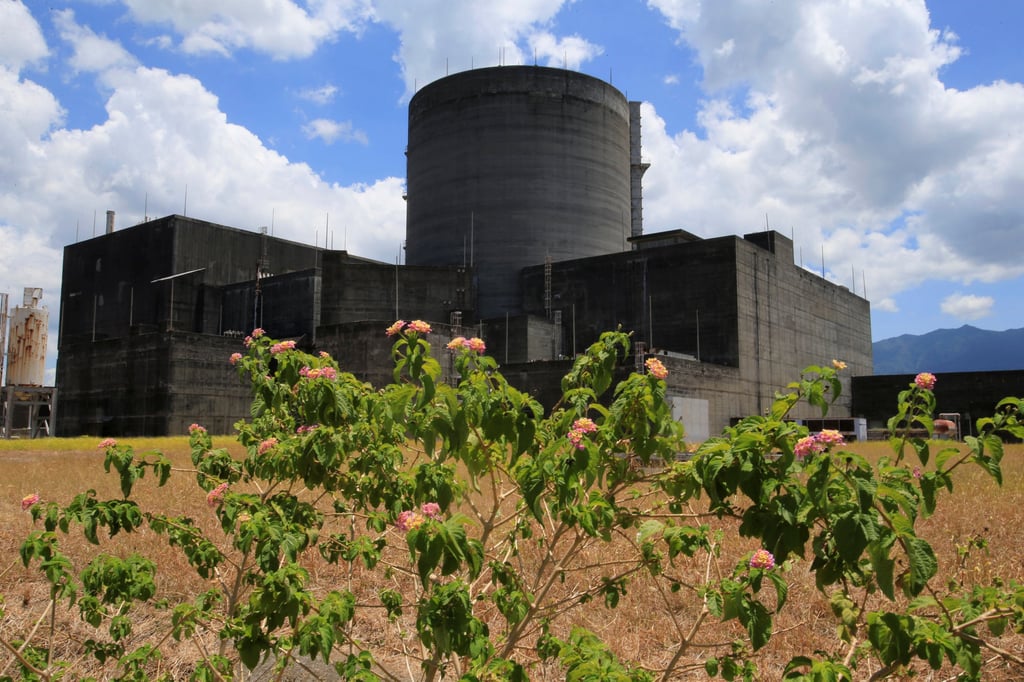
Bautista said much of the initial work slowed after the Bataan Nuclear Power Plant and the broader nuclear power programme were mothballed in 1986 following fears from the Chernobyl explosion and corruption allegations.
Bautista leads the Nuclear Fuel Cycle Research Programme, a 2024 government-funded initiative continuing work that began several years ago.
He said the programme was currently in its first phase, developing capabilities across the fuel cycle from uranium exploration and recovery to radioactive waste management.
This also entails other efforts such as recovering uranium from sources including ores, seawater and fertiliser by-products, and establishing a nuclear power plant simulator.
However, the Philippines was still far from developing a commercial nuclear-fuel industry, with progress still “at an early stage”, Bautista said, adding that continuous support would be needed to help the country meet its 2032 target.
Tungpalan said the Philippines “does not have to build every step of the nuclear fuel cycle on its own”, as it could strategically develop capabilities in certain areas while relying on international partners for others.
Powering higher ambitions
The uranium finding comes as the Philippines considers not only how to generate nuclear power but also how to build an industrial base capable of consuming large amounts of reliable electricity.
Nuclear energy would be an important cornerstone for the Philippines’ critical industry ambitions, with the proposed Pax Silica hub requiring enormous amounts of energy, far more than the country can offer, according to Carlo Arcilla, a former PNRI director and a professorial lecturer at the University of the Philippines’ National Institute of Geological Sciences.
Pax Silica, a 1,620-hectare (4,000-acre) “AI-native, hi-tech hub” for semiconductor, artificial intelligence and critical mineral supply chains, would require 3 gigawatts of embedded generation capacity – equivalent to 16 per cent of the Luzon grid, which is responsible for 74 per cent of total power demand in the Philippines.
“Only nuclear can power Pax Silica,” Arcilla said, adding that the hub would “need power, which we don’t have”.
Meanwhile, alternative sources such as solar power would entail an enormous land requirement to supply the needed capacity.
While reviving the Bataan Nuclear Power Plant would be a sound option, it might be better for the Philippines to focus on building new sites to avoid political controversies associated with the plant, Arcilla said.
In August, the Department of Energy identified seven new potential sites in the provinces of Bataan, Palawan, Masbate, Pangasinan and Camarines Norte.
Tungpalan said the Philippines could start small by developing local capabilities in uranium mining and processing, before relying on international partners for more sensitive phases such as enrichment.
“The value of [this finding], therefore, is not that it must supply our first nuclear power plant, but that it could give our country an important strategic option as our nuclear energy programme grows.”
KioskNews shows a cleaned-up reading view extracted from the publisher’s page — the original always lives on their site, not ours.