The Senate curbed remarks in Sara Duterte’s trial — on what legal grounds?
Already have Rappler+?
to listen to groundbreaking journalism.
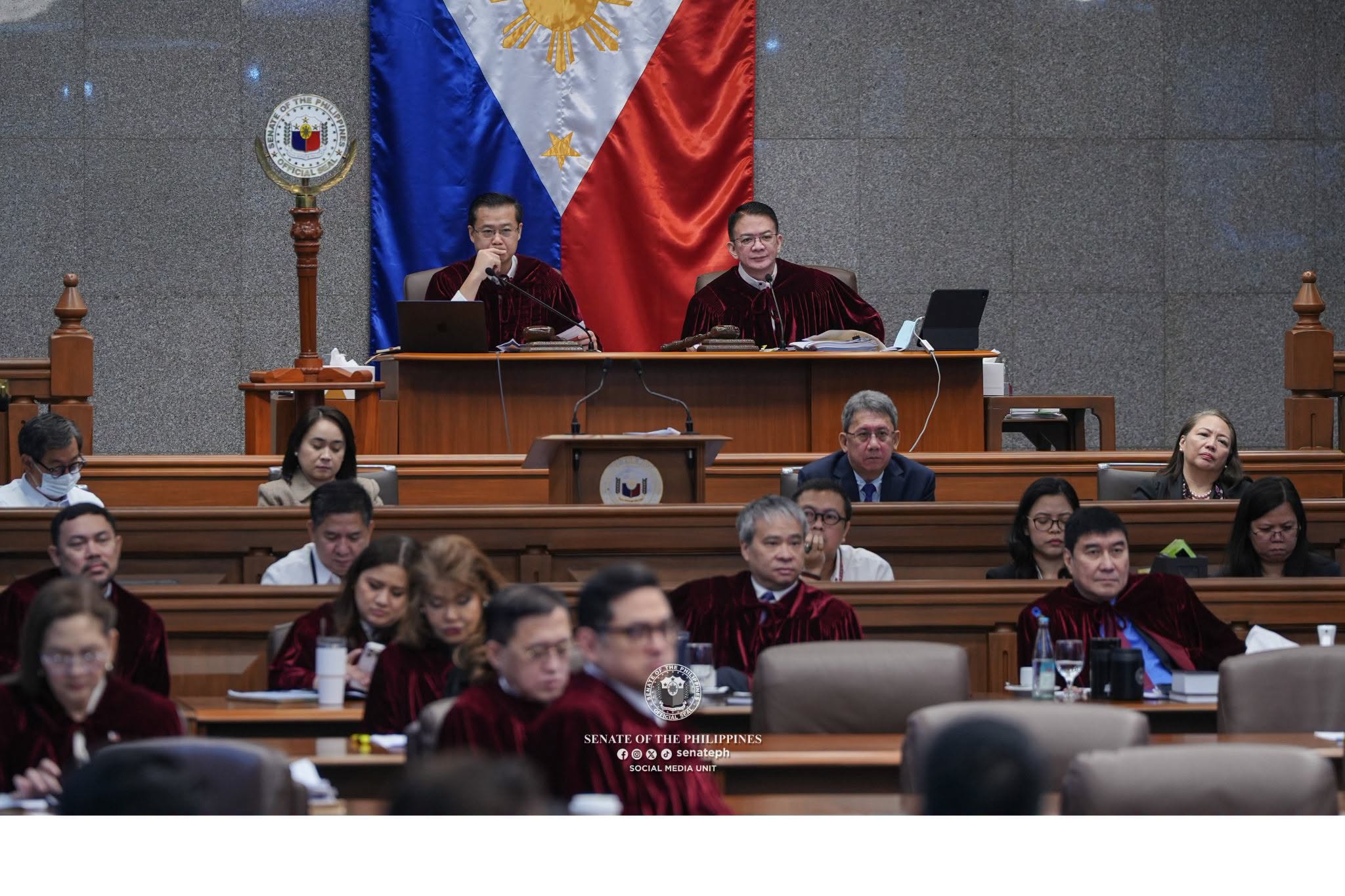
IMPEACHMENT TRIAL. The Senate impeachment court holds a trial.
Senate of the Philippines Facebook page
The Senate highlights the sub judice or the rule that 'restricts comments and disclosures pertaining to judicial proceedings to avoid prejudging the issue, influencing the court, or obstructing the administration of justice'
AT A GLANCE
- Presiding officer Chiz Escudero reminded parties involved in Vice President Sara Duterte's impeachment case about the limitations on discussing the merits of the case, warning of penalties for violations.
- The sub judice rule, which restricts comments on ongoing judicial proceedings to prevent undue influence, applies to all parties involved in the impeachment, including senator-judges and Duterte herself.
- Escudero highlighted the importance of political neutrality and adherence to the Code of Judicial Conduct, stating that violations could lead to penalties, including ethics complaints for senator-judges.
This is AI-generated. Read the article for full context. Report any errors.
Instead of reprimanding those who allegedly discussed the merits of Vice President Sara Duterte’s impeachment case, presiding officer Chiz Escudero reminded the parties about the limitations of what they can discuss on the floor.
Escudero set the possible penalties against violators: a public reprimand or admonition for the first offense, and then a P30,000-fine for each subsequent offense.
This rule applies to all parties in the ongoing impeachment.
“You know who you are, and based on the records, we know who you are,” said Escudero.
“[You are enjoined] from making public statements or otherwise discussing, sharing, or endorsing comments pertaining to the merits of this pending impeachment trial, and from engaging in trial by publicity, as they directly threaten the independence of the Court, degrade the dignity of the tribunal, and risk turning it into a circus, and weaponize the media to substitute public outrage for actual evidence,” he added.
So what are Escudero’s legal grounds for implementing this order?
Sub judice
The sub judice rule is the principle that bars parties from discussing the merits of the case to avoid undue pressure.
The Supreme Court defines this principle in Romero et al. v. Estrada as the rule that “restricts comments and disclosures pertaining to judicial proceedings to avoid prejudging the issue, influencing the court, or obstructing the administration of justice.”
This rule is not exclusive to court or legal proceedings. This is also found in the Senate’s impeachment rules.
Sub judice in the context of an impeachment trial not only applies to lawyers, but also to the senator-judges and to Duterte herself.
“The Presiding Officer and the Members of the Senate shall refrain from making any comments and disclosures in public pertaining to the merits of a pending impeachment trial. The same shall likewise apply to the prosecutors, to the person impeached, and to their respective counsel and witnesses,” says the procedures’ Rule 18.
Reminder to senator-judges
Escudero, in expounding on the sub judice rule, also mentioned the 2025 Code of Judicial Conduct and Accountability (CJCA), or the code of conduct for judges. He cited Canon III, Section 10, which bars judges from making comments in and out of court that could affect the outcome of the case.
Escudero also mentioned CJCA’s Canon IV, Section 24: “A judge shall not engage or use any form of expression which tends to violate, or has the effect of, violating the sub judice principle, provoke or inflame divisive and contentious issues of public concern, or project an image not compatible with the dignity of their position.”
Apart from citing jurisprudence or past court decisions, the presiding officer also mentioned a portion of the oath taken by senator-judges before the trial: “To do impartial justice according to the Constitution and the laws of the Philippines.”
He also took note of the impeachment rules’ Rule III: “Senators shall observe political neutrality during the course of the impeachment trial. ‘Political neutrality’ shall be defined as exercise of public official’s duty without unfair discrimination and regardless of party affiliation or preference.”
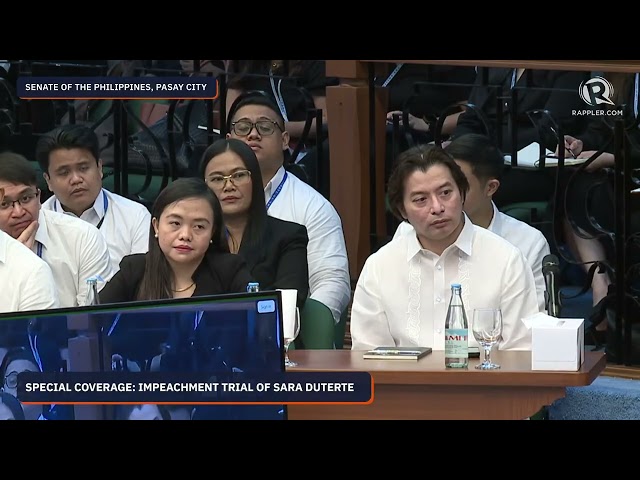
More penalties
Apart from contempt or the penalties mentioned by Escudero, counsels may also face separate punishments if their remarks or actions violate other rules like CPRA or the Code of Professional Responsibility and Accountability, the code of conduct for lawyers.
“Where the same conduct appears to violate CPRA, the Chair may direct the clerk to transmit the certified copy of the pertinent order, transcript, and records to the Supreme Court or the Office of the Bar Confidant for whatever action the Supreme Court may deem proper. Such transmittal is a referral, not a finding or penalty of professional discipline. Disciplinary jurisdiction over…members of the bar still remain with the Supreme Court,” said Escudero.
Meanwhile, senator-judges who violate their impeachment oath may be slapped with an ethics complaint before the Senate committee on ethics and privileges.
“Under Rule 10, Section 13(2) of the rules of the Senate, the committee on ethics has jurisdiction over all matters relating to the conduct, rights, privileges, safety, dignity, integrity, and reputation of the Senate and its members,” said Escudero. – Rappler.com
KioskNews shows a cleaned-up reading view extracted from the publisher’s page — the original always lives on their site, not ours.