Shenzhen pledge: Can US, Russia, China come together to improve global fuel supplies?
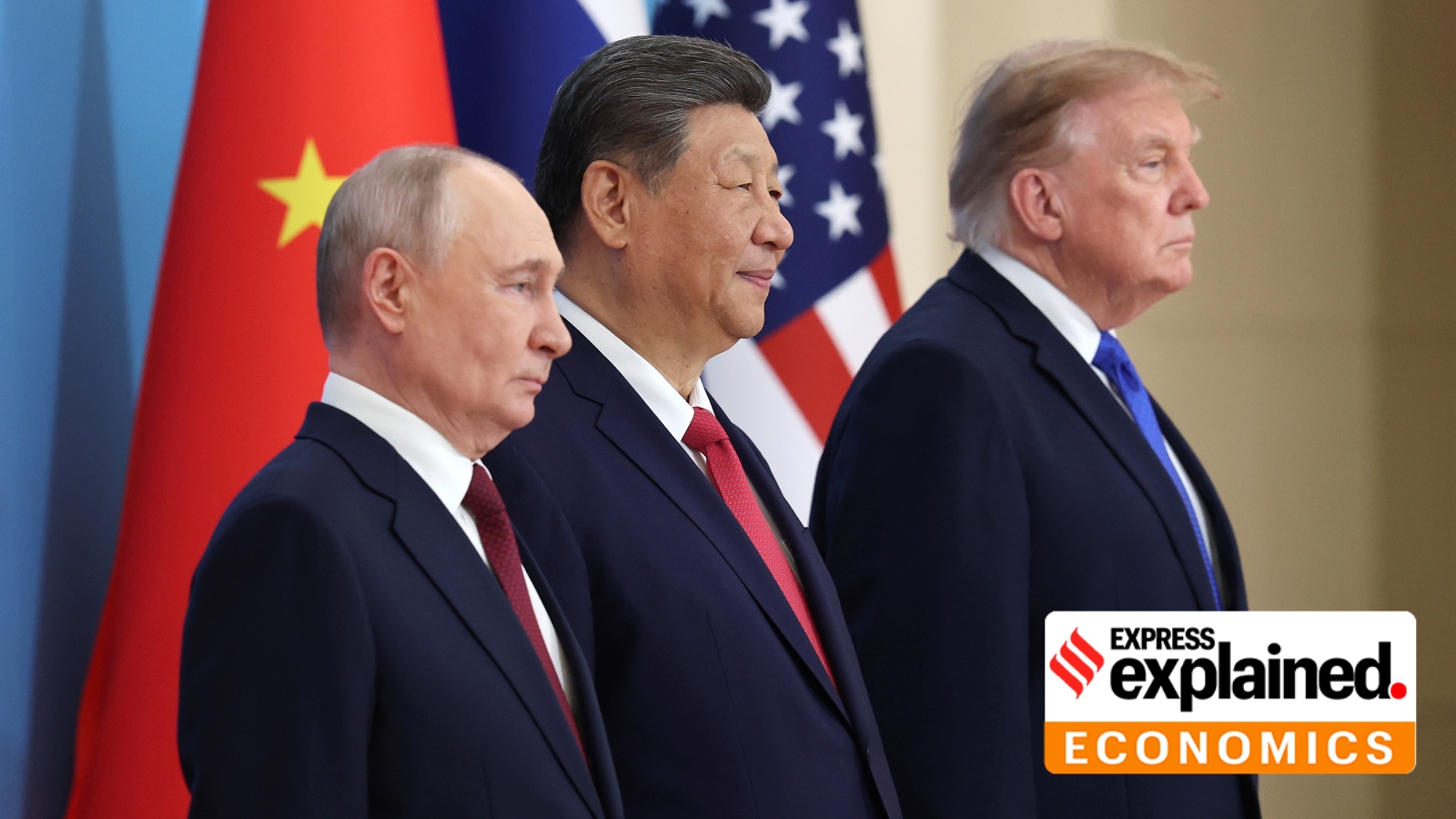
The “US-Russia-China Heads of State Declaration toward Peace” issued after US President Donald Trump, Russian President Vladimir Putin, and Chinese President Xi Jinping held an unprecedented trilateral summit in Shenzhen said that the three countries plan to increase the production and supply of refined petroleum products “for the benefit of all nations”. It also said that the three leaders “reaffirmed the importance of stable energy flows”.
While the statement is short on specifics, it can be seen as a statement of intent from three of the world’s most influential energy market players at a time when global fuel supplies are severely strained. Ongoing geopolitical conflicts — US-Iran and Russia-Ukraine — have disrupted oil and fuel supply chains, pushed up fuel prices, and highlighted energy security-related concerns.
While the pledge could potentially provide some psychological relief to fuel markets, particularly regarding diesel, translating the commitment into actual additional supplies will be a major challenge, according to energy experts and analysts. The commitment also raises important questions about sanctions, refining capacity, trade restrictions, and the ability of the three countries to coordinate their energy policies.
Timing is key
The timing of the pledge is important, given the geopolitical conflicts and their impact on fuel flows. The West Asia conflict has been particularly damaging because of the disruption in energy flows via the Strait of Hormuz, through which roughly a fifth of the world’s oil supplies passed before the conflict. Although oil flows have now recovered notably, shipments of refined petroleum fuels from the Gulf remain significantly below pre-war levels.
At the same time, Ukrainian attacks on Russian oil refineries have reduced Moscow’s ability to process crude and export diesel. This has compounded the shortage of fuels, particularly diesel, in international markets. Paris-based International Energy Agency’s latest Oil Market Report highlighted that diesel prices in Europe remained 77% above pre-war levels.
High diesel prices have been a major concern for the Donald Trump administration in Washington, with retail prices touching record highs. Diesel is seen as one of the most important petroleum fuels as it is not just a transportation fuel, but also powers long-haul trucks, agricultural machinery, construction equipment, and other heavy industrial equipment.
So severe has been the crisis that in a surprise move last month, Trump announced that the US would be buying thousands of tonnes of Russian diesel, and was relaxing its sanctions regime to facilitate Russian diesel exports to other countries as well. This announcement came as a shock to many, considering the US has taken numerous measures, including sanctions, to restrict Moscow’s earnings from energy exports.
Story continues below this ad
Diesel supplies are tight, inventories are low, and importers are scrambling to secure the fuel from geographies not impacted by conflict or chokepoint closures. Diesel is among the most important petroleum fuels globally owing to its use across sectors, which also makes it the most politically sensitive fuel amid the ongoing geopolitical crises.
The limitations that US, Russia, and China face
The US, Russia, and China are among the world’s largest oil producers and refining powers. Their combined influence over crude supplies, refining capacity, and international petroleum trade makes their commitment something to sit up and take note of. However, there is a major question mark over the actual impact the declaration will have in terms of actual fuel flows and global energy market stability.
“I don’t see the declaration bringing much extra fuel onto the market in the near term. All three countries have pledged to increase the production and supply of refined products, but each faces a different constraint,” Abu Dhabi-based energy analyst Natalia Katona told The Indian Express.
American refiners have emerged as important suppliers of diesel to international markets amid disruptions in West Asia and Russia. But US refineries are already operating at extremely high utilisation rates, which essentially limits the scope for a further increase in fuel production.
Story continues below this ad
“In China, domestic supply comes first. Beijing formally banned diesel exports in March, then allowed limited shipments of diesel and jet fuel to selected partner countries. In June, only a handful of companies had permission to export under their general-trade quotas. More companies received permits in July, but the monthly approval process interrupted trade again in early October, and only in mid-October Beijing approved limited additional volumes…With refinery output below expectations and domestic diesel stocks at their lowest, Beijing has little incentive to allow more diesel to leave the country,” said Katona.
Russia, which has traditionally been a major exporter of diesel and other petroleum products, is constrained by the damage to its refining infrastructure from Ukrainian attacks, reducing its ability to process crude and export fuels. There is also the complication of Western sanctions on Moscow due to the war in Ukraine. Although the US has shown a willingness to relax certain restrictions to improve global fuel availability, the broader sanctions regime complicates Russian petroleum trade, financing, insurance, and shipping.
“The market reaction to the news from the trilateral summit in Shenzhen, China, was modest. European gasoil prices fell 1.5% on the news, while crude oil prices barely moved. That response is consistent with our view that the pledge offers limited near-term relief for refined product markets. US refiners are already running close to capacity, while Ukrainian drone strikes have sharply reduced Russian refinery runs. China has the most scope to influence the outcome, but we expect Beijing to keep product exports around September-October levels. The declaration gives no volume target or timetable, leaving each government to decide how much it can deliver,” Jorge Leon, Rystad Energy’s head of geopolitical analysis, said in a note.
KioskNews shows a cleaned-up reading view extracted from the publisher’s page — the original always lives on their site, not ours.