Australia is talking about immigration – but what do people at the centre of the debate have to say?
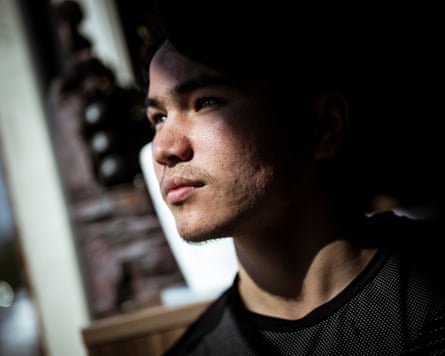
When Shamsullah Sadey, 19, fled Taliban-controlled Afghanistan and arrived in Australia with his family in 2024, he brought with him dreams of becoming a neurosurgeon.
But the high school student is feeling increasingly “uncertain” about his future. He says the recent debate about immigration means for “the first time I’ve genuinely felt unwelcome” in Australia.
That feeling is common among migrants, refugees and asylum seekers who tell Guardian Australia they’re anxious and fear being excluded as the major political parties compete on policies to reduce net overseas migration (Nom).
Under long-awaited changes to immigration rules, the federal government has promised to reduce Nom to 245,000 this financial year and 225,000 in 2027–28.
The policy was unveiled after One Nation pledged to reduce the number of temporary migrants in Australia by more than 750,000 over three years, targeting international students and family members of skilled migrants. The party’s policy would create a Nom ceiling of 130,000 a year.
Arriving as a refugee, Sadey initially didn’t expect Australia “to be this good”. He found purpose in his plan to pursue a career in medicine, but says his excitement about life in Melbourne is dampened by a growing sense that migrants are being “being looked at more as a number or problem rather than the people who are contributing to the Australian community”.
“It’s quite disheartening. Behind every migration number is a person and a family and a story. Australia can have a well-managed migration system while also treating migrants and refugees with dignity,” he says.
“Australia has given me more than enough. I hope Australia remains a place where young people from refugee and migrant backgrounds can feel that they belong and have a future. I just hope that we don’t lose sight of the human side of migration.”
The University of Technology Sydney associate professor Laurie Berg says it’s “disappointing that all sides of politics are now fixated on a single number” – the Nom.
“The dehumanising impact of reducing migrants to numbers inflames anti-migrant sentiment,” Berg says.
“The focus on Nom can suggest an assumption that migrants are to blame for social ills like shortages of housing or cost of living [pressures]. This is not sensible policymaking.”
The academic says the current debate largely overlooks migrants’ “deep contributions to Australian communities” and warns it can leave migrant communities feeling “scapegoated rather than valued”.
“It gives social licence to Australians to treat migrants as disposable and exploit them.”
‘Focusing only on the economic gains’
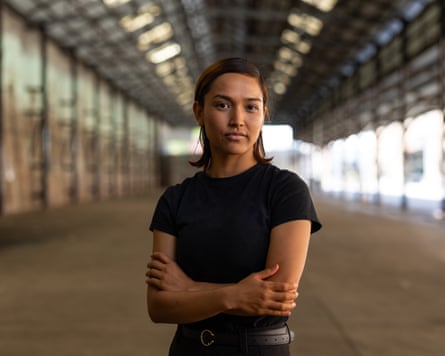
Kobra Sayyadi came to Australia from Afghanistan in 2010 after being sponsored by her brother, who arrived as a refugee. The 27-year-old completed secondary school before studying for a Bachelor of Arts and pursuing a career in the creative arts.
The recent focus on skilled visas and specific industries makes her feel as though immigrants are only valued for their economic contribution.
The home affairs minister, Tony Burke, recently addressed the National Press Club. His speech was called “The work of managing the migration program: who arrives, who stays, who leaves”.
Sayyadi, who lives in Sydney, says the minister “mentioned doctors and construction workers and nurses”.
“That in itself … tells you a lot. ‘We only welcome or value these kind of professions’ – is how it came across to me.
“It feels very much like they’re focusing only on the economic gains that will come from this migration reforms. I’d ask him to also pay attention to the social costs that can come as a result of it.
“What about roles in public services and community services in the arts? You know, those are the things that make people’s lives meaningful, and that’s what makes Australia rich as a country. So why try and stifle that?”
‘More conscious of their accents’
Canberra-based Saad Khalid came to Australia from Pakistan as an international student shortly before the Covid lockdowns.
After completing his studies, he pursued a career working for an ethnic community broadcaster.
The 24-year-old feels the debate around multiculturalism has “really gone downhill” leaving him and others in his community “on the edge”.
“People are becoming more conscious of the way their accents are heard, whether their name or surname immediately identifies them as coming from somewhere else, whether they’re speaking in another language in public and that’s something I’ve experienced myself,” Khalid says.
He fears the hostile tone of some debate means policies don’t reach communities affected by them – especially people who increasingly feel “they don’t belong in this country or the door is closing”.
after newsletter promotion
“One comment doesn’t necessarily change the way someone feels about belonging, but a few things added up really. Seeing migration being discussed negatively in the online space and then seeing politicians talking about it as a national conversation item – like seeing Pauline Hanson talk about Uber drivers and other sorts of essential workers – I guess it’s left a few people on the edge,” he says.
“You announce something in Canberra and within a few minutes it’s in WhatsApp groups, it’s in WeChat groups, and in conversations between Australia and people who have families overseas.
“A lot of people immediately begin to ask ‘Does this apply to me? What about my situation?’
“[But] there’s a lot of potential for disinformation because of polarisation. A lot of migrant groups are very confused … whether Australia is a welcome home for them.”’
‘Dominated by far-right voices’
The head of advocacy at the Asylum Seeker Research Centre, Ogy Simic, says the “discourse has been dominated by far-right voices”.
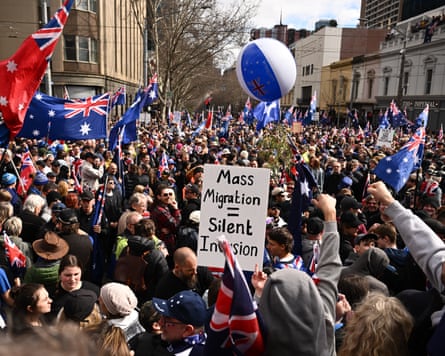
Neo-Nazis and politicians were among protesters at anti-immigration March for Australia rallies held across the country last year. The marches were condemned as hateful by Burke and the federal government but attended by the One Nation leader, Pauline Hanson, and senator Malcolm Roberts, as well as independent MP Bob Katter.
Simic partly blames the Albanese governments for allowing the conversation to become more hostile.
“Migrants and refugees are constantly talked about as a problem to be cracked down on, blamed or feared … people want government to act on the cost of living issues, the fact that it’s harder for people to go and see a doctor than ever before, the sort of issues that people are feeling in their own lives,” he says.
“[But] they’re not actually being addressed by government through this debate.”
Simic says the research centre is receiving more reports of people being targeted in public.
“We’re hearing increased accounts of people being targeted on the street. People are noticing more racist abuse in public, more hostility in their communities and an enormous amount of racism online that is increasingly spilling into everyday life.”
Simic wants governments to redirect the migration debate towards the policies they intend to implement “in a way that cuts through and brings community along”.
“People start emailing and calling us. They’re worried and asking: ‘Does this affect me? Am I going to lose my work rights? Is my visa at risk? What does this mean for my family?’ The fear travels far beyond the people directly targeted by any one policy. Entire communities start wondering whether they could be next.”
‘A mature debate’
Burke in his press club address rejected any suggestion he or the government had remained silent in the face of harmful rhetoric targeting migrant communities.
The minister said he had “spent [his] entire political life standing up against hate speech” and wanted to ensure all Australians, regardless of their heritage, were treated equally.
Australians were “capable of having a mature debate about this” issue, Burke insisted.
Labor in mid-September said foreign citizens staying in Australia without a valid visa would face measures to force them to leave the country, with policy changes also affecting backpackers and preventing international students from extending stays indefinitely.
Burke at the time said: “The government supports immigration but is opposed to anyone rorting the immigration system.”
Simic stresses his “message to Tony Burke would be to remember the multicultural communities that support the Labor party and respond to them in a way which brings our community together – as opposed to letting these far-right voices divide us”.
The University of Sydney professor Ghassan Hage worries the immigration debate is moving further away from a legitimate discussion.
“While there is always room for people with expertise to have a debate in a public forum … debates where ‘everyone’ is entitled to an opinion regardless of expertise are inevitably racist festivals,” he says.
“The voice of those who are debated is seldom heard. This is why immigration debates more often than not create an environment or an atmosphere that alienates and marginalises immigrants of colour.”
KioskNews shows a cleaned-up reading view extracted from the publisher’s page — the original always lives on their site, not ours.