Malaysia’s economy resilient despite global risks, World Bank calls for decisive reforms
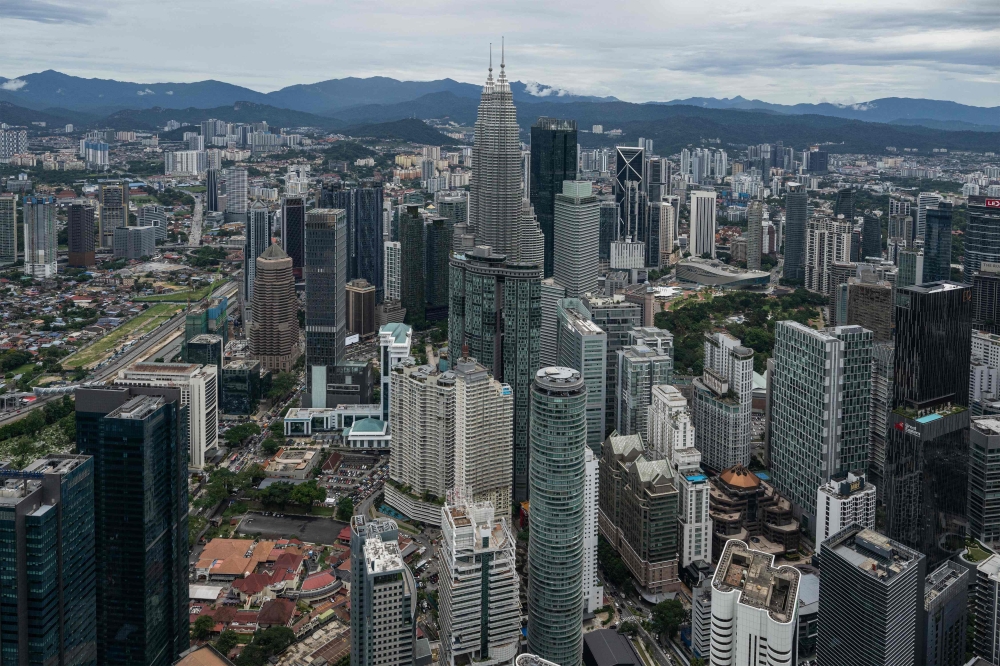

The World Bank expects Malaysia’s economy to remain resilient in the second half of 2026, supported by domestic demand, employment gains and continued investment. — AFP pic
First Published: Wednesday, 11 Nov 2026 5:11 PM MYT
KUALA LUMPUR, Nov 11 — Malaysia’s economic outlook for the second half of 2026 (2H 2026) is expected to remain positive, with domestic demand continued to be supported by employment gains, targeted fiscal support and ongoing investment activities, according to World Bank Group.
Its division director for the Philippines, Malaysia and Brunei Zafer Mustafaoğlu said the near-term outlook remained uncertain, with geopolitical conflicts, trade tensions and weaker global demand all weighing on trade and confidence.
“As a highly open economy, Malaysia remains exposed, especially through trade and financial channels,” he said in his welcoming remarks at the launch of the October 2026 Malaysia Economic Monitor “From Quantity to Quality: Financing Malaysia’s Productive SMEs” here today.
Zafer also said as Malaysia enters this period from a position of strength, these headwinds also call for decisive actions.
These include continuing to rebuild fiscal space to strengthen resilience to future shocks, keeping monetary and macroprudential policy appropriately calibrated, and even amid immediate pressures, staying focused on the foundations for long-term growth.
“Deepening structural reforms is not optional, but is essential for sustainable growth and better jobs,” he said.
Meanwhile, Zafer said Malaysia is on the brink of achieving high-income status, but the challenge for its small and medium enterprises (SMEs) is to shift to higher productivity, higher technology adoption, intellectual property creation and innovation.
For that, it requires the financing to evolve from basic working capital and investment funding to high-risk expansion capital for global market scaling, automation overhauls, digitalisation and artificial intelligent adoption and green transitions.
“So, the question is not simply about whether SMEs can access credit, but whether the finance available to them actually matches the productive and innovative investment they need to make.
“This is vital for Malaysia’s transition towards productivity-led growth, enabling technology adoption, innovation, business upgrading, and other investments that depend more on future productive capacity than on existing collateral,” he said. — Bernama
KioskNews shows a cleaned-up reading view extracted from the publisher’s page — the original always lives on their site, not ours.