The 8 Best Films of the 1950s, Ranked


Luc Haasbroek is a writer and videographer from Durban, South Africa. He has been writing professionally about pop culture for eight years. Luc's areas of interest are broad: he's just as passionate about psychology and history as he is about movies and TV. He's especially drawn to the places where these topics overlap.
Luc is also an avid producer of video essays and looks forward to expanding his writing career. When not writing, he can be found hiking, playing Dungeons & Dragons, hanging out with his cats, and doing deep dives on whatever topic happens to have captured his interest that week.
Sign in to your Collider account
The 1950s were a transformative decade for cinema. The rise of TV was shaking things up, Japanese cinema reached an international audience, European filmmaking moved toward the innovations of the French New Wave, and some of Hollywood's greatest directors were at the peak of their powers.
The result was a diverse collection of classics. Picking favorites is tough, but the titles below are strong contenders. They're still funny, frightening, exciting, emotionally devastating, and formally daring more than 67 years later.
8 'The Night of the Hunter' (1955)

“Would you like me to tell you the little story of right-hand, left-hand?” The sole directorial effort by actor Charles Laughton, The Night of the Hunter is part thriller, part fairy tale, part Southern Gothic nightmare, and unlike anything else from its decade. At the grim center of the narrative is murderous preacher Harry Powell (Robert Mitchum), who hunts two children (Billy Chapin and Sally Jane Bruce) who know where their dead father hid stolen money.
Mitchum delivers one of the all-time great villain performances, spellbinding as a man who cloaks his greed and violence in religion. The famous "LOVE" and "HATE" tattoos (endlessly imitated in the years since) across his knuckles reduce his worldview to an almost mythological struggle between good and evil. Finally, in terms of the visuals, all this is shot in a deliberately heightened style: shadows stretch and loom, creating an almost phantasmagoric atmosphere.
7 'Tokyo Story' (1953)

“Isn't life disappointing?” This gem trades spectacle for subtlety. In Tokyo Story, we follow elderly couple Shūkichi (Chishū Ryū) and Tomi Hirayama (Chieko Higashiyama) as they travel to Tokyo to visit their grown children, only to discover that those children are mostly too busy with their own lives to spend much time with them. Ironically, the person who treats the elderly couple with the greatest warmth is their widowed daughter-in-law Noriko (played beautifully by Setsuko Hara), who isn't even related to them by blood.
However, the movie never gets melodramatic with that. Nobody is exceptionally cruel. Nobody delivers a grand speech explaining the breakdown of the family. Life has simply moved on. The characters are all presented complexly, and that realism is what makes the film hurt so much. Indeed, while rooted in a very specific cultural context, Tokyo Story ends up touching on universal themes.
6 'The Searchers' (1956)

“That'll be the day.” One of the archetypal Westerns, and yet one that also interrogates the genre's mythology. Here, John Wayne plays Ethan Edwards, a Civil War veteran who spends years searching for his niece Debbie (Natalie Wood) after she's abducted by Comanche raiders. Ethan possesses many qualities associated with the classic Western hero. He's resilient, skilled, courageous, and almost supernaturally determined. But he's also consumed by racial hatred, and it gradually becomes clear that finding Debbie may not mean rescuing her.
Wayne is great in the part, playing powerfully off his familiar screen persona and genre authority and turning it into something unsettling, particularly as Ethan's obsession becomes increasingly difficult to distinguish from vengeance. Director John Ford surrounds that darkness with amazing Monument Valley landscapes, capturing the tension between the Western fantasy and its often-uglier reality, culminating in that iconic closing shot.
Collider Exclusive · 8 Questions · 2 Minutes Which Western Icon Are You Most Like? No Name · Doc Holliday · Wyatt Earp · Mattie Ross
Pick your name, your gun, your horse and how you spend a night in town, and we will tell you which legend of the Old West you would have been. Four icons are waiting at the end of this: the stranger who never gives his name, the gambler who would die for a friend, the lawman who never wanted the badge, and the girl nobody has ever talked out of anything.
🚬No Name(Dollars Trilogy)
🃏Doc Holliday(Tombstone)
⭐Wyatt Earp(Tombstone)
🐎Mattie Ross(True Grit)
01
The town is about to learn your name. What do they call you? In a Western, what people call you is already half the character.
02
What are you carrying? Everything out here is character, right down to what is sitting on your hip.
03
What are you riding? A hero and their horse is one of the oldest relationships in cinema.
04
You have got one evening in town. How does it go? The saloon is where these films quietly tell you who somebody really is.
05
A stranger offers you money for a job that sounds like trouble. Somebody always turns up with a full purse and a bad idea.
06
Somebody is waiting for you in the street. What does the town see? Two people, an empty road, and everybody else watching from behind the shutters.
07
What is the one thing you will not do out here? The code is about the only thing west of the river that actually holds.
08
The job is finished. Where does the story leave you? Eight questions in, this is the one that decides your icon.
The Dust Has Settled Your Western Icon Is…
Four icons and four completely different ways of walking into trouble. This is the one you would have been out there, why it fits, and what it would have cost you.
The Man With No Name
You have never explained yourself and you have never needed to, because people work out fairly quickly that you are the most capable person in the room without you ever having to mention it.
- Eastwood built the character out of everything he refused to do, stripping away the backstory, the speeches and every bit of reassurance until only the competence was left.
- You keep your own counsel, and while other people occasionally find that unnerving, you have never felt any real need to fix it for them.
- The Dollars films work because he genuinely is in it for himself right up until the moment he is not, and he never explains that part either.
- You would be gone before anybody got a chance to thank you.
Doc Holliday
You are the funniest person in most rooms and the most loyal person in all of them, and you would be genuinely insulted if somebody suggested those two things were in any tension.
- Doc has no real reason to be in this fight beyond the fact that his friend is in it, which is the only reason he has ever needed for anything.
- You lead with wit, and it does a very effective job of hiding how seriously you take the handful of people you actually care about.
- Val Kilmer's performance is the most quoted in the entire genre because the jokes keep getting sharper as the situation gets worse.
- You would spend everything you had on this and still describe it as a good week.
Wyatt Earp
You never wanted this job, and you took it anyway because the alternative was standing there watching somebody less careful do it badly, which is the most Western reason there has ever been.
- Earp is the reluctant authority figure, a man who came to town specifically to be left alone and somehow ended up answerable for all of it.
- You are protective by instinct, so when something goes wrong your first thought is who is exposed rather than who is to blame.
- These films understand that keeping order costs far more than breaking it, and that the person holding the line almost never gets thanked.
- You would do the whole thing again, and you would complain about it the entire time.
Mattie Ross
Nobody has ever successfully talked you out of something you had already decided was right, and a long line of grown adults has found that out the hard way.
- Mattie is the most relentless character in the Western canon and she manages it through argument, paperwork and flat refusal rather than a fast draw.
- You have no patience for being managed, so you negotiate, you check the details and you turn up exactly when you said you would.
- True Grit is the rare Western where the moral centre is the youngest person on screen and every adult around her has to catch up.
- You would get what you came for, and the film is honest about what that takes out of you.
5 'Rear Window' (1954)
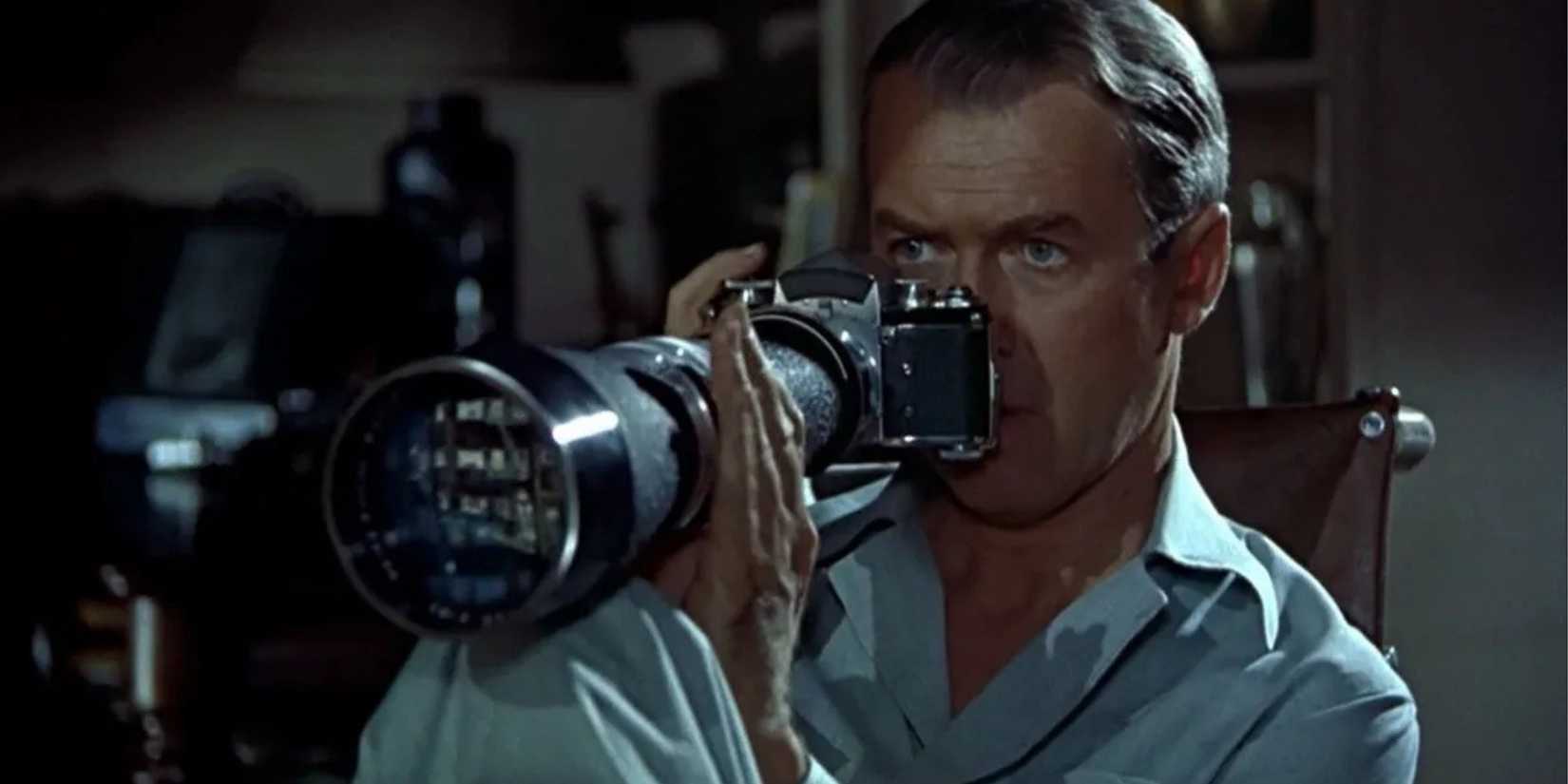
“That's a secret, private world you're looking into out there.” Only Hitchcock could make the act of looking out of a window so unbearably tense. Rear Window traps photographer L.B. "Jeff" Jefferies (James Stewart) inside his apartment with a broken leg, leaving him with little to do besides watch his neighbors through the windows overlooking his courtyard. Then he begins to suspect that one of them has murdered his wife.
The setup is ingenious, in part, because the audience is placed in essentially the same position as Jeff. We can see suspicious behavior, but our knowledge is restricted by distance, walls, curtains, and whatever happens to be occurring within view. The Master of Suspense weaponizes that limitation, keeping us hooked while simultaneously making viewers complicit in Jeff's voyeurism. As a result, Rear Window becomes a statement on relationships, loneliness, the uncomfortable pleasure of watching other people's private lives, and, of course, filmmaking itself.
4 'Rashomon' (1950)

"It's human to lie. Most of the time we can't even be honest with ourselves.” The defining multi-viewpoint 'unreliable narrator' movie, one whose title became shorthand for an entire narrative device. In Rashomon, a samurai is dead and his wife has been assaulted, but determining exactly what happened proves almost impossible in Rashomon. Akira Kurosawa presents several incompatible accounts of the same encounter, with the bandit Tajōmaru (Toshiro Mifune), the samurai's wife (Machiko Kyō), the dead samurai himself (Masayuki Mori), and a woodcutter (Takashi Shimura) each offering different versions of events.
Every testimony changes the audience's understanding without providing a comfortable final answer. However, the witnesses aren't necessarily lying in a straightforward way. Rather, their stories reflect pride, shame, self-image, and the universal tendency to reconstruct events in ways that make our own behavior easier to live with. It's timeless stuff.
3 'Paths of Glory' (1957)

“There are few things more fundamentally encouraging and stimulating than seeing someone else die.” One of Kubrick's early masterpieces, Paths of Glory is a lean, mean, economical anti-war film, cramming a ton of power into just 88 minutes. It takes us into the trenches of World War I, where French soldiers are ordered to launch a suicidal attack against a heavily fortified German position. When the assault inevitably fails, the generals responsible decide that somebody else needs to be punished.
Three soldiers are selected for court-martial, essentially at random, and Colonel Dax (Kirk Douglas) attempts to defend them against charges of cowardice. This setup becomes a vehicle for barbed anti-establishment commentary. Specifically, Kubrick contrasts the muddy terror endured by ordinary soldiers with the senior officers' comfort. The generals discuss casualties almost abstractly while the men beneath them are expected to die for irrational decisions they had no part in making.
2 'Vertigo' (1958)

“Only one is a wanderer; two together are always going somewhere.” James Stewart and Alfred Hitchcock teamed up yet again for Vertigo. This time, the star plays former detective Scottie Ferguson, whose fear of heights contributed to his retirement from the police. When an old acquaintance asks him to follow his apparently troubled wife Madeleine (Kim Novak), Scottie becomes increasingly obsessed with her. That premise sounds like standard crime fare, but the mystery ultimately becomes unusually strange and dark.
Here, Hitchcock turns romantic obsession into a form of psychological horror, particularly as Scottie attempts to transform another human being into his idealized image of someone else. He's assisted by a killer score from Bernard Herrmann and an extraordinary performance by Novak, built around identity, performance, and desire, never reducing the character to a mere archetype. All in all, while Vertigo was not immediately hailed as a masterpiece, it's come to be regarded as one of the greatest films ever made.
1 'Seven Samurai' (1954)

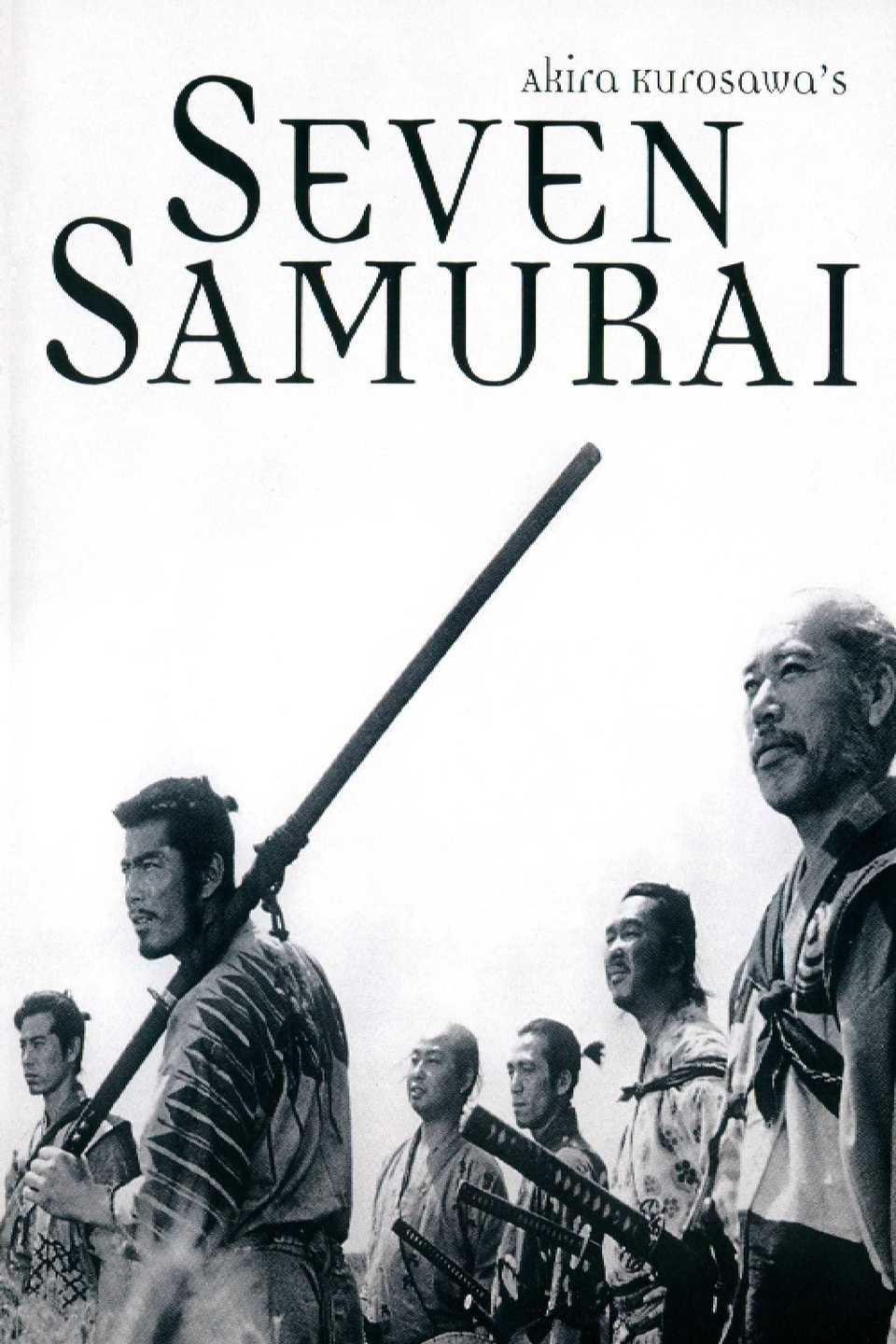
“Again we are defeated. The farmers have won. Not us.” So much modern action cinema can be traced back to this point. Seven Samurai serves up a juicy plot that has been the blueprint for countless movies that have followed: a desperate village recruits a group of warriors for protection, the team is gradually assembled, personalities clash, preparations are made, and everything culminates in an enormous battle.
The combat is staged remarkably well. Kurosawa shoots the final attack with clarity despite rain, mud, horses, arrows, and people moving in multiple directions at once. That said, he makes sure that the action has real depth. For example, each samurai becomes distinctive, from the experienced and compassionate Kambei (Takashi Shimura) to Toshiro Mifune's chaotic Kikuchiyo, while the farmers possess their own fears, prejudices, secrets, and survival instincts. In short, the movie delivers on all fronts.
Seven Samurai
- Release Date
- April 26, 1954
- Runtime
- 207 Minutes
- Director
- Akira Kurosawa
- Writers
- Akira Kurosawa
KioskNews shows a cleaned-up reading view extracted from the publisher’s page — the original always lives on their site, not ours.