Why Japan is taking its missile drills to Indian soil
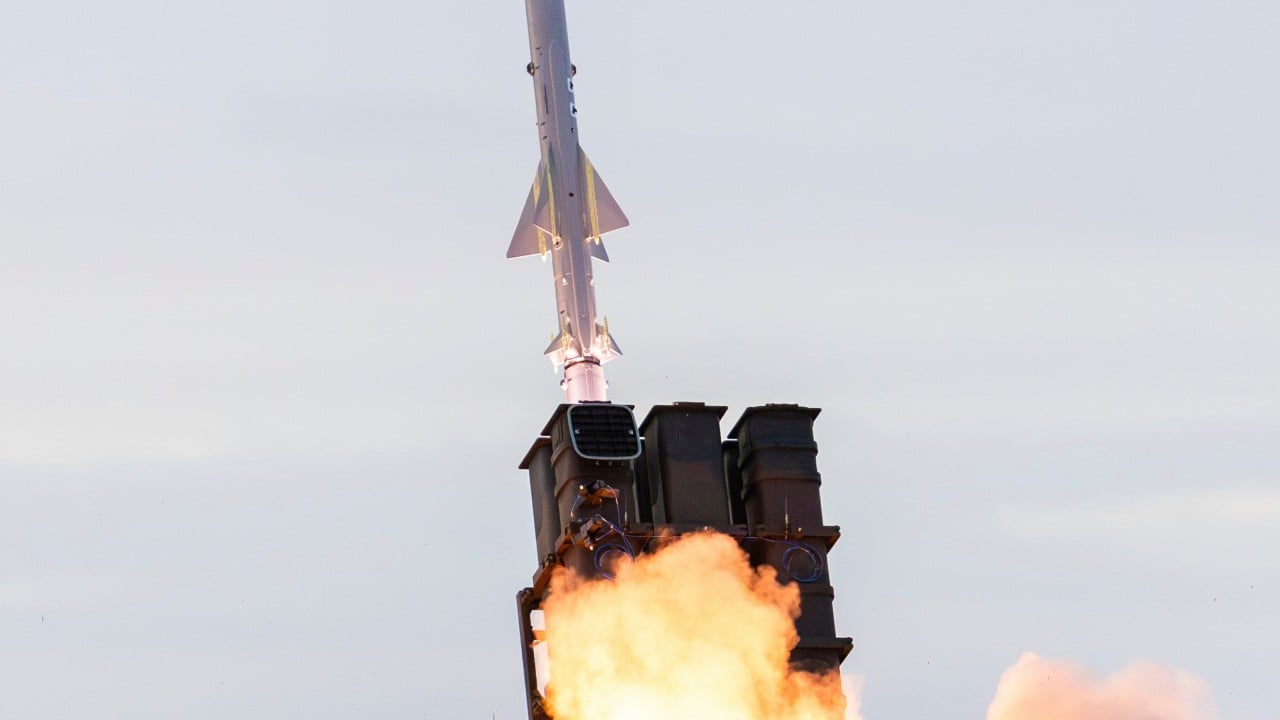
India’s decision to allow Japanese forces to conduct live-fire missile drills at its firing ranges signals a new level of cooperation between their militaries, analysts have said, as shared concerns over China push the two countries towards closer defence ties.
“What we’re seeing is certainly an elevation of the security relationship. India and Japan have run joint exercises for years, but the fact that Delhi is letting another country’s forces fire long-range missiles from Indian soil is a different level of trust,” said Sam Baron, a research fellow at the Yokosuka Council on Asia-Pacific Studies in Japan.
The announcement followed a fourth “2+2” ministerial dialogue in Tokyo on Thursday, in which India’s External Affairs Minister S. Jaishankar and Defence Minister Rajnath Singh met their Japanese counterparts, Toshimitsu Motegi and Shinjiro Koizumi.
In a joint statement, the two countries welcomed the signing of a letter of intent on the use of Indian firing ranges, noting that the Japan Self-Defence Forces would conduct live-fire drills in India for the first time starting next year, including exercises involving surface-to-ship missiles.
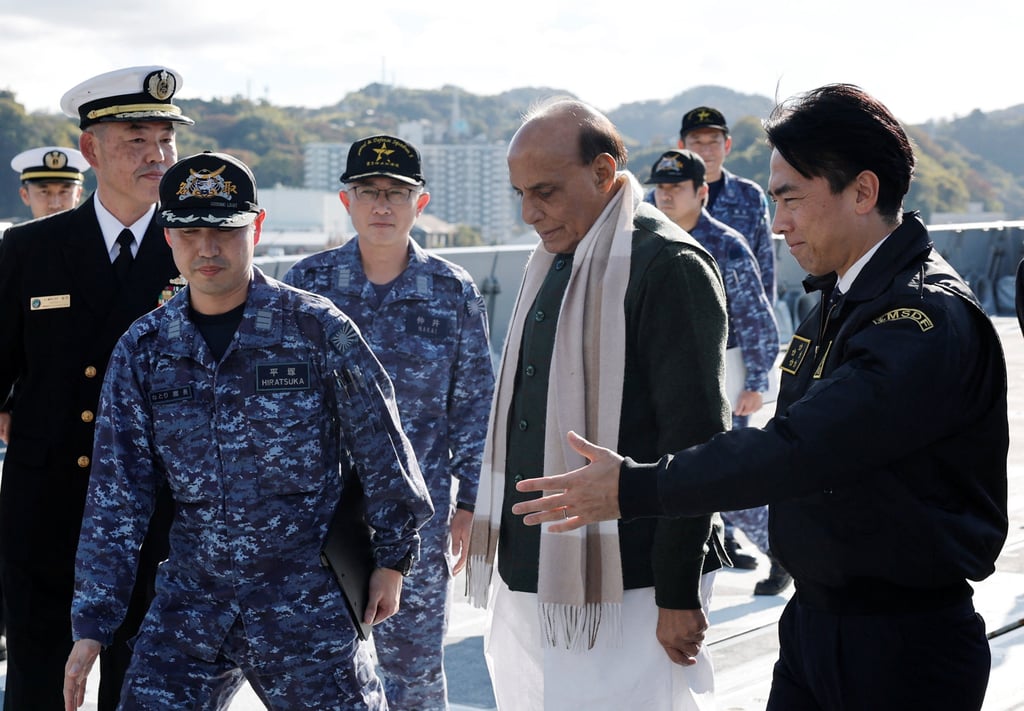
Japan and India have intensified their defence cooperation over the past year, with Thursday’s talks marking the third meeting between Singh and Koizumi since August.
In August, the two countries’ defence ministers signed a Memorandum of Arrangement on Maritime Security Cooperation covering maritime domain awareness and exploratory talks on joint naval shipbuilding and design, among other areas.
Japan’s Air Self-Defence Force fighter aircraft visited India for the first time for the Veer Guardian 26 air exercise in September. The two sides also held their first trilateral naval passage exercise with Indonesia in February.
Allowing Japan to use India’s test ranges could involve sharing tracking data, coordinating airspace and maritime safety arrangements and gaining visibility into how each other’s systems perform, Baron said.
“It moves the bilateral security relationship from simply conducting joint exercises to enabling each other’s military capabilities,” he added.
Baron called the timing significant as Japanese Prime Minister Sanae Takaichi’s administration prepares to finalise revisions to its National Security Strategy, National Defence Strategy and defence build-up programme by the end of December.
“It is widely expected that they will take a firmer position on China and emphasise things such as counterstrike capability, resilience against economic coercion and deeper security partnerships beyond the US,” he said. “Access to Indian ranges fits that direction extremely well.”
Takaichi visited India in July for a bilateral summit that further strengthened defence ties.
That same month, Japan and India agreed in principle to co-develop a derivative of the Japanese-developed Unified Complex Radio Antenna, or Unicorn, system for Indian warships – building on a 2024 framework – with final project arrangements slated for completion ahead of India’s formal procurement clearance in early 2027.
“Tokyo and New Delhi are now looking at the challenges from China in similar terms, even if they talk about them differently,” Baron said. “Their strategic reading of the situation is converging, and this agreement is a clear demonstration of that.”
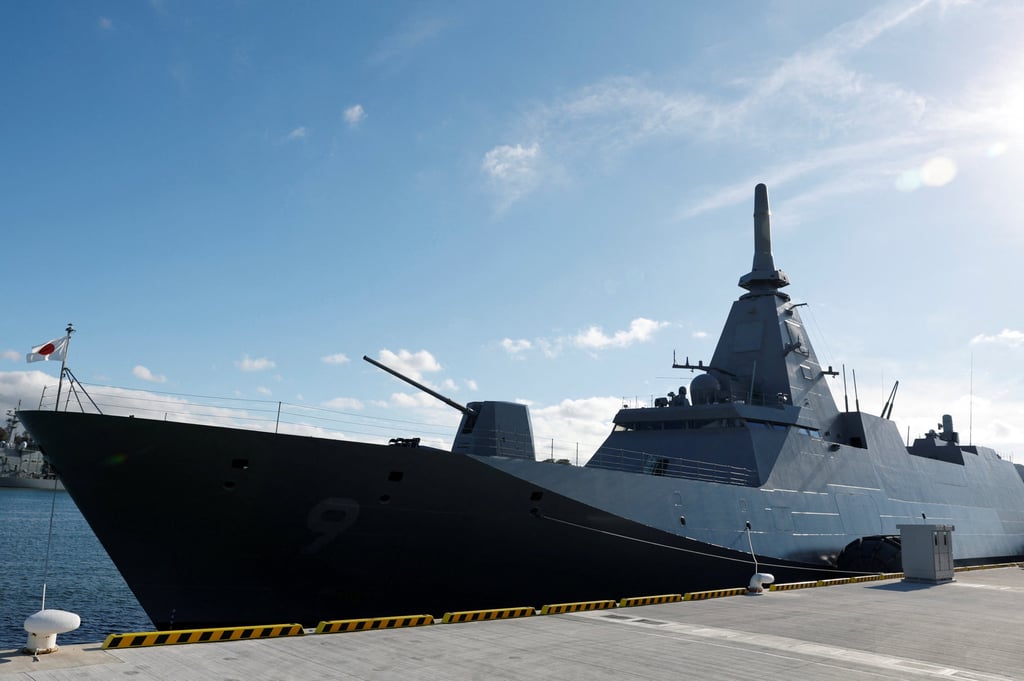
Both countries stood to gain from the latest agreement, Baron said, with Japan, in particular, obtaining access to additional training facilities where it could conduct live-fire drills for longer-range missiles whose testing was constrained by its own geography.
“This is particularly relevant as Japan continues to develop its longer-range counterstrike capabilities, including upgraded Type-12 anti-ship missiles,” he said.
“For India, hosting Japanese forces for live-fire exercises provides opportunities for greater military familiarity, defence interoperability and knowledge-sharing, particularly in maritime operations,” Baron added, noting that exposure to Japanese missile systems, including precision-guidance technologies and unmanned platforms, could also offer useful insights for Indian defence planners.
Reducing reliance on the US?
Josh Kurlantzick, senior fellow for Southeast and South Asia at Washington’s Council on Foreign Relations, said both countries stood to gain new opportunities, particularly as Japan increasingly felt it could no longer count solely on the US for defence.
“They gain steps towards potential interoperability. They both gain steps towards deterrence of China, which is important to both countries,” he said.
The agreement also moved Japan a step closer to normalising overseas military activities, a major goal of its current leadership, he added. However, Kurlantzick warned that the move could heighten concerns in both China and Pakistan.
Overall, the initiative suggested that regional powers in the Indo-Pacific might be able to provide deterrence without relying on the US defence umbrella in the long run, he said.
“India is deepening its defence relationship with Japan, an important regional actor, while strengthening its position as a provider of security cooperation in the Indo-Pacific,” said Laura Sorica, a researcher at Armed Conflict Location & Event Data Project, a US-registered non-profit organisation.
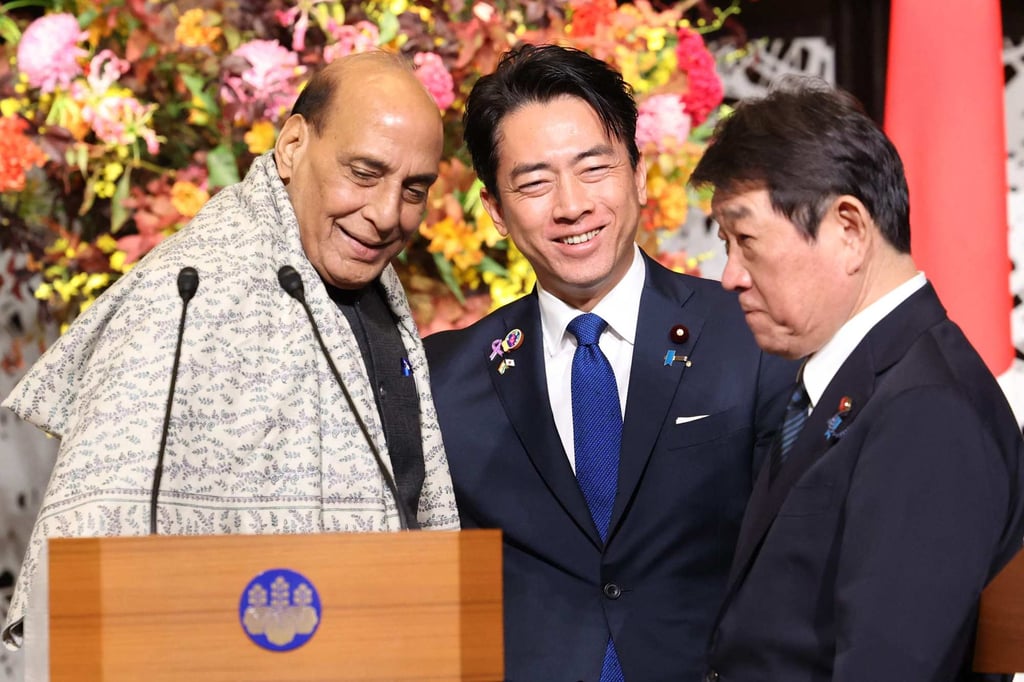
“Closer military cooperation also creates opportunities to expand defence-industrial ties, including through technology transfers and potential collaboration in missile and naval technologies,” she said, adding that the agreement reflected growing strategic convergence and shared concerns over China’s increasing maritime assertiveness.
While commercial and industrial ties have been a core pillar of India-Japan relations, the missile-testing agreement “disabuses the notion” that ties are limited to trade and showcases “conventional security heavy-lifting”, said Dattesh Parulekar, an assistant professor of International Relations and Area Studies at Goa University.
The move “unmistakably bolsters visions of pluralised securitisation of the Indo-Pacific”, he said.
Srinivasan Balakrishnan, director of strategic engagement and partnerships at the Delhi-based Indic Researchers Forum, described the agreement as “a quietly consequential step, not a dramatic announcement designed for headlines”.
“The arrangement is reciprocal in spirit even if the immediate traffic is one way. It signals that India no longer sees advanced defence cooperation as a one-directional transfer of technology or equipment but as a shared operational space,” he said.
KioskNews shows a cleaned-up reading view extracted from the publisher’s page — the original always lives on their site, not ours.