Xi Jinping Leans On Trump As China Seeks To Contain Chip War With US
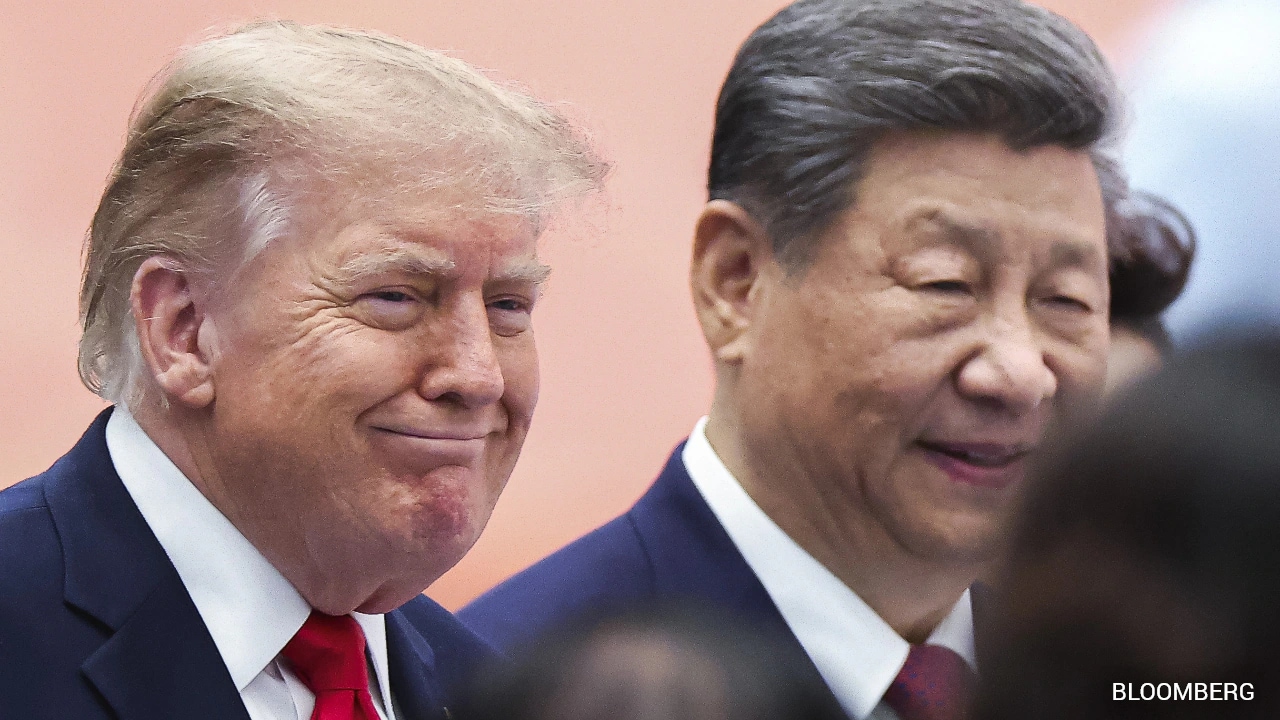
Xi Jinping showed Donald Trump extraordinary hospitality during their third summit of the year. For Beijing, that bonhomie might be its best strategy for stopping a spiraling chip battle with its main rival.
China's top leader broke nearly five decades of precedent to give Trump a rare airport welcome - and cheek-to-cheek hug - as the Republican touched down Wednesday in Shenzhen. Over an afternoon of discussions at a secluded state guesthouse the following day, Trump lauded Xi as a friend, while Xi praised his US counterpart's effort to steady bilateral ties as "one for the history books."
In another show of closeness, Trump, 80, was seen offering Xi, 73, a hand as they boarded an escalator, with the Chinese leader holding the Republican's forearm as he stepped up beside him.
The camaraderie stood out coming days after Washington stepped up efforts to restrict China's access to the technology underpinning the global AI race. Both leaders appeared to lean heavily on their personal rapport to keep ties between the world's largest economies on an even keel, a departure from the tit-for-tat of last year's trade war.
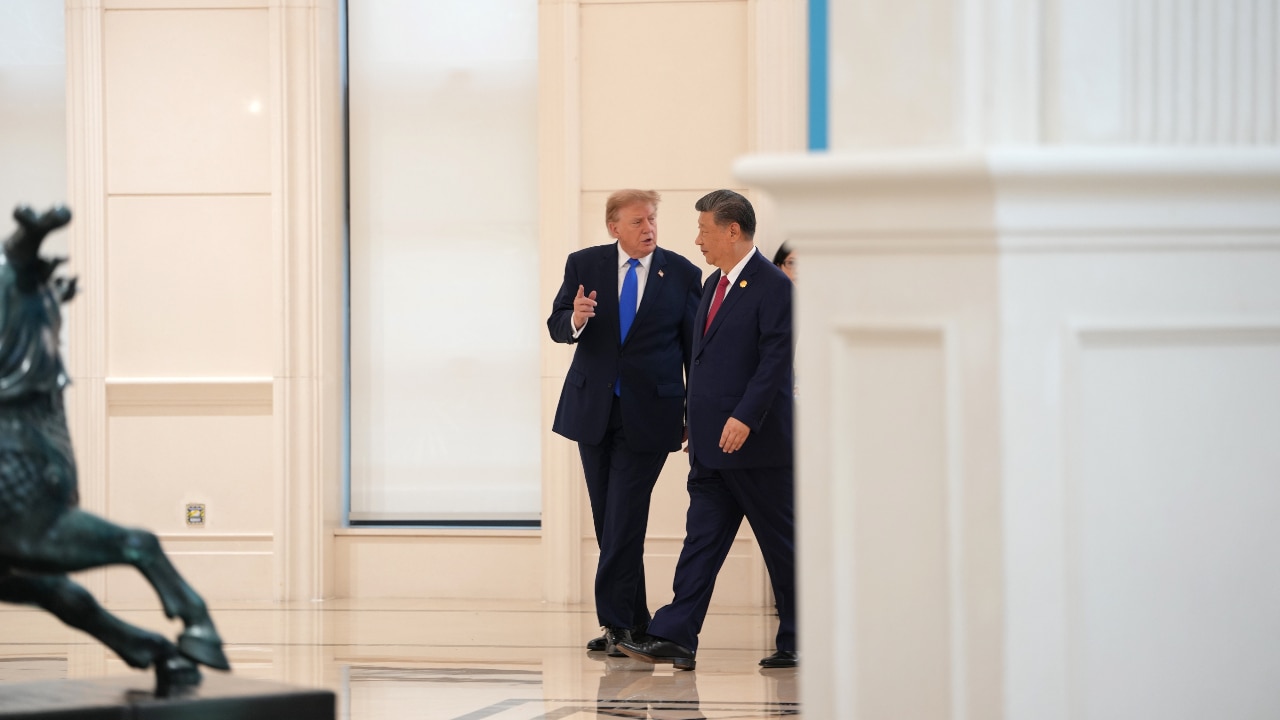
Photo Credit: Bloomberg
"Trump is Xi's best option," said Alicia Garcia Herrero, chief Asia-Pacific economist at Natixis SA. Officials in Beijing realize newly exposed divisions within the administration are driving the latest curbs, giving Beijing an incentive to preserve its relationship with the president. "Things could get worse. China needs to stop this spiral of additional export controls. It's very important for China."
Xi's team now needs to "negotiate night and day" with the friendly pockets of Trump's team before next month's Group of 20 leaders' summit in Miami, she said, and hold off on reimposing controls on rare earths - a move that would blow up their hard-won trade truce.
China's resolve will be tested later this month when its suspension of a ban on exports of critical minerals to the US, including gallium, germanium and antimony, is set to expire. In a sign Beijing is already mulling some retaliation, China's Commerce Ministry earlier this week threatened countermeasures against Washington's latest salvo, if some resolution couldn't be reached.
For now, this week's summitry offered evidence that both leaders remain determined to prevent their rivalry from spiraling into a confrontation that would inflict pain on their own economies.
"You're my friend, and we have a very special relationship," Trump told Xi at the start of their meeting, while flanked by Treasury Secretary Scott Bessent and Secretary of State Marco Rubio, whose agencies helped draft the latest curbs. "I think as long as you and I are in charge of things, we'll never have a problem," added the US president, who has two years left in the White House.
After the Xi-Trump huddle spilled over into an impromptu lunch that kept Russian President Vladimir Putin waiting for their delayed trilateral, China called the discussions "positive and constructive." Both sides vowed to develop an action plan for building a "constructive relationship of strategic stability," and pledged greater cooperation on artificial intelligence and drug controls, according to the Chinese readout.
"Any disagreements that cannot be resolved immediately should be managed constructively to prevent conflicts from escalating," Xi said, in a veiled reference to Washington's latest barrage of measures.
The US has yet to publish its own account of the talks.
Zhu Feng, dean of the School of International Studies at Nanjing University, called the encounter on the sidelines of the Asia-Pacific Economic Cooperation forum the "friendliest, most positive" meeting between Xi and Trump this year. The aftermath from Nvidia Corp. co-founder Jensen Huang's downfall, however, could still spark a major escalation in the US-China tech war, and change the calculus, he said.
"It is clear this summit will not alter the fundamental choices the US has made to engage in strategic competition with China," he said. "China-US relations are unlikely to undergo any substantive change as a result of summit-level diplomacy. We need not harbor excessive illusions in this regard."
Tech War
The talks on Thursday were held in Kylin Villa, which opened in 1997, the year neighboring Hong Kong was handed back to Beijing from Britain. That resort has since hosted Chinese leaders and high-profile foreign visitors, and is also personal to Xi being the place where his father - Xi Zhongxun - once recuperated while battling cancer.
Its lakeside location contrasts sharply with the rest of futuristic Shenzhen: the beating heart of China's robotics and drone industries and home to Huawei Technologies Co. - the national champion chasing Nvidia to produce cutting-edge AI chips.
China's decision to host its summit in that city ensured the tech battle with America was the backdrop to the pleasantries, as the next deadline for extending their trade truce on Jan. 10 looms large.
Trump tried to reduce tensions by downplaying allegations Huang had an affair with a Chinese executive who US intelligence believes was spying for China. "Any pretty woman that comes from China, they considered her to be a spy," he said.
The US leader also appeared keen to distinguish between restricting China's access to the most sophisticated semiconductors and allowing US companies to continue selling less advanced products.
Expectations for major breakthroughs were low going into the summit, especially given both leaders are meeting again next month. But even a commencement date for the reduction on $30 billion worth of each other's imports, negotiated under the newly established US-China Board of Trade, didn't materialize in the initial readouts. A similar framework has been floated for bilateral investment, though progress has been slow.
Tensions could soon flare again. US lawmakers in Washington are closing in on a deal to ban Chinese cars from the US, according to people familiar with the matter.
For now, both presidents want to reinforce their personal ties ahead of a potentially more confrontational period when the new US Congress takes office in January, said William Yang, senior analyst for Northeast Asia at the International Crisis Group.
"The Democrats are signaling strongly they are going to look hard into pushing the administration to enforce or reinstate strict export control measures against high-end AI semiconductor chips," he said. "Beijing is sensing there might be a storm coming in the next few weeks."
(Except for the headline, this story has not been edited by NDTV staff and is published from a syndicated feed.)
KioskNews shows a cleaned-up reading view extracted from the publisher’s page — the original always lives on their site, not ours.