‘True revolutionary’: Why Bhagat Singh chose Jawaharlal Nehru over Subhas Bose
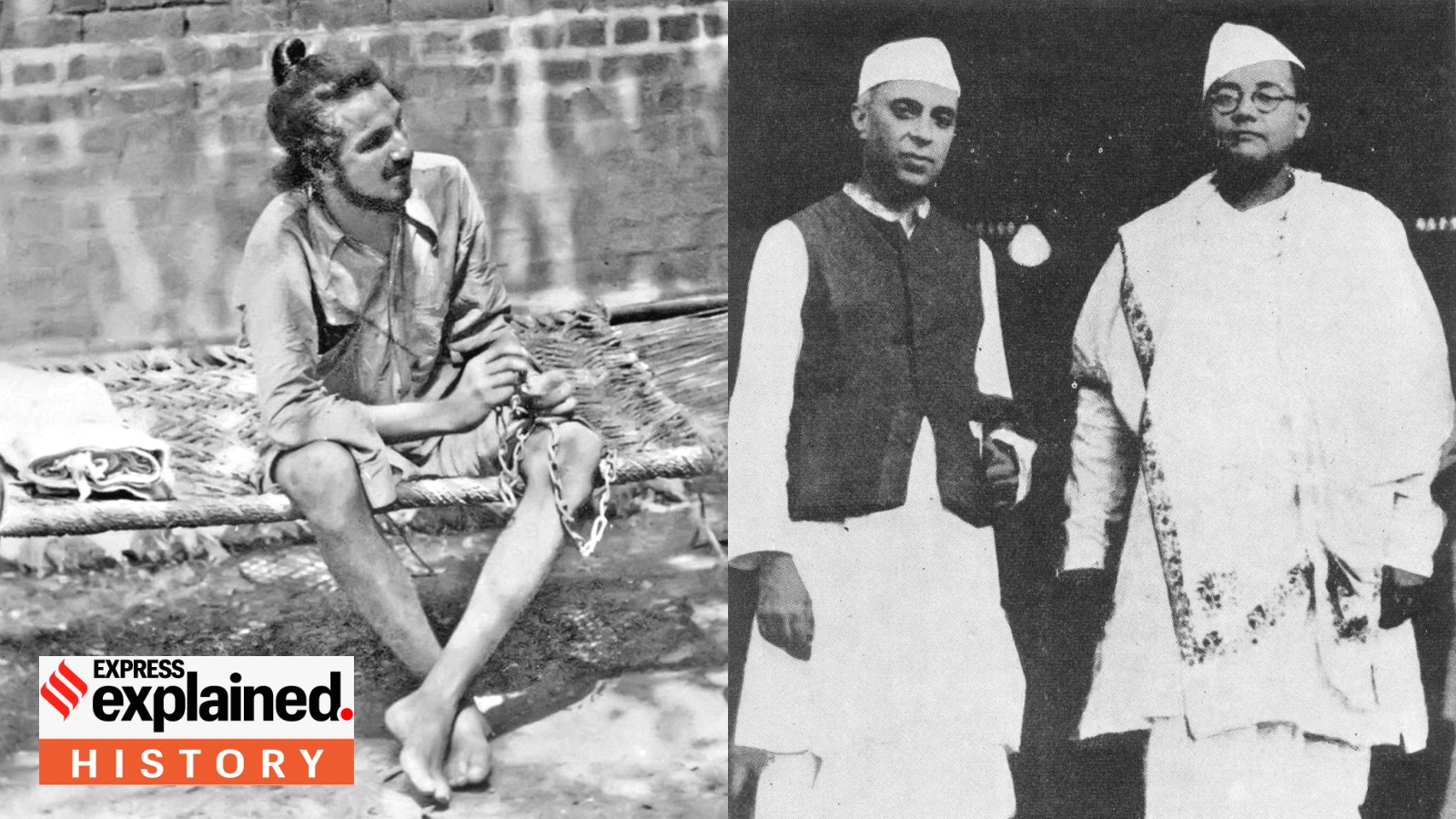
For close to a century since two young freedom fighters emerged as the flagbearers of the Indian National Congress, there has been much political discourse and heated debate as to whose contributions to the independence movement were greater: Jawaharlal Nehru or Subhas Chandra Bose.
Moreover, many often tend to see Bose as a “revolutionary” and a “man of action” owing to his breaking away from the Congress in the late 1930s and taking charge of the Indian National Army (INA) in Singapore — as opposed to Nehru, who remained within the Congress fold, was seen as a “man of words”, and went on to become the first Prime Minister of independent India.
As India commemorates Nehru’s birth anniversary today (November 14), it is illustrative to read what Bhagat Singh — also considered a “revolutionary” and a “man of action” — had to say about the political ideologies of both Bose and Nehru, which he wrote about in an essay originally published as “Naye Netaaon ke Alag Alag Vichar” (New Leaders and Their Different Ideologies) in the July 1928 issue of the journal Kirti.
Young leaders with modern sensibility
Singh starts his essay by stating how Indians had lost hope and resolve after the failure of the Non-Cooperation Movement (1920-22) and communal conflict between Hindus and Muslims that followed over the decade. But with the emergence of many new leaders possessing a modern sensibility and the proliferation of youth movements, “only young leaders” were commanding the attention of patriotic-minded Indians, leaving the tallest veteran leaders behind.
He picks out two leaders who appear to be rising above all others: the “venerable Subhash Chandra Bose of Bengal” and the “eminent Pandit Jawaharlal Nehru”.
“They are both uncompromising champions of Indian independence; both intelligent and genuine patriots. And yet, their ideologies are as different as night and day,” Singh writes. “One is believed to be a devotee and proponent of India’s ancient culture and the other a committed follower of western civilisation. If one is regarded as tender-hearted and sensitive, the other is spoken of as a quintessential revolutionary.”
His attempt, Singh adds, is to present their respective ideologies so that people could understand the difference between the two and make up their own minds.
Story continues below this ad
What Bhagat Singh said about Nehru and Bose
For the sake of this essay, he takes into account the speeches the two leaders had delivered in the recent past. He points out though both were considered part of the “Extremist” faction of the Congress and had argued for Purna Swaraj (complete independence), “the two leaders are poles apart in their thinking”.
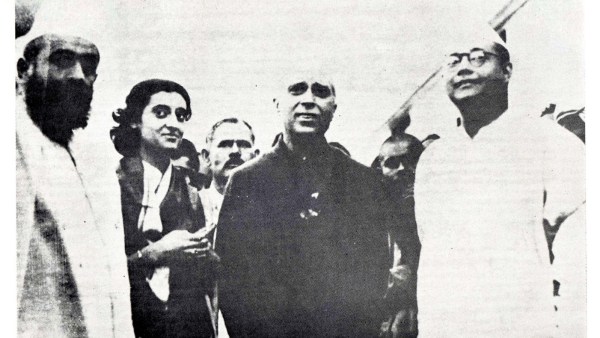 Jawaharlal Nehru (C) with Subhas Chandra Bose (R) at Allahabad railway station in 1939. Photo: Nehru Archive
According to Singh, the difference between them became “clear as daylight” after listening to the two leaders’ speeches at a conference in Bombay (now Mumbai). Bose, whom Singh calls “a very emotional Bengali”, stated that India has a special message for the world and a lesson in spirituality for humanity. Citing Bose’s assertion that Indians should return to the Vedas, Singh calls it the “same old romanticism” and “pure emotionalism”.
“ Bose… has great faith in his ancient past. He sees only greatness in this ancient era. In his thinking, there’s nothing new in the system of panchayati raj, or the rule of the people, which he says is very old in India. He goes so far as to say that Communism isn’t new to India either,” Singh writes.
Singh contrasts this with the entirely different view of Nehru, who said in his speech: “Every country thinks it has a special message for the world… I don’t see anything special that belongs to my country alone.”
Story continues below this ad
Nehru went on to say that every youth must rebel not just in the political sphere but also in social, economic, and religious ones. “I have not much use for any man who comes and tells me that such and such thing is said in the Koran. Everything unreasonable must be discarded, even if they find authority for it in the Vedas and the Koran,” Nehru said.
‘Not just the heart but also the mind’
According to Singh, Nehru’s thoughts were those of a “true revolutionary” whereas Bose’s thoughts were that of someone who wants to replace one regime with another. “One man thinks our old systems are very superior; the other man believes we should rebel against these systems. Yet the latter is called emotional, sensitive, and the former a transformative revolutionary!” Singh writes.
Singh brings out another point of contrast: why both Bose and Nehru were seeking purna swaraj. According to Singh, Bose supported it because “the British are people of the West and we are of the East”, while Nehru’s position was that “we need to establish our own rule so that we can change the entire social structure”. Also, Bose was sympathetic to the working class and wanted to improve their condition but Nehru wanted to “bring in a revolution and change the existing system altogether”.
“Subhash Chandra is emotional and romantic — he is giving the young food for their hearts, and only their hearts. The other man is an epochal change-maker who is fuelling not just the heart but also the mind,” Singh writes.
Story continues below this ad
Singh then addresses readers, particularly those in Punjab, by pointing out how one Punjabi newspaper had heaped praise upon Bose while saying that rebels such as Nehru “destroy themselves beating their heads against stone”. He advises readers against being swayed, reminding them: “Punjab has always been a rather emotional province. People’s passions here rise very quickly and just as quickly subside, like foam.”
Singh, while cautioning against becoming blind followers, then concludes his essay by calling upon the young people of Punjab to align with Nehru to understand the true meaning of revolution and its significance both in India and abroad.
“Subhash Chandra doesn’t appear to be providing any intellectual nourishment, only food for the heart. The need of the hour now is for the youth of Punjab to understand and strengthen revolutionary ideas. At this time, Punjab needs food for the mind, and this can only be found with Pandit Jawaharlal Nehru,” Singh writes.
KioskNews shows a cleaned-up reading view extracted from the publisher’s page — the original always lives on their site, not ours.