Can BRICS turn trade commitments into real transactions?
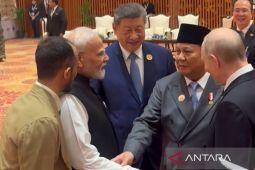
Jakarta (ANTARA) - BRICS has expanded its agenda for trade facilitation and economic integration. The next test is whether those commitments can make cross-border transactions faster, cheaper, and more predictable for businesses.
At the 18th BRICS Summit in New Delhi on Sept. 12-13, leaders adopted the New Delhi Declaration, which included commitments on trade facilitation, customs cooperation, supply chains, digitalization, cross-border payments, and logistics.
The declaration also supported voluntary implementation of the BRICS Authorized Economic Operators Action Plan 2026.
These measures address different stages of the same process. A company exporting goods must exchange data and documents, clear customs, make payments, arrange transportation, and move cargo through ports and other logistics networks. If these stages remain disconnected, an agreement between governments does not automatically translate into easier trade.
For Indonesia, the implementation challenge is particularly relevant after it became a full BRICS member in January 2025. BRICS now comprises 11 full members: Brazil, China, Egypt, Ethiopia, India, Indonesia, Iran, Russia, Saudi Arabia, South Africa, and the United Arab Emirates.
Together, the 11 members account for about 49.5 percent of the world’s population, 40 percent of global gross domestic product (GDP), and 26 percent of global trade. That scale makes smoother trade among members increasingly important if BRICS is to turn its combined market power into tangible benefits for businesses.
Russian President Vladimir Putin said at the summit that trade among BRICS members had reached US$1.2 trillion. At that scale, even small frictions can become significant costs when repeated across thousands of transactions.
The challenge for BRICS, therefore, is increasingly about implementation rather than adding another layer of commitments.
Find the bottlenecks
Indonesia’s experience with the United Arab Emirates shows how an agreement can improve customs procedures at the border.
Indonesia and the UAE fully implemented their Mutual Recognition Arrangement on Authorized Economic Operators (MRA AEO) on Nov. 11, 2023. The agreement provides a basis for customs facilitation for companies that meet AEO requirements.
The BRICS AEO Action Plan provides an opportunity to apply a similar principle on a wider scale. The New Delhi Declaration calls for voluntary implementation, information exchange, capacity building, sharing of best practices, and mutual recognition while taking national frameworks and priorities into account.
A limited trade pilot could identify where the process actually breaks down. If companies have to enter the same information repeatedly, the problem may be limited interoperability between digital systems.
If AEO status is recognized but does not result in meaningful customs facilitation, the gap may be in implementation. If goods clear customs but remain delayed afterward, the bottleneck may lie in ports, transportation, or other logistics services.
This approach would allow BRICS members to identify specific problems without attempting to redesign the entire trading system.
Payments present another test
At the BRICS Business Forum in New Delhi, Indonesian Chamber of Commerce and Industry Chairman Anindya Novyan Bakrie proposed stronger interoperability among cross-border payment systems. He also called for the BRICS Business Council to identify concrete obstacles faced by businesses and submit specific proposals to governments.
The proposal reflects a broader challenge in turning financial cooperation into practical trade facilitation. A company does not benefit simply because payment systems are designed to connect. It benefits when an invoice can be paid across borders with fewer steps, lower uncertainty, and a processing time that businesses can reliably anticipate.
Measure the difference
Indonesia can contribute a practical approach as a relatively new full member of BRICS.
Indonesian President Prabowo Subianto used the New Delhi summit to call for stronger cooperation on industrialization and global supply chains. He called on BRICS members to combine their resources, production capacity, technological capabilities, and markets to address shared challenges.
China subsequently welcomed the proposal and expressed readiness to strengthen cooperation in technology, industry, and capacity building.
For those ambitions to translate into stronger industrial and supply-chain links, businesses must be able to move goods, make payments, and connect to suppliers and markets across BRICS with less friction and greater predictability.
The next challenge is making these commitments work together at the transaction level. A company should not have to navigate disconnected systems and procedures for data, customs, payments, and logistics when those processes are part of the same shipment.
Indonesia could start with trade routes that are already busy and strategically important to its industries. Effectiveness could be measured through simple indicators, such as how often documents must be entered, how long cargo remains at ports, whether shipments face repeated inspections, and where payment or logistics processes cause delays.
A pilot on one trade route would not need to apply immediately across all BRICS members. Findings from the field could be used to refine existing mechanisms before they are extended to other commodities or trade routes.
This is where BRICS commitments will be tested against the reality of actual transactions. Trade facilitation should not be measured by how many agreements are signed, but by how quickly goods move, how efficiently documents are processed, and how predictably businesses can estimate delivery times and costs.
*Martha Herlinawati Simanjuntak is a journalist at the ANTARA News Agency
Disclaimer: The views and opinions expressed here are those of the author and do not necessarily reflect the official policy or position of the ANTARA News Agency.
Related news: Indonesia turning membership into global influence through BRICS
Related news: Indonesia's Prabowo champions three key messages at BRICS Summit
KioskNews shows a cleaned-up reading view extracted from the publisher’s page — the original always lives on their site, not ours.