‘Unguarded moments’: a lost archive of street photography – in pictures
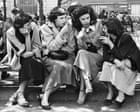
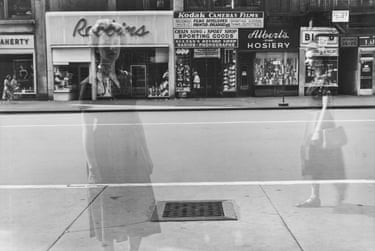
Louise Twice, 34th Street, Manhattan
John Baer received his first camera, a 1938 Model II, from a German soldier. He traveled with it from Manhattan to Brooklyn to Westchester county.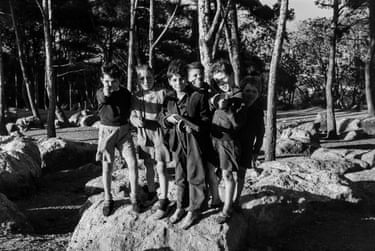
Boys with Guns, Barcelona
In January 1942, when Baer was serving as the managing editor of the campus newspaper at Pennsylvania State University, he was drafted to fight in the second world war.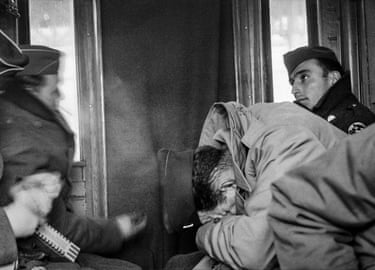
Soldiers on a French Train
Years later, in 1945, he took Soldiers on a French train, photographing soldiers during the first stage of their journey home.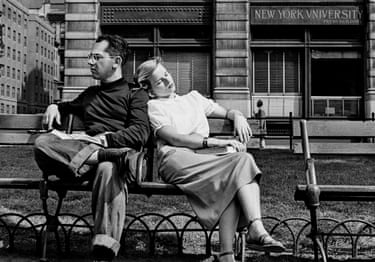
Couple in Washington Square Park
In 1948, Baer and his wife, Louise, moved from Europe to New York City, where they rented a fifth-floor walk-up at 215 Second Avenue in the East Village.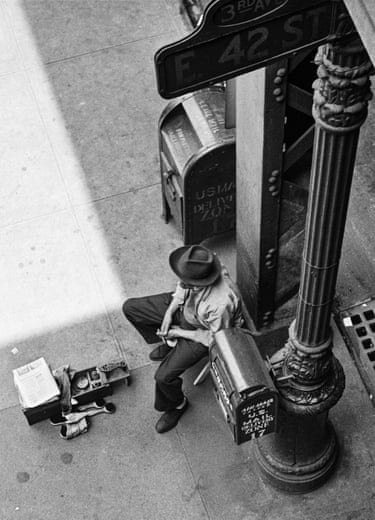
Shoeshine man, Third Avenue and 42nd Street, Manhattan
Baer often captured scenes of New York City from his fire escape.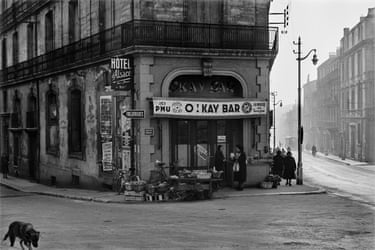
O!Kay Bar, Montpellier, 1950–51
In 1950, he and his wife sublet their New York City apartment to move to Montpellier, France, where he photographed daily life, friends and political posters that warned against American military and economic dominance.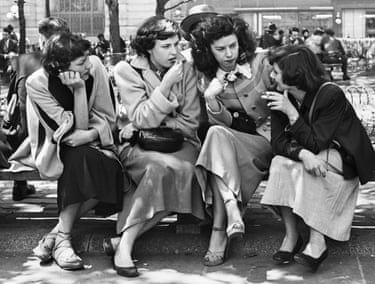
Lunch Hour, Bryant Park
On 27 August, 1951, they returned to New York City.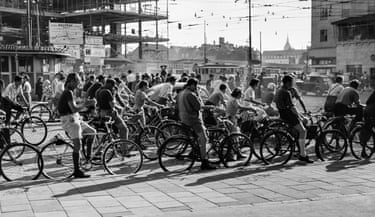
Cyclists in traffic, Munich
During Christmas 1959, he invited Kurt, a German soldier, to his home for dinner. When his son, Andrew Baer, asked him if Kurt helped the Nazis, he responded that if he had been born in Germany, he also would have been in the German army.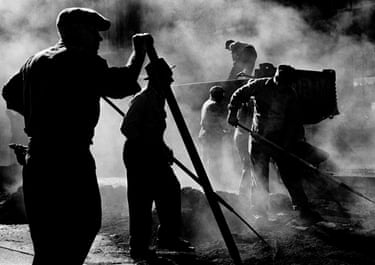
Paving Fifth Avenue
Baer was captivated by the people who kept the city running, photographing construction workers as anonymous people.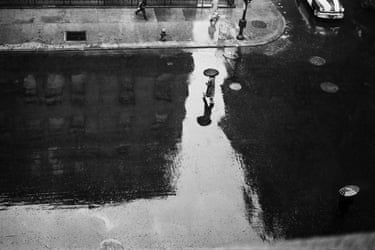
Rainy Day Reflections, Lexington Ave, 1934
As his son Andrew Baer writes in John Baer: The Extraordinary Ordinary / A Memoir in Photographs, 1945–1954, “John’s ability to quietly blend in allowed him to catch people in unguarded moments, and from surprising angles.”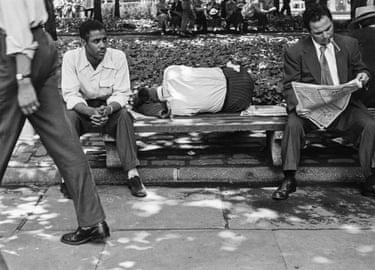
Passing Time, Bryant Park
In 1952, shortly after Andrew was born, he and Louise moved from Manhattan to Brooklyn, where he became involved with the group called the Abingdon Square Painters, where he grew his circle of artist and writer friends.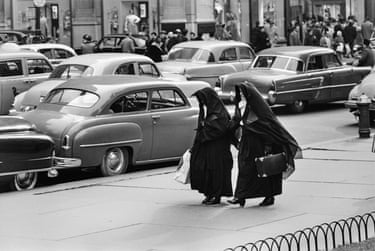
Nuns, Midtown
Baer and Barney Weinberg, a close friend from Penn State, were the first non-painters to show their work in Abingdon Square’s West Village gallery. His installation series Stuyvesant Town placed groups of unframed prints on large, horizontal boards to create high-contrast compositions, which were unconventional for the time.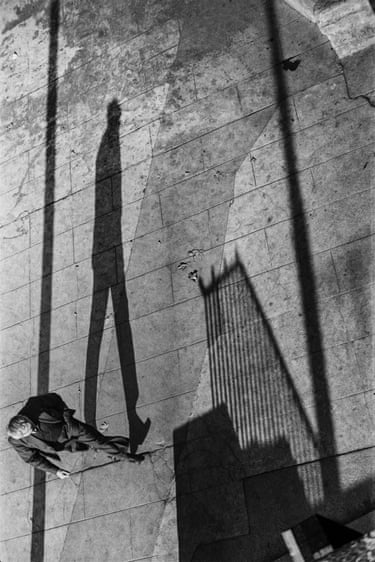
Shadow Study, Manhattan
In 1960, he moved back to Hastings-on-Hudson after remarrying Louise. They then moved to Manhattan and Rhode Island before divorcing again in 1986. Since then, his images have largely gone untouched and been unseen until now.KioskNews shows a cleaned-up reading view extracted from the publisher’s page — the original always lives on their site, not ours.