The 10 Worst Summer Blockbuster Movies in Film History, Ranked

Michael Block is a 14 time GLAM Award nominated writer, producer, and host of the podcast Block Talk. Throughout his time in the entertainment industry, he has worked on and off Broadway as a stage manager, written several produced plays, critiqued hundreds of theatrical performances, drag and cabaret shows, and has produced events randing from drag competitoons to variety concerts!
On Block Talk, he interviews nightlife personalities, covers the wide world of entertainment through features, ranking episodes, and recaps ALL of Drag Race, as well as Dragula and Survivor. He has interviewed hundreds of RuGirls that span the globe at DragCon NYC, DragCon LA, and DragCon UK.
In his free time, he makes one-of-a-kind jewelry and gift baskets with his mom. He is a proud member of the LGBTQ+ community.
Sign in to your Collider account
Every summer, Hollywood gives cinephiles the gift of big-budget movies to fill their nights and escape the heat. The blockbuster has evolved into a cinematic event, filled with epic hype and grand spectacles. Often dominating the box office, setting records in the process, these blockbusters reign supreme long after their debut. But for every major success comes an absolute flop. We’re going back in time to discuss ten of the absolute worst summer blockbusters of all time.
Between horrific stories, terrible effects, and box office blunders, these ten made history in all the wrong ways. Even with a cast full of stars, they didn’t have the power to save them from absolute cinematic dread. While there are many terrible blockbusters that arrived during other seasons of the year, these movies wasted our precious hours during the heat of the summer. How many of these movies did you suffer through?
10 'The Last Airbender' (2010)
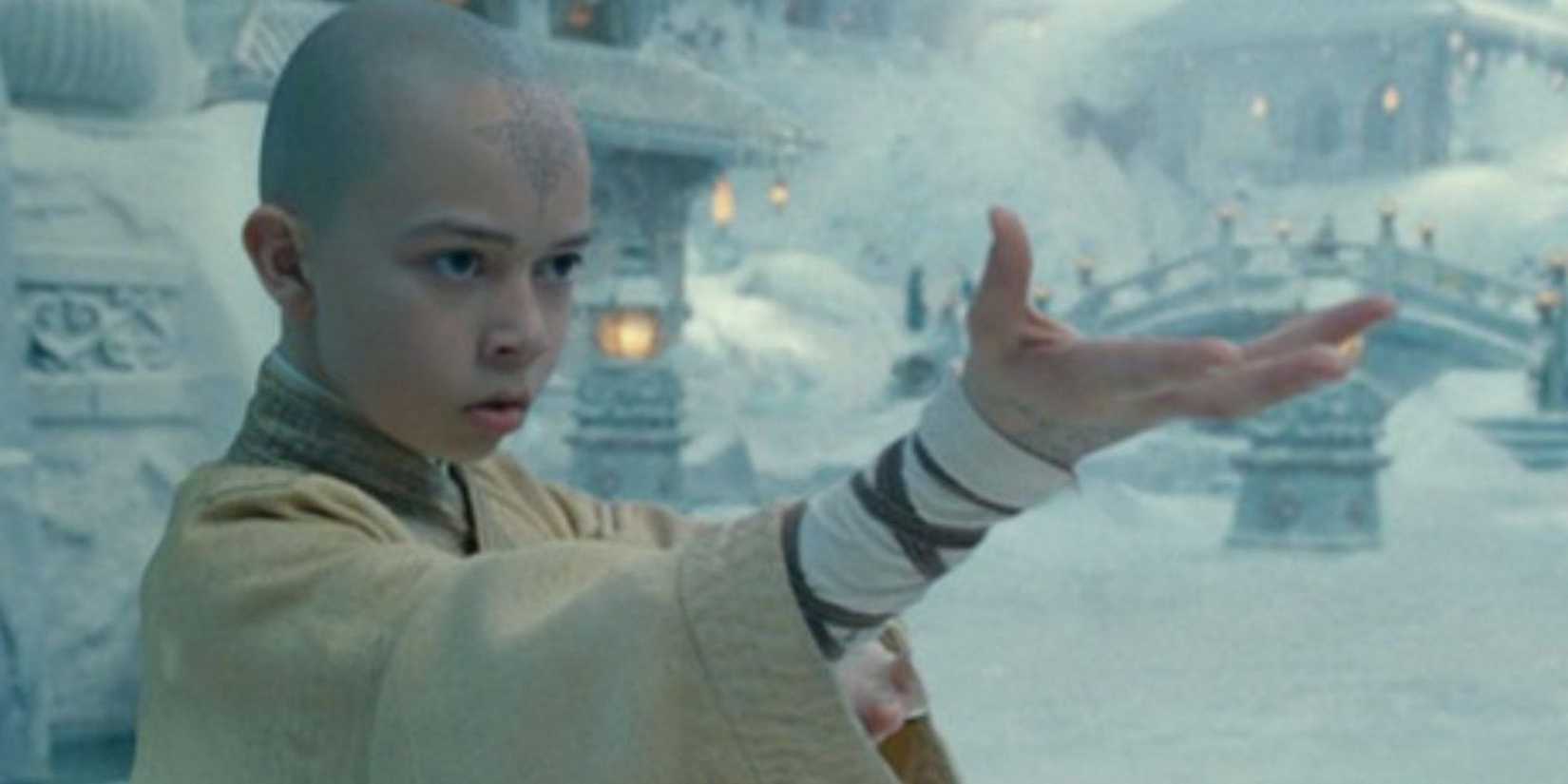
While we sit here today and complain about Disney’s animated feature-to-live-action film pipeline, the downward trend started much earlier when M. Night Shyamalan opted to transform the first season of a Nickelodeon animated series into a full-blown blockbuster. The Last Airbender follows Aang (Noah Ringer), a young boy who awakens from a century-long slumber in an iceberg to discover he is the Avatar, the only person capable of manipulating all four elements. Joined by his friends Katara (Nicola Peltz) and Sokka (Jackson Rathbone), he journeys to the Northern Water Tribe to master waterbending and stop the ruthless Fire Nation from conquering the world, all while evading capture by the exiled Prince Zuko (Dev Patel). A highly ambitious project, The Last Airbender has earned a reputation for having a brutal 5% on Rotten Tomatoes, where it sits atop its all-time worst blockbuster list.
Proving the power of television, the film irrationally attempted to cram an entire 20-episode television season into a tight 103-minute runtime. What resulted was constant, clunky voice-over narration and awkward info-dumping to bridge massive gaps in the plot. In a time when diversity and visibility were not quite top of mind, the beloved Inuit and Asian-inspired characters of the source material were largely cast with white actors, stripping away cultural authenticity and angering fan communities. Now, to the action. What an utter shame. Rather than fluid, dynamic martial arts, elemental bending is portrayed through sluggish, over-choreographed group movements that don't hold up today. While Shyamalan has a resume of masterpieces, here he simply botched the core elements that made the source material shine. By altering core elements based on personal preference, including changing the pronunciation of major character names and draining out the series' signature humor for a dreary, somber tone, the movie alienated both casual viewers and hardcore fans.
9 'Wild Wild West' (1999)
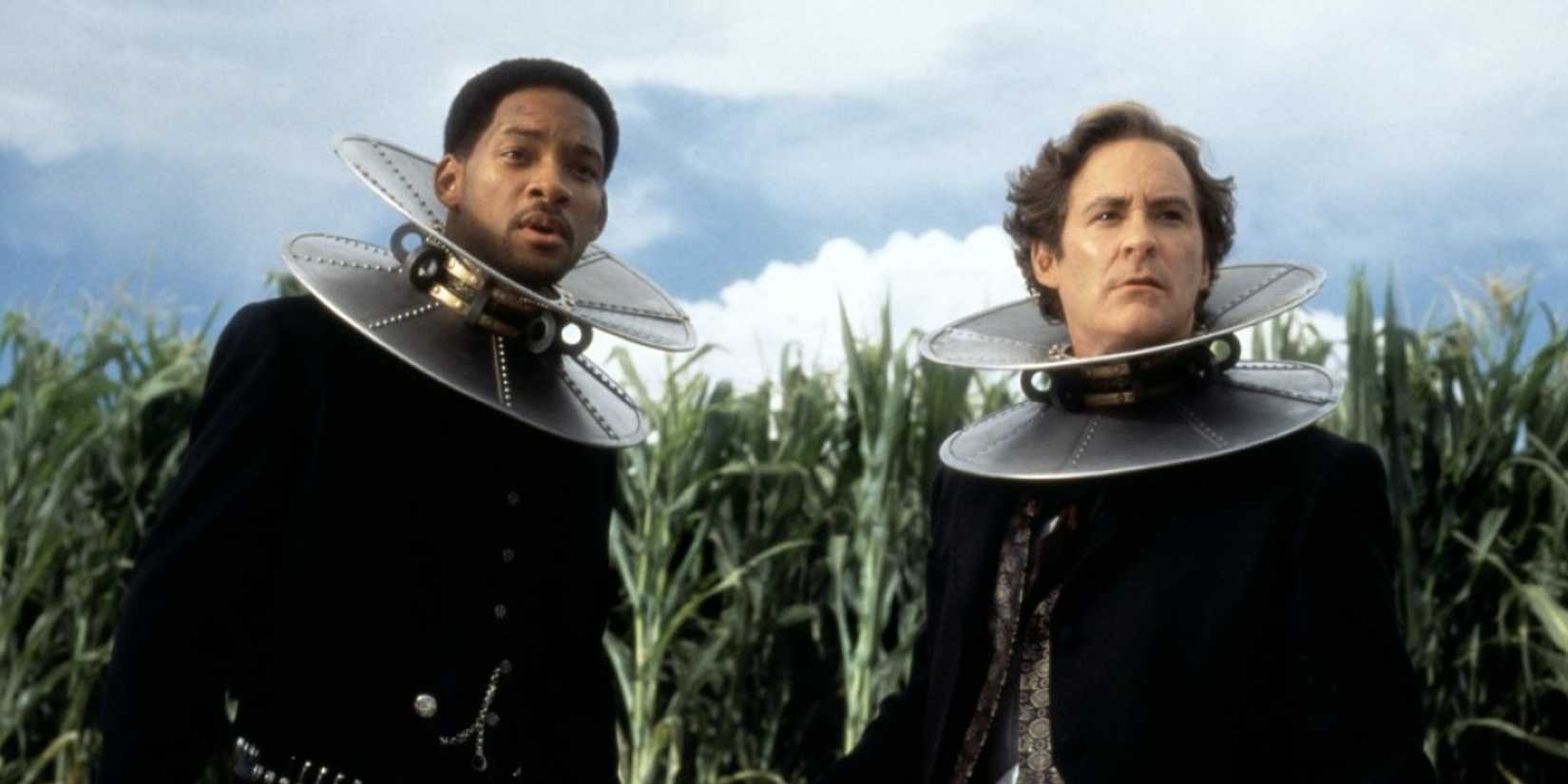
If one actor dominated the ‘90s blockbuster, it was Will Smith. Between Independence Day and Men in Black, fans might think he’d hit a trifecta with Wild Wild West. Unfortunately, that was not the case. Directed by Barry Sonnenfeld and based on the 1960s television series, Wild Wild West follows U.S. Army Captain James West (Smith) and U.S. Marshal Artemus Gordon (Kevin Kline) as they team up on orders from President Ulysses S. Grant (Kline) to stop a plot against the United States. Using advanced steampunk gadgets, the mismatched duo must defeat Dr. Arliss Loveless (Kenneth Branagh), a vengeful ex-Confederate scientist who kidnaps prominent inventors and uses a giant mechanical spider to assassinate the President and divide the nation. Wild Wild West earned its awful reputation because of a massive, bloated budget, a messy tone, and a legendary failure to connect with audiences.
With an astronomical production budget, the bar was set quite high to make it back up at the box office. It fell short. The film awkwardly mashed up a 1960s espionage western with bizarre steampunk technology, resulting in a disjointed, vulgar, and confusing plot. As fun as a giant mechanical spider climax might have been, it simply didn’t mesh. Smith and Kline often dazzle in comedically tinged projects, but here they were essentially lone wolves, lacking chemistry as the script abandoned the smooth-operating partnership of the original TV series for bickering slapstick. And to think Smith turned down the role of Neo in The Matrix for this disaster is mind-blowing. What a drastically cinematic world we’d live in with that timeline! At least Wild Wild West “won” five Golden Raspberry Awards!
8 'Green Lantern' (2011)

The turn of the century saw the rise of superhero films, proudly led by Marvel and DC. While there were massive hits in the first decade, the second decade of the century also produced some super flops. One such example is 2011’s Green Lantern. Directed by Martin Campbell, the film centers on reckless test pilot Hal Jordan (Ryan Reynolds), who is chosen by a powerful alien ring to become the first human member of the Green Lantern Corps, an intergalactic peacekeeping force. He must master his new abilities and overcome his self-doubt to stop Parallax (Clancy Brown), an ancient entity that feeds on fear and threatens to destroy the universe. An utter disaster, Green Lantern flopped because of a combination of fractured production, a confused script, and poor visual execution.
With a rushed and inconsistent script, Green Lantern was doomed to fail. The screenplay went through damaging rewrites that stripped away core character depth. Instead of leaning into a sprawling cosmic space opera, the story tried to force a generic, Earth-bound origin story modeled after Iron Man, leaving the world-building feeling hollow and exposition-heavy. Unlike Iron Man, the film had no solid start, making the franchise feel futile. The film relied heavily on a widely mocked, fully computer-generated green suit that looked rubbery and unfinished. Campbell clashed with Warner Bros., which heavily interfered with the edit, forced script changes, and selected Reynolds for the lead role without the director's full buy-in. With clashing personalities, the director and star’s strained relationship made the project's execution suffer. A complete cinematic blunder, at least Reynolds redeemed his superhero days with Deadpool!
7 'Space Jam: A New Legacy' (2021)

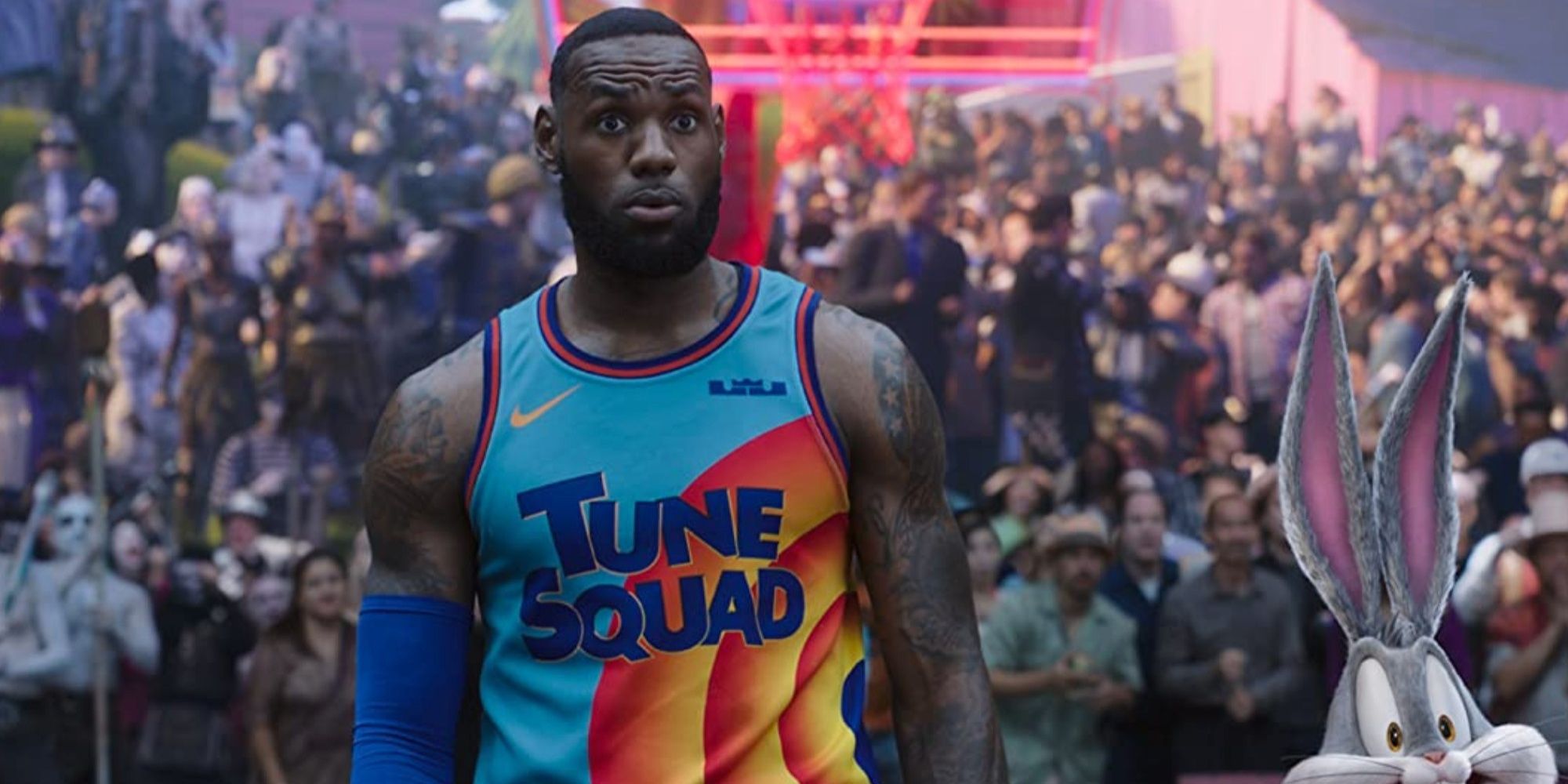
My generation grew up with the thrill of experiencing Michael Jordan and Bugs Bunny sharing a court as they take on the Monstars. It made logical sense that the next generation would desire their own Jordan hanging out with Bugs and co. Unfortunately, even with advances in cinema and animation, Space Jam: A New Legacy proved that not everything should be rebooted. When NBA superstar LeBron James and his young son, Dom (Cedric Joe), are trapped inside a digital "ServerVerse" by rogue artificial intelligence named Al-G Rhythm (Don Cheadle), LeBron must recruit the Looney Tunes to win a high-stakes basketball game. Through the match against a powered-up digital roster, LeBron learns to accept his own authentic self and mend his strained relationship with his son. A well-meaning legacy film, Space Jam: A New Legacy functions less like a traditional film and more like a 120-minute commercial for Warner Bros. and HBO Max.
Space Jam: A New Legacy was proof that corporate synergy is not what audiences desire. Rather than honoring the classics, the movie crams in endless, distracting cameos and references from unrelated franchises, turning the background into a relentless catalog of intellectual property. The plot spends extensive time establishing a stiff, unconvincing father-son dynamic and ego-driven framing around LeBron, who just does not have the charm his predecessor brought. Directed by Malcolm D. Lee, the pacing is simply abysmal. It takes nearly an hour for the Looney Tunes to even enter the frame and reach the basketball game, bogged down by uninspired writing, clunky CGI, and stiff live-action acting. Space Jam: A New Legacy was kitchen sink done wrong. It’s safe to say, we did not believe this film could fly.
6 'Superman IV: The Quest for Peace' (1987)
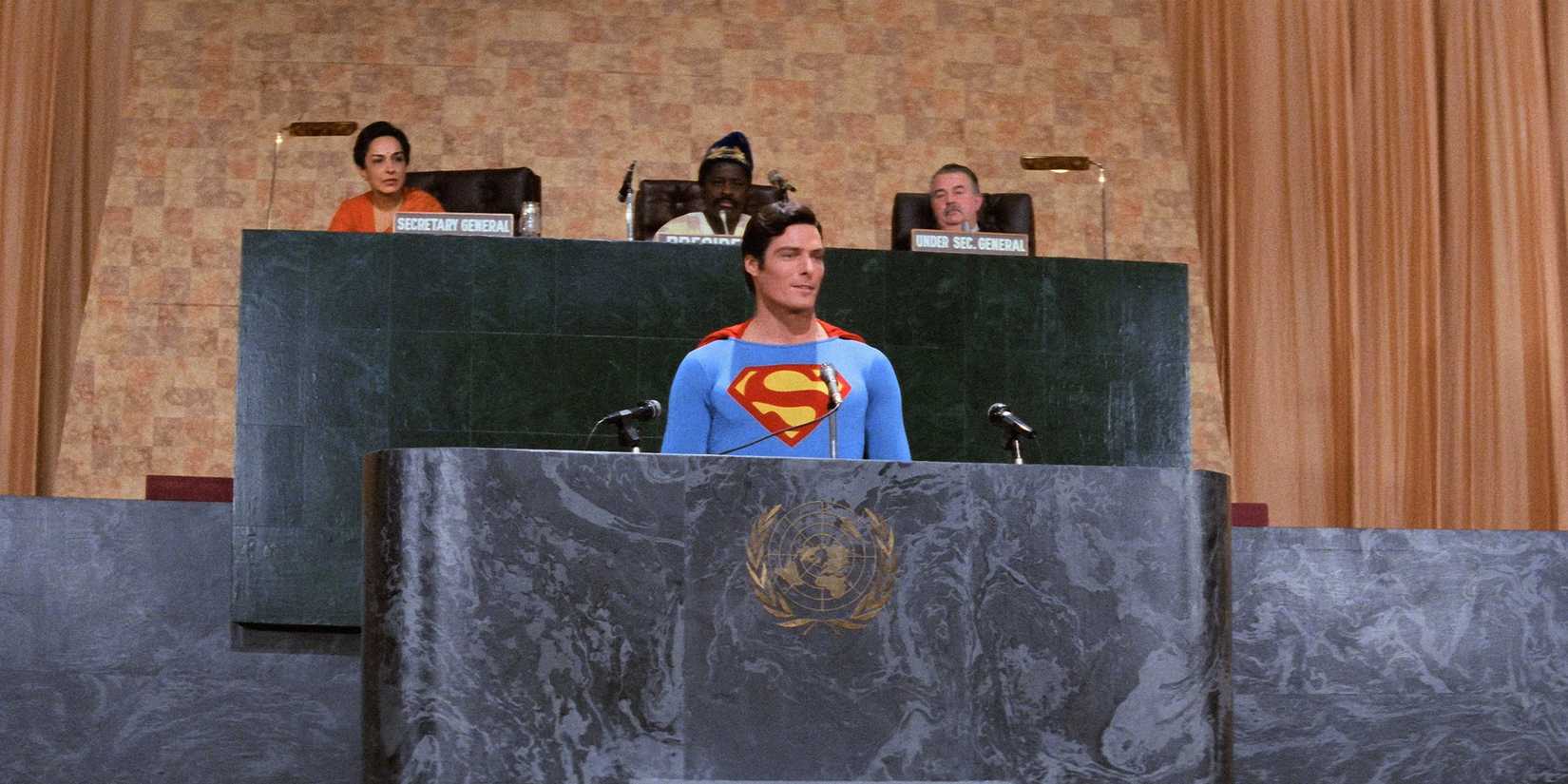
For the longest time, it seemed as if Christopher Reeve’s Superman was indestructible. Then he made Superman IV: The Quest for Peace, and well, Superman went down. Directed by Sidney J. Furie, Superman (Reeve) takes a stand against the Cold War by collecting and throwing the world's nuclear warheads into the sun. Meanwhile, his archenemy Lex Luthor (Gene Hackman) escapes prison and uses a strand of Superman's hair to create a powerful, solar-powered adversary named Nuclear Man (Mark Pillow) to destroy him. Superman IV: The Quest for Peace earned a disastrous reputation due to drastic budget slashes, messy editing, and shoddy visual effects that sank the franchise and its studio.
Produced by the cash-strapped Cannon Group, the budget was slashed from an approved $30M–$36M down to just $17M—half the budget of Superman III. With financial distress, haphazard production, and cheap stand-ins for crucial locales, the film looked simply silly. With a truncated runtime, the film resulted in crucial subplots being removed, leaving the narrative and scientific logic completely disjointed. Sometimes, if a film looks good, you can forgive some things. Except the creation of Nuclear Man suffered from poor costume design. From there came exposed blue-screen lines, repeated flight footage, and poorly dubbed, mismatched lip-syncing from Hackman's Lex Luthor. When your star sees the film as a catastrophe, you know it’s bad news. The massive flop put Superman on ice until Superman Returns in 2006.
Collider Exclusive · 8 Questions · 2 Minutes Which Iconic Fandom Should You Join? Harry Potter · Lord of the Rings · Star Wars · Star Trek
Eight honest questions about how you actually are: what you put on when you need cheering up, how deep you go into the things you love, what you argue about, what you keep on your shelf. Answer them and we will tell you where you belong. Four of the biggest fandoms on earth are taking new members, and they could not be more different from one another.
⚡Harry Potter(Wizarding World)
💍Lord of the Rings(Middle-earth)
⚔️Star Wars(A Galaxy Far Away)
🖖Star Trek(The Final Frontier)
01
What do you put on when you need cheering up? Nobody is brave about this one.
02
How deep do you go into something you love? There is no shallow end here, only different deep ends.
03
What do you and your friends actually argue about? Every fandom has one argument it has been having for years.
04
How do you feel about a room full of strangers? Every one of these comes with a very big room.
05
Where would you rather spend a week? Pick on instinct rather than on budget.
06
What do you believe about people, mostly? All four of these stories have an answer, and they disagree.
07
What is actually on your shelf? Look over at it before you answer.
08
What do you actually want from a story? Eight questions in, this is the one that picks your fandom.
Membership Confirmed Your Fandom Is…
Four of the largest communities on the planet, and four completely different reasons to belong to one. Here is yours, what it would give you, and the argument you would be having within a week.
Harry Potter
You belong to the fandom that is really about comfort. Hogwarts works on people because it is a place rather than a plot, and the pull is not the wizard war so much as the corridors, the food, the weather and the sense that somebody is expecting you.
- You are drawn to belonging, which is why this fandom sorted itself into houses within about five minutes and has never stopped.
- This is the most social of the four, and the one most likely to know which type every single person in your life would be.
- The books are built to be reread rather than analysed, and rereading is exactly what you do with things you love.
- The new HBO series is bringing the whole thing back one book at a time, which means the arguments are about to start all over again.
Lord of the Rings
You belong to the deepest fandom on this list, the one where somebody has always read further than you and is quietly delighted to say so. Middle-earth rewards patience more than any other world in popular culture.
- You like the sense that the story you are reading is only the visible part of something enormous, which is precisely how Tolkien built it.
- This fandom takes adaptation seriously to a degree that other fandoms find slightly alarming, and it has good reasons for that.
- Your favourite thing about the books is probably the bit that is not action at all, which is the walking, the songs and the long goodbyes.
- Nobody here thinks heroism belongs to the powerful, and the whole story exists to make that argument.
Star Wars
You belong to the loudest and largest tent of the four, the one where three generations are all watching the same thing and none of them agree about any of it. That disagreement is not a flaw in this fandom, it is the main activity.
- You want something you can share with absolutely everybody, from a six year old to a grandparent, and this is the only one on the list that really does that.
- Nobody argues like Star Wars fans argue, and the argument has been running since roughly 1980 with no sign of resolution.
- The pull here is sensory before it is narrative, since it is the sound design, the score and the look of a used and dented galaxy.
- You would be first in the queue, in costume, with strong opinions and a genuinely good time.
Star Trek
You belong to the thinking fandom, the one that turns up for the argument rather than the explosion. Trek has always been a series of ethical problems in space, and the people who love it love being asked what they would have done.
- You are an optimist in a way that is currently unfashionable, and this is the only major franchise still willing to say the future might be better.
- The best episodes are the ones where nobody fires anything, which is a sentence that makes perfect sense to this fandom and to nobody else.
- Starfleet Academy brought the franchise back to a classroom in 2026, which is appropriate, because Trek has always been a bit of a seminar.
- You would want the conversation afterwards more than the episode itself, and here you will always find somebody willing to have it.
5 'Batman & Robin' (1997)
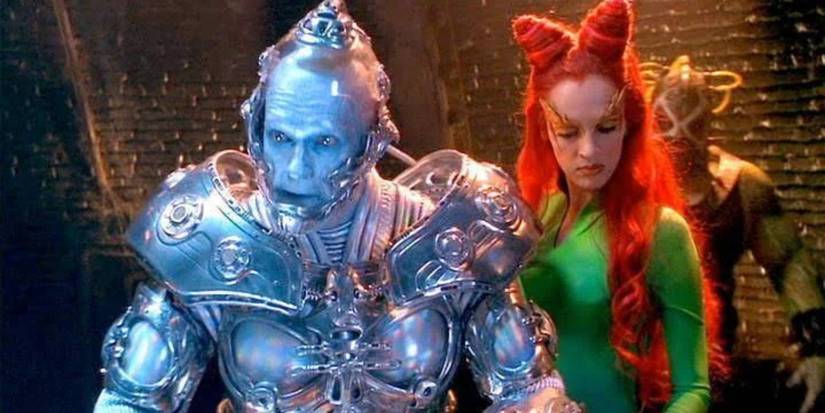
As a kid, Batman & Robin is great! In retrospect, it’s a masterclass in flopping. The fourth and final installment of Warner Bros.' original Batman film series, the Joel Schumacher-directed superhero flick follows the dynamic duo of Batman (George Clooney) and Robin (Chris O’Donnell) as they stop the cryogenically powered Mr. Freeze (Arnold Schwarzenegger) and the eco-terrorist Poison Ivy (Uma Thurman) from plunging Gotham City into a permanent winter while trying to find a cure for their dying butler, Alfred (Michael Gough) As Poison Ivy's manipulations strain their partnership, Batman and Robin are joined by a new ally, Batgirl (Alicia Silverstone), to defeat the villains and save the city. Batman & Robin became a cinematic disaster primarily because of its extreme neon campiness, toy-driven commercial mandate, and disastrously weak script.
With a new Bruce Wayne at the helm, the film needed to match the star. Schumacher abandoned the gothic, serious tone of earlier Batman entries in favor of a 1960s-style TV campiness, neon lights, and infamous suit design choices like molded rubber nipples. With cross-promotion in mind, the studio fast-tracked a film that focused on real-life consumerism rather than a strong product. Hoping the audience would forgive its weaknesses, it instead butchered the future until Christopher Nolan revived it. Written by Akiva Goldsman, the script is universally mocked for Schwarzenegger’s relentless barrage of groan-worthy ice puns as Mr. Freeze. The film crams in too many under-developed characters, reducing Bane (Robert Swenson) to a grunting, mindless henchman and turning Batman and Robin into bickering partners over Poison Ivy's silly manipulations. If there’s one thing that came out of the film, it is that it created a blueprint of what not to do. And yet, too many superhero films fall into the same trap themselves.
4 'The Lone Ranger' (2013)
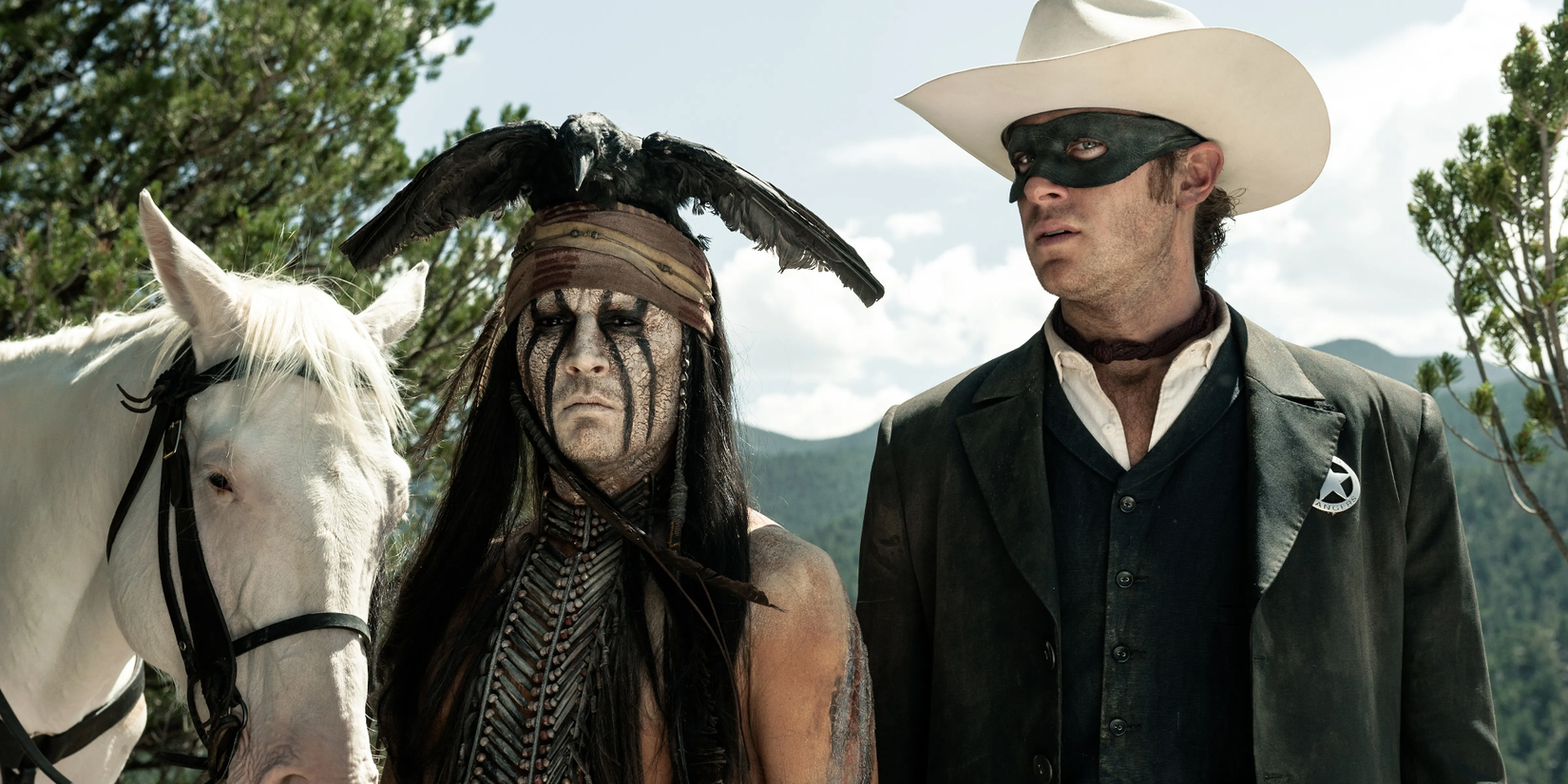
Building on precedent, Gore Verbinski and Johnny Depp had the formula for a massive blockbuster hit. But when it came to The Lone Ranger, it was proof that it wasn’t the individuals but the product that makes or breaks a movie’s success. Based on the infamous characters, The Lone Ranger follows an elderly Comanche warrior named Tonto (Depp) who recounts his 1869 adventures to a young boy, detailing how he teamed up with idealistic Texas lawyer John Reid (Armie Hammer). Donning a mask to avenge his brother's death, Reid becomes the Lone Ranger as the duo works to stop an outlaw and a corrupt railroad tycoon, Latham Cole (Tom Wilkinson). The Lone Ranger was an unfortunate mix of massive financial losses, a bloated and messy script, and severe tonal issues that absolutely do not hold up well.
After the wild success of Pirates of the Caribbean, Disney hoped they had another hit on their hands. It was anything but. Produced on an estimated budget of $225–$250 million, plus an additional $150 million in marketing, the film cost Disney an estimated $160 million to $190 million, making it one of the studio's worst box-office bombs. Filming was plagued by budget overruns, a chickenpox outbreak, wildfires, a near-fatal horseback injury to Depp, and the tragic drowning death of a crew member. For the film itself, Verbinski attempted a dark, ironic deconstruction of the Old West that clashed violently with slapstick comedy, cannibalism themes, and excessive, consequence-free violence. A miscast Depp played Tonto as an eccentric, bizarre focal point while sidelining the title character, and Hammer struggled to make the strait-laced Lone Ranger compelling to modern audiences. Perhaps timing was not on the film’s side as it arrived following the darker Western epics and before the modern Western boom, but The Lone Ranger felt like an outdated product in which younger audiences had little nostalgic attachment to a property that peaked on radio and TV in the 1940s and 50s.
3 'Speed 2: Cruise Control' (1997)
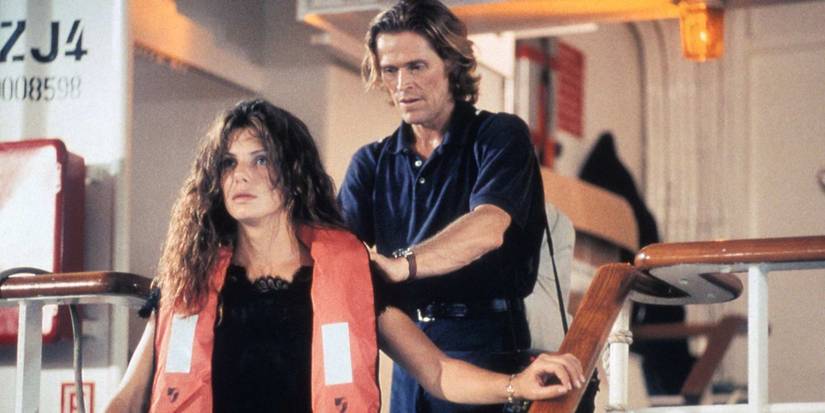
If there’s one thing we learned from Speed 2: Cruise Control is that not every film requires a sequel. Especially when it’s a formulaic disaster that ruins its entire premise by selecting the absolute worst vehicle for action. Directed by Jan de Bont, the sequel follows Annie Porter (Sandra Bullock) and her boyfriend, Alex Shaw (Jason Patric), as they go on a luxury Caribbean cruise that a disgruntled computer hacker, John Geiger (Willem Dafoe), hijacks. Geiger disables the ship's communications and sets the massive ocean liner on a deadly collision course with a giant oil tanker, forcing Annie and Alex to team up with the crew to stop it. Proving that a cruise ship is the stupidest setting for a high-octane thriller, Speed 2: Cruise Control became a legendary flop because of a slow-moving premise, a missing star, and a spiraling production budget.
The original film worked because a city bus trapped at 50 mph created relentless, claustrophobic momentum. Moving the action to a massive, slow-moving cruise ship completely killed the tension; as Keanu Reeves, who refused to return, famously pointed out, an ocean liner is even slower and less urgent than a bus. With an already absurd plot, topping it with a disgruntled, terminally ill computer hacker suffering from copper poisoning who tries to cure himself with leeches while crashing a luxury liner into an oil tanker as the main villain was simply ridiculous. With a nonsensical narrative and a massive budget that spiraled beyond its means, Speed 2: Cruise Control earned an abysmal Rotten Tomatoes score, yet was nominated for eight Golden Raspberry Awards, so at least it’s remembered for something!
2 'Gigli' (2003)

Remember the OG days of Bennifer? Well, that whole saga was cemented into pop culture history with their horrendous film Gigli. Written and directed by Martin Best, the romantic comedy crime caper centers on low-level Los Angeles mobster Larry Gigli (Ben Affleck), who is ordered to kidnap the mentally disabled younger brother, Brian (Justin Bartha), of a powerful federal prosecutor to keep a crime boss out of prison. Doubting Gigli can handle the job alone, his boss sends a free-spirited female enforcer named Ricki (Jennifer Lopez) to supervise him, leading to unexpected romantic feelings and a change of heart for Gigli. Gigli became an epic historical disaster because it combined a massive budget with catastrophic creative and public relations failures.
Even with critical derision, the mess came long before anyone even saw the film. Produced on a budget of roughly $75 million, the film grossed only about $7 million to $7.3 million worldwide, making it one of Hollywood's most expensive box-office bombs. The movie suffered from extensive studio re-edits, an eight-month production shutdown, and an incoherent genre mashup that awkwardly blended a low-rent mobster kidnapping plot with a bizarre romantic comedy. Now, to thaw romance. Intense media scrutiny surrounding the real-life romance between stars Affleck and Lopez led to severe public fatigue and a hostile pre-release climate. What could have been a cinematic blip evolved into everyone’s main focus. With cringe-inducing dialogue, a convoluted plot, and a complete lack of chemistry from two leads who were in an actual relationship, Gigli is fondly remembered for all the wrong reasons.
1 'Catwoman' (2004)

Even with a small handful of defenders, there’s simply no denying the hot mess express that was Catwoman. After discovering that her cosmetics company’s new anti-aging cream causes severe health hazards, timid graphic designer Patience Phillips (Halle Berry) is murdered by her employers to keep the secret quiet. She is mysteriously resurrected with superhuman feline powers by an Egyptian Mau cat and adopts the vigilante persona Catwoman to dismantle the corporate conspiracy while evading Detective Tom Lone (Benjamin Bratt) who is falling for both sides of her identity. A blockbuster blunder in the making, Catwoman’s toxic mix of studio interference, a fractured script, and bizarre stylistic choices alienated both critics and audiences, making it the worst summer blockbuster of all time.
Directed by Pitof, Warner Bros. and Village Roadshow Pictures stripped the character of Selina Kyle and the Batman universe because of rights conflicts, creating a brand-new lead. In turn, the script cycled through dozens of rewrites and multiple screenwriters, leaving a hollow plot about a corporate conspiracy involving a killer anti-aging skin cream. With riches of embarrassments front and center, the movie relied on frantic, music-video-style editing, nauseating CGI flips, and clichéd, soapy dialogue. The leather-strapped, tattered catsuit drew heavy criticism for feeling oversexualized and more like generic dominatrix gear than a functional superhero outfit, contradicting any intended themes of female empowerment. Even with Berry in the titular role, she was grossly out of place in this universe. It won four Golden Raspberry Awards, including Worst Picture, Worst Director, Worst Screenplay, and Worst Actress for Berry, who famously showed up to accept her trophy in person. Good for her!

Catwoman
- Release Date
- July 22, 2004
- Runtime
- 104 minutes
- Director
- Pitof
- Writers
- John Rogers
KioskNews shows a cleaned-up reading view extracted from the publisher’s page — the original always lives on their site, not ours.