Amazon loses 40 Leo satellites as ULA's Vulcan rocket fails minutes after launch
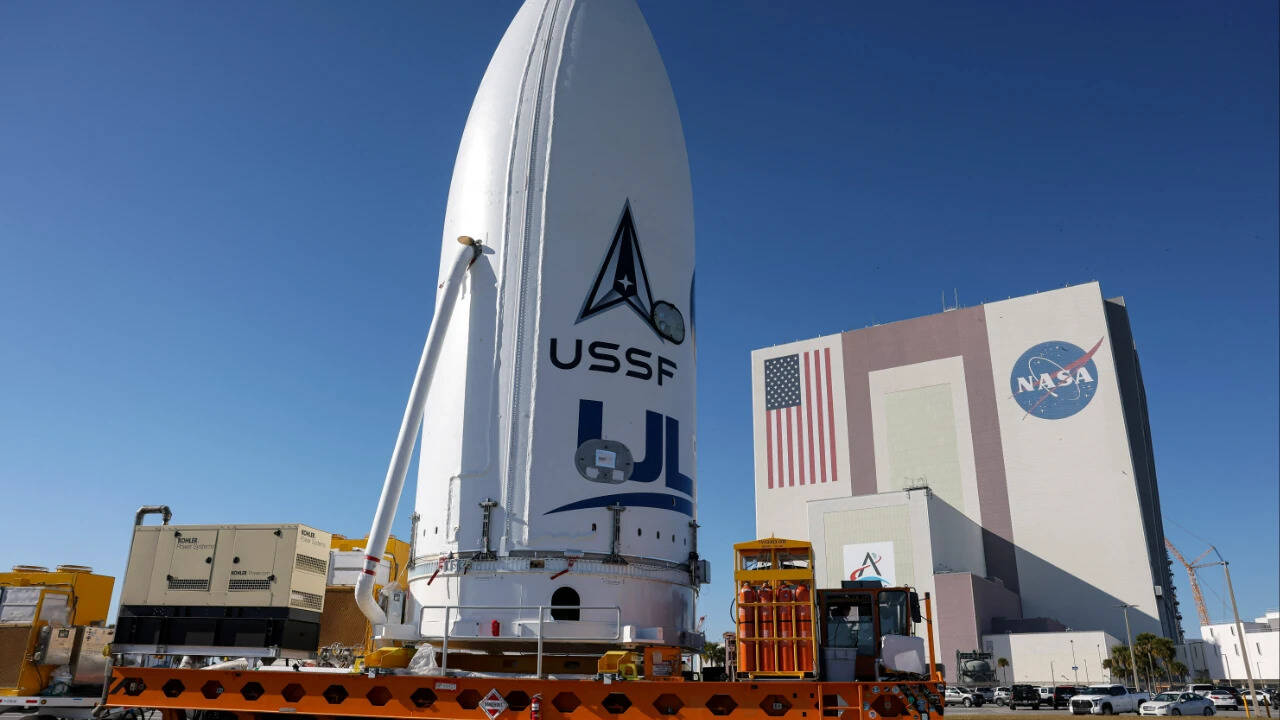
A United Launch Alliance (ULA) payload faring carrying a national security spacecraft to be attached to the Vulcan rocket for USSF-87
Amazon lost 40 satellites intended for its Leo internet network after a Vulcan rocket operated by United Launch Alliance (ULA) failed around 10 minutes after liftoff from Florida on Sunday, marking the first mission failure for the two-decade-old launch company.The rocket, jointly owned by Boeing and Lockheed Martin, lifted off from Space Launch Complex 41 at Cape Canaveral at 12:40 pm local time (1740 GMT). It suffered an anomaly during flight and failed to place the satellites into orbit, ULA said in a statement."Based on data received by our Launch Director, we confirm that the Vulcan vehicle launched from Space Launch Complex 41 suffered an anomaly 10 minutes into the flight and failed to deliver the Amazon mission to orbit," the company said.ULA added that the cause of the failure was not immediately clear as it had only just occurred.
"Every flight generates data, and every flight teaches us something. Since the anomaly just occurred, we don’t have any specific data yet to understand what occurred today," it said.The failure marks a setback for ULA's flagship rocket as the company looks to establish a regular launch schedule for Amazon's expanding satellite internet constellation.
Setback for Amazon's satellite internet plans
Amazon has purchased 38 launches from ULA, with Vulcan expected to carry nearly half of the first generation of its Leo satellite network, which is planned to comprise 3,232 satellites, according to news agency Agence France-Presse (AFP).The failed mission was the largest batch of satellites Amazon had attempted to launch in a single flight. The company has deployed around 400 satellites since April 2025 and had not conducted any launches since July.Amazon had planned to use the constellation to launch its commercial internet service, Amazon Leo, in 2026."There is risk with any launch, and that's especially true for inaugural missions," Amazon Leo said in a post on X, adding that it believed ULA would "learn from this mission and deliver on their long-term plans for Vulcan."The failure also comes as Amazon competes with Elon Musk's Starlink in the satellite internet market.
Amazon's other launch options
Amazon is also relying on other rocket providers to deploy its satellite constellation. Jeff Bezos-founded Blue Origin's New Glenn rocket, another launch vehicle expected to carry Amazon satellites, has remained grounded since an explosion during a test in May.
Amazon is also a major commercial customer of French launch company Arianespace, which is scheduled to launch 36 of its satellites aboard an Ariane 6 rocket no earlier than November 23 from Kourou in French Guiana.The Vulcan failure came a day after Musk's SpaceX deployed 26 large Starlink satellites during a test flight of its Starship rocket.The flight also achieved the first-ever catch of a spacecraft using mechanical arms on its launch tower, demonstrating a step towards rocket reusability.
KioskNews shows a cleaned-up reading view extracted from the publisher’s page — the original always lives on their site, not ours.