Before Bigg Boss 20, fans spent over Rs 11 cr to make Qazi Touqeer win Fame Gurukul
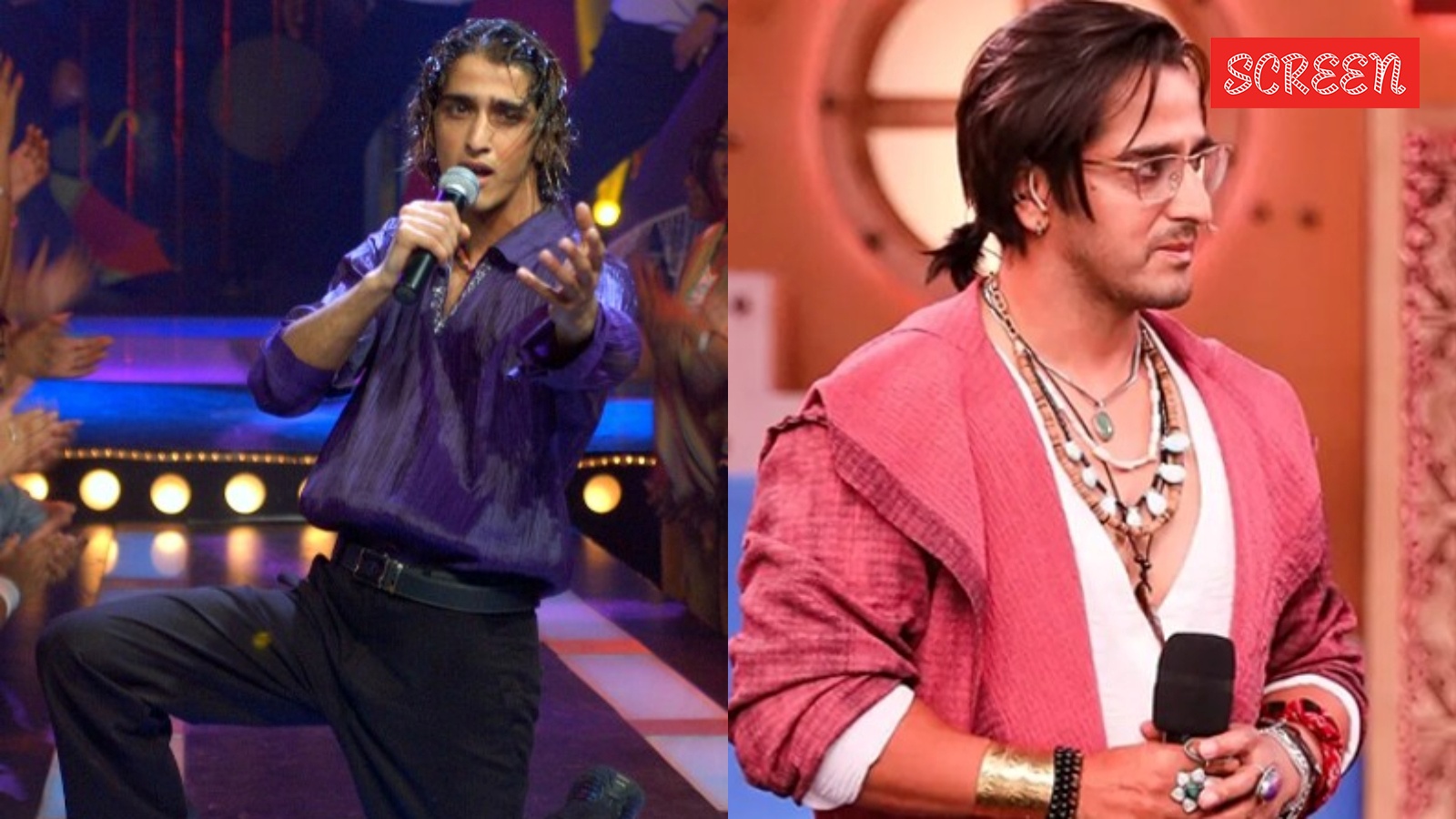
When Bigg Boss 20 premiered on September 6 and the contestants were revealed, the general verdict was that there were hardly any known faces in the lineup. Among the contestants was Qazi Touqeer, a name that meant very little to a generation that grew up on Instagram, YouTube and streaming platforms. On premiere night, many viewers found his antics irritating; others simply wondered why he was on the show.
Then there was another night, almost 21 years back.
Flashback to October 20, 2005. At the finale of Sony TV’s Fame Gurukul, a 20-year-old boy from Kashmir was crowned one half of the show’s winning ‘Fame Jodi’, alongside Ruprekha Banerjee. Each won Ra 50 lakh, Sony music contract and a Maruti Alto.
The boy the judges doubted, audience loved
What’s wild isn’t the win, it’s the math behind it. Indian Idol’s first season, the one that had the whole country choosing between Abhijeet Sawant and Amit Sana, pulled in about 3 crore votes across its entire run. Qazi alone is reported to have pulled in roughly 2.5 crore, on one season of a smaller show, becoming the most-voted contestant across any reality show in India.
And this at a time when each SMS vote cost three to six rupees out of your own pocket.
Fame Gurukul was Sony’s answer to the BBC’s Fame Academy, arriving a year after Indian Idol had already made reality-TV singing a national event. Qazi Touqeer was one of its stars. He had no formal musical training. He was off-key often enough that the judges sent him in the “danger zone” ten separate times across the season.
Ten times, he was in danger of going home. Ten times, India voted him back in.
In an interview at the time, Tarun Katyal, then Executive Vice President and Business Head of Sony Entertainment Television, said, “What do we do with this boy! He has proved there’re forces much larger than talent to control stardom.”
Story continues below this ad
Qazi himself understood what was happening, even if he couldn’t quite explain it.
“I just don’t seem to be getting booted out. It must be my luck. But more than that, the viewers just love me. Otherwise why would so many thousands spend six rupees each to SMS in my favour? Kuch to baat hai,” he told IANS at the time.
ALSO READ: Samir Soni got divorced the morning his debut film role was chopped: ‘Was harder for Neelam’
What made Qazi so popular in 2005
Qazi’s appeal was never about his singing. He had an unmistakable screen presence: the long, distinctive hair, the boyish face, the slightly mischievous smile. He was theatrical, emotional and unafraid to be himself.
Story continues below this ad
Here’s the thing about 2005 reality TV – nobody had figured out how to fake sincerity yet. Qazi wasn’t performing vulnerability for the cameras. He just genuinely looked like a kid who badly wanted this and wasn’t sure he deserved it, week after week, and the country could tell the difference between that and a script.
There was another element to the Qazi phenomenon: the underdog story.
Every week, viewers could see him being told that he wasn’t good enough. Every week, he had another chance to prove himself. And every week, the audience could intervene.
It created an emotional relationship that went beyond music. You could see Qazi trying. You could see him improving. You could see him being criticised. And then you could decide whether you wanted to give him another chance.
Story continues below this ad
For many viewers, the vote became personal. So people voted. Millions of them, including this writer — living in a PG with no TV that year, walking to a cyber café just to watch the one week he didn’t land in the danger zone, and again for the finale. Paid SMS votes, more than once. That’s the kind of hold Qazi had on people.
Qazi became ‘viral’ before being viral was a thing
A contestant who wasn’t considered the best singer had become one of the biggest audience draws on Indian television.
He reportedly received fan mail from across the world, including the US, Bangladesh, France, Italy and Nigeria. In one interview, he spoke about receiving love letters from female fans and described the response as “unbelievable”.
When he won, crowds gathered outside his Srinagar home in the winter cold and stayed there, because a boy from their state had put Kashmir on India’s television screen for once, for a reason that had nothing to do with the news.
Story continues below this ad
For millennials who watched reality television in 2005, the Qazi craze is difficult to explain to Gen Z because it happened in a completely different media ecosystem. There was no Instagram Reel, no YouTube Shorts. No X fandoms. No streaming numbers.
There was television. And there was SMS voting. And that was enough. Qazi became “viral” before people even knew the meaning of the term in this sense.
What happened after
Sadly Qazi’s enormous popularity didn’t materialise into something meaningful in the longer run. Qazi and Ruprekha released music after the show, including “Yeh Pal”, but the anticipated superstar career did not materialise. And Qazi more or less vanished from a country that had voted for him 2.5 crore times.
A decade later, in 2015, he resurfaced in the song “Afghan Jalebi” from Phantom, appearing alongside Katrina Kaif. After that: not a lot, at least not on a stage big enough for the rest of us to notice.
Story continues below this ad
What did stick around was a friendship nobody would have bet on. Arijit Singh, who lost on Fame Gurukul and went on to become the most in-demand voice in Hindi film music, stayed close to Qazi for two decades after the show ended. A video of a phone call between them did the rounds on Instagram. Qazi also visited Arijit’s hometown.
Arijit Singh made his support official the day Bigg Boss 20 began — “Apna Rockstar QAZI hai udhar,” he posted, promising to watch Bigg Boss for the first time in his life, for Qazi.
Rex D’Souza, the Gurukul runner-up, has been posting his own videos calling him a gem of a person.
Qazi is a talking point again
When Qazi entered the Bigg Boss 20 house, the generational gap became immediately obvious. For younger viewers, he was an unfamiliar face whose behaviour could be annoying, eccentric or simply confusing.
Story continues below this ad
For millennials, however, seeing Qazi back on television was like opening an old cupboard and finding an entire era of Indian television inside it.
Social media began filling with reminders of who he once was. People who had watched Fame Gurukul in 2005 started explaining the Qazi phenomenon to viewers who had never heard his name.
Within days, Qazi had turned himself into the season’s most talked about contestant. Comment sections that spent premiere week asking who this man even was have started calling him the most entertaining person in the house.
It is no surprise for those who have watched him in Fame Gurukul because grabbing attention has always been his speciality.
Story continues below this ad
In 2005, it was his hair, his performances, his danger-zone appearances and his survival. In 2026, it is his quirks and antics inside the Bigg Boss house.
The platform has changed. The audience has changed. The technology has changed. Qazi hasn’t lost the one quality that made him a star in the first place: people notice him.
KioskNews shows a cleaned-up reading view extracted from the publisher’s page — the original always lives on their site, not ours.