Man builds robotic cat feeder that senses when dish is empty
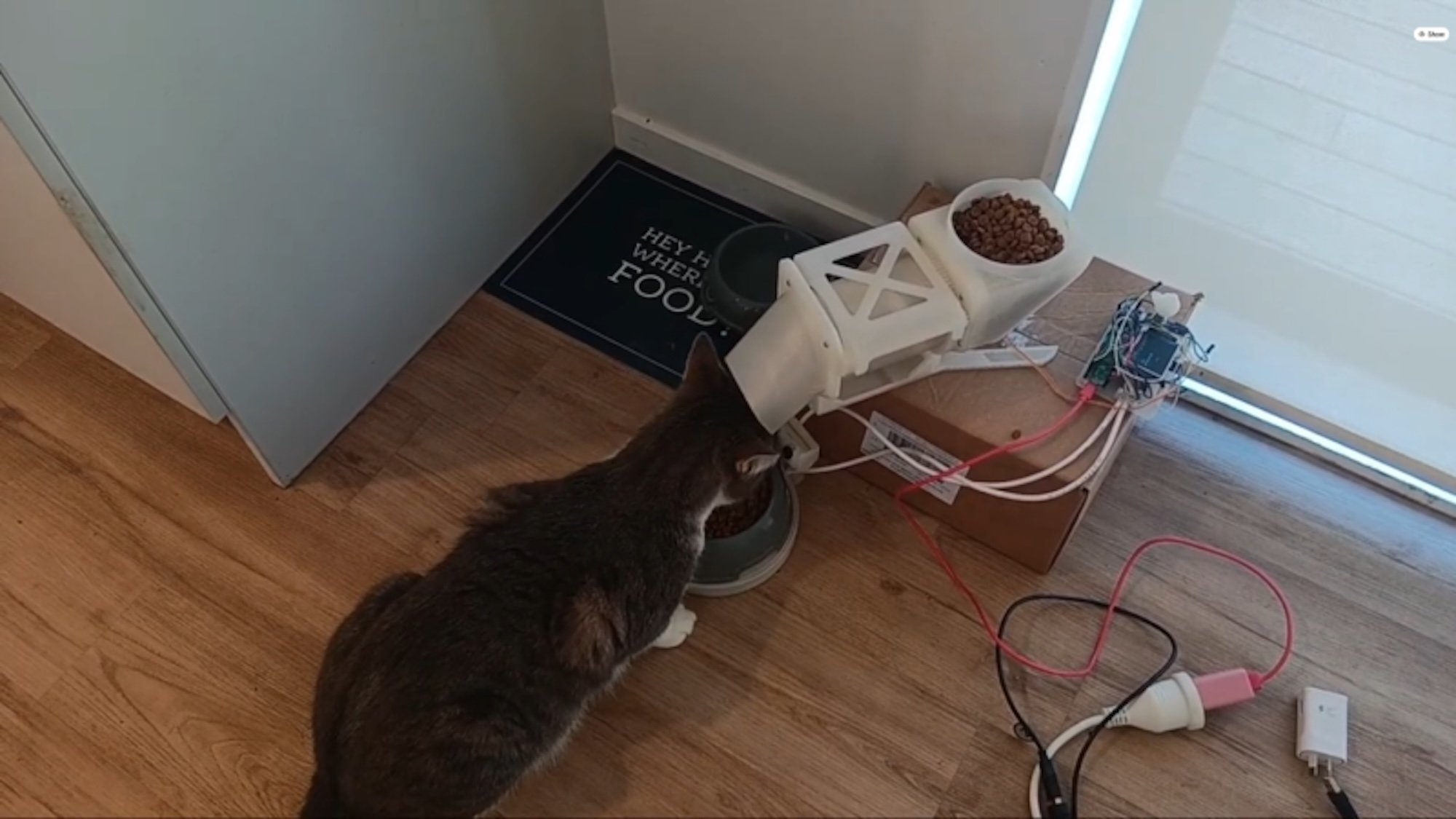
Pet owners can pick from any number of automatic cat feeders at this point, and even shell out hundreds of dollars for a particularly fancy kit. But at the end of the day, most of them are simply a scooper that dumps out premeasured amounts of feline food based on an internal timer.
Jason Winfield, a New Zealand-based YouTuber and frequent traveler, wanted a slightly more advanced option: a robotic cat feeder that distributes a predetermined amount of food for his two pals, and also senses when the dish is actually empty.

I Built a Cat Feeder That Knows If Your Cat Actually Ate!
“I tried a few of those automatic feeders off-the-shelf, and look, they’re fine. They do the job. Sort of,” Winfield explains in his recent video. “But here’s what bothered me: How do I know my cat actually ate?”
Winfield’s invention is designed to avoid overfeeding or accidentally building a mountain of kibble. The device runs on a Raspberry Pi Pico with Wi-Fi capabilities, and includes a tiny LCD screen and a buzzer to alert when food has been delivered. An onboard real-time clock (RTC) module keeps time even without direct power, which allows for a timed feeding window for daily rations.
Winfield also attached a 3D-printed cat head toggle to cycle through settings on the feeder’s screen. DIY projects like this are bound to run into errors, so Winfield also encoded a failsafe that turns off the feed dispenser if the dish has remained full for a specific length of time.There’s even an ultrasonic sensor to detect the presence of a cat, so the feeder doesn’t inadvertently drop kibble on their head.
The end result is an efficient, reliable automatic feeder that keeps Winfield’s cats happy. Winfield himself is even confident that his cats will never go hungry while he’s traveling.
KioskNews shows a cleaned-up reading view extracted from the publisher’s page — the original always lives on their site, not ours.