Israel and Morocco agree to appoint ambassadors, upgrade ties as FMs meet
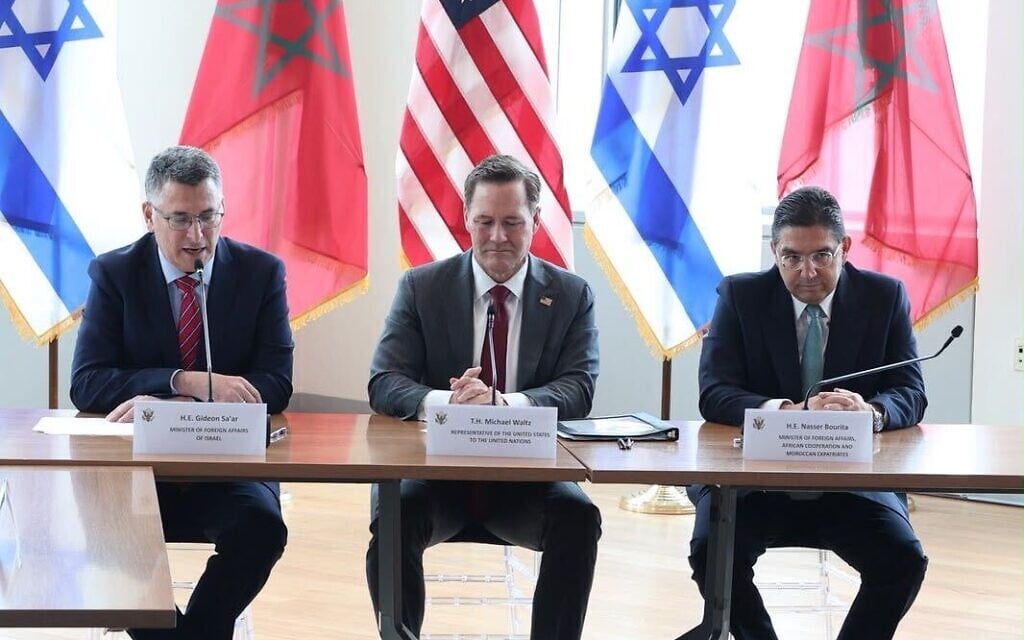
Foreign Minister Gideon Sa’ar met with his Moroccan counterpart in the United States on Wednesday, a day after the sixth anniversary of the Abraham Accords, for a meeting aimed at deepening the ties between the two countries.
The meeting, hosted by the US Ambassador to the United Nations Mike Waltz in New York, focused on a series of agreements to upgrade the bilateral relationship, according to the Foreign Ministry.
Sa’ar and Moroccan Foreign Minister Nasser Bourita agreed to upgrade their diplomatic representation, appointing ambassadors and turning their diplomatic missions into full embassies.
0:00 / 0:00
Promoted: Theatron Hotel and Residences
They also agreed to increase flights between the countries, hold high-level visits in the coming months, and conclude investment and tax agreements by the end of the year.
“The friendship between the Moroccan and Jewish peoples has deep roots and a rich history,” said Sa’ar. “The declaration we signed today outlines practical ways to upgrade ties between Israel and Morocco for the benefit of both peoples, and we will work to implement it.”
Get The Times of Israel's Daily Edition by email and never miss our top stories
By signing up, you agree to the terms
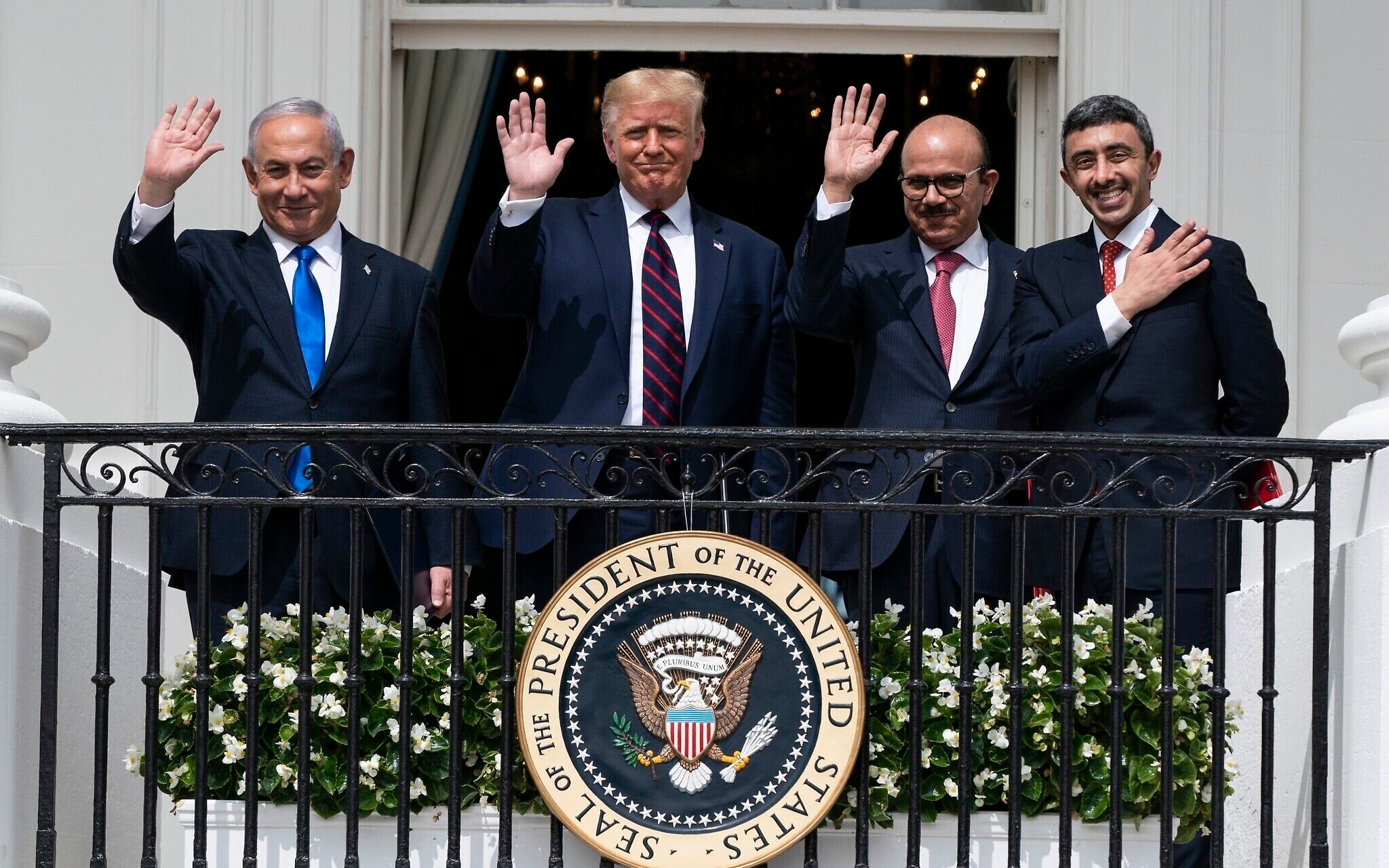
Waltz held a separate event on Tuesday to mark the anniversary of the Abraham Accords with officials from the other countries as well: the United Arab Emirates, Bahrain and Kazakhstan, the latter of which is a recent addition.
Wednesday’s meeting came after direct flights between Israel and Morocco resumed last month for the first time since the October 7, 2023, Hamas-led terror attack prompted Israeli carriers to suspend flights to the North African country.
Since the signing of the Israel-Morocco normalization agreement in December 2020 and until the Hamas attack that sparked the Gaza war, Morocco had been a popular destination for Israeli travelers, and the Moroccan Tourism Ministry estimated that some 200,000 Israelis visited in the year before the attack.
Much of the relationship between Jerusalem and Rabat has taken place out of the public eye since October 7, with the Moroccan envoy to Israel avoiding public events, as the Gaza war proved unpopular among the Moroccan public and mass anti-Israel protests became a regular feature there.
Still, Moroccan authorities have gone after anti-Israel activists who have criticized the country’s ties with Israel and praised terror attacks against the Jewish state, and defense cooperation has continued.
In January, Israel and Morocco signed a joint military work plan for 2026, in what was the third meeting of their Joint Military Committee.
At the center of the visit was a panel focusing on force build-up from a strategic perspective and shared objectives for cooperation between the two militaries, according to the IDF at the time.
It described Morocco as a “key partner for regional stability.”
Zev Stub and Stav Levaton contributed to this report.
Help us report truthfully on social media

As a multimedia journalist, my job is to take the quality, fact-based journalism produced by The Times of Israel newsroom and make it accessible across every platform — from Instagram posts to podcasts to short-form videos.
This is how many, especially young people, consume news these days. But misinformation is rampant on social media. Our team at ToI produces accurate, responsible short-form reporting on Israel and the Jewish world.
If you believe in the importance of factual social media journalism, please consider joining our reader support group, The Times of Israel Community. Your financial support is essential to sustain responsible multimedia reporting.
— Gabriella Jacobs, multimedia journalist
Support our work Support our work Already a member? Sign in to stop seeing this
KioskNews shows a cleaned-up reading view extracted from the publisher’s page — the original always lives on their site, not ours.