From TikTok strategy to defence diplomacy: Why this UCL law graduate chose MINDEF over the Bar
By the end of junior college, Lim Eng Yin had sent out 10 scholarship applications. “Cast your net wide,” she says, quoting the mantra that she and many of her peers swore by.
The Ministry of Defence (MINDEF) was the first to come back with an offer – the Defence Merit Scholarship, which would fund her tuition and provide an allowance for overseas study.
She took it.
That decision has opened the door to a career far broader than she imagined.
Through postings in communications and defence policy, Lim has helped shape how MINDEF communicates with the public and worked on Singapore’s international defence relations. She now manages manpower policies relating to compensation and service injury, while also running the Singapore Armed Forces (SAF) Care Fund.
None of these roles was on her radar when she accepted the scholarship to study law at University College London.
A gamble on the legal path
There was, however, one part of the offer that gave her pause. She could study law under the scholarship, but she would not be able to be called to the Bar during her six-year bond.
For an 18-year-old who had already set her sights on law, that raised a bigger question: Was she prepared to spend six years after graduation away from the conventional path into legal practice?
She spoke to friends and family, including those in the legal profession, weighing what she might lose by delaying legal practice against what the scholarship could open up.
“People told me that six years could feel long, but it wasn’t forever,” she says. “The legal route would still be open afterwards, whereas if I gave up the scholarship, I might never receive the same opportunity again.”
Her internship experience at the law firm also reassured her that she did not need to become a practising lawyer immediately after graduation. Several of her colleagues had entered law after spending years in other professions, including business, engineering and science.
“I was convinced I could still return to the legal profession later,” she says.
Testing the waters on TikTok
Lim joined the ministry as a Defence Executive Officer (DXO) in July 2020. Her first posting was with the MINDEF Communications Organisation, where she spent two years working on long-term communications strategy and planning.
She was then seconded to So Drama! Entertainment, where she moved into a more hands-on role managing MINDEF’s social media accounts.
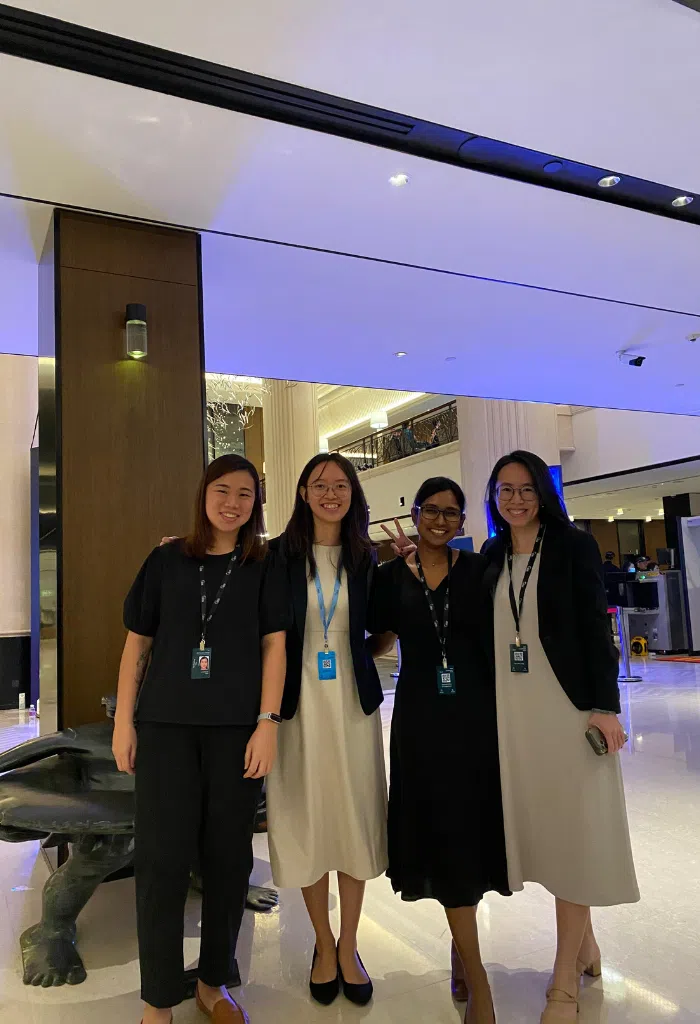
During her secondment to So Drama! Entertainment, Lim (second from left, pictured with colleagues at the Shangri-La Dialogue) handled the Ministry of Defence’s (MINDEF) social media content and later helped establish the ministry’s TikTok presence.
PHOTO: COURTESY OF LIM ENG YIN
There, one question arose: Did MINDEF belong on TikTok at all?
Setting up an account was the easy part. The harder question was what joining the platform would say about a ministry whose communications often deal with serious matters of defence and national security.
“For a serious organisation like MINDEF, there were strategic questions: What would TikTok give us that Facebook, Instagram, YouTube or Twitter did not?” she says. “Would joining make the ministry appear frivolous? What kind of content could we publish to engage our target audience without undermining the organisation’s seriousness?”
From social media to defence policy
Under MINDEF’s in-house talent programme for DXOs, officers typically rotate between postings every two to three years across areas such as defence relations, finance, national education and policy formulation.
After nearly three years in communications, Lim opted for a posting in the Defence Policy Office (DPO) – a notoriously gruelling rite of passage for MINDEF scholars.
“I heard from other scholars that it’s one of the most demanding postings, so I decided to do it when I was still young and had energy,” she says with a laugh.
Lim joined the DPO after the Russia-Ukraine war had begun, and the conflict quickly made the interconnected nature of defence policy real to her.
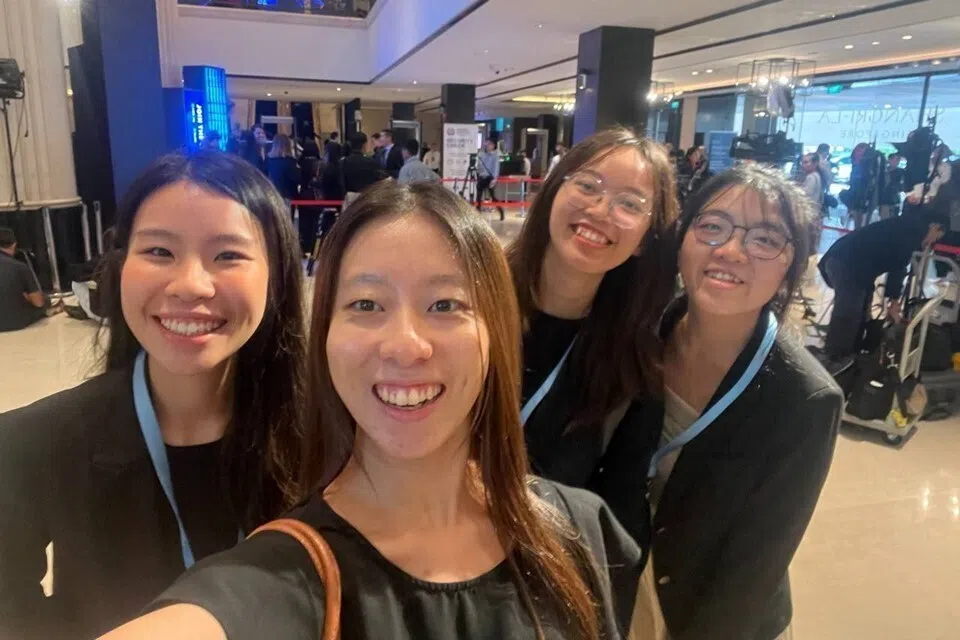
After three years in communications, Lim (second from right) joined the Defence Policy Office, where she worked on Singapore’s international defence relations and supported events such as the annual Shangri-La Dialogue – this time from a different vantage point.
PHOTO: COURTESY OF LIM ENG YIN
As one of the officers on the Europe and International desk, she helped manage Singapore’s bilateral defence relations with countries in the region.
Officers also had to look beyond their assigned regions, tracking global developments that could have knock-on effects on defence relationships and security considerations elsewhere.
Her responsibilities included formulating policy positions involving international defence partners and facilitating exchanges between senior leaders. She also supported events such as the annual Shangri-La Dialogue, prepared ministerial briefs and speeches, received visiting diplomats and accompanied MINDEF leaders on overseas assignments.
Bringing legal skills back to people
As her two-year posting at the DPO drew to a close, Lim began looking for a role that would let her build management skills and experience.
That decision led to her current role in the Manpower Policy Department. Her responsibilities include designing and refining compensation and service injury policies, advising on internal and public queries about them, and handling cases.

Now in MINDEF’s Manpower Policy Department, Lim (second from left) helps design and refine compensation and service injury policies for servicemen.
PHOTO: COURTESY OF LIM ENG YIN
As part of her current position, she also helps to manage the SAF Care Fund, a charity supporting disabled MINDEF and SAF personnel that were injured in the line of service.
There, her legal training comes into play more directly. She has to understand and interpret legal and internal regulations governing injury-related policies, as well as the charity’s governance and compliance requirements.
“It’s not legal writing in the strictest sense, but the skills of interpreting, understanding and drafting are definitely transferable,” she says.
More importantly, Lim finds the work meaningful and enjoyable. Looking back, she believes private legal practice could not have offered the same breadth of experience.
“I have done things in the past six years that I could not have done in private practice,” she says.
“I think about what could have been, but I would not say that I regret my choice.”
Learn how the Defence Merit Scholarship can open up career opportunities with MINDEF.
KioskNews shows a cleaned-up reading view extracted from the publisher’s page — the original always lives on their site, not ours.